



 16.03°C Kathmandu

Sat, Oct 10, 2026
National
Why some officials convicted of corruption lose their pensions while others keep them
Existing framework bars pension benefits for serving officials convicted of graft, but remains silent on those already retired.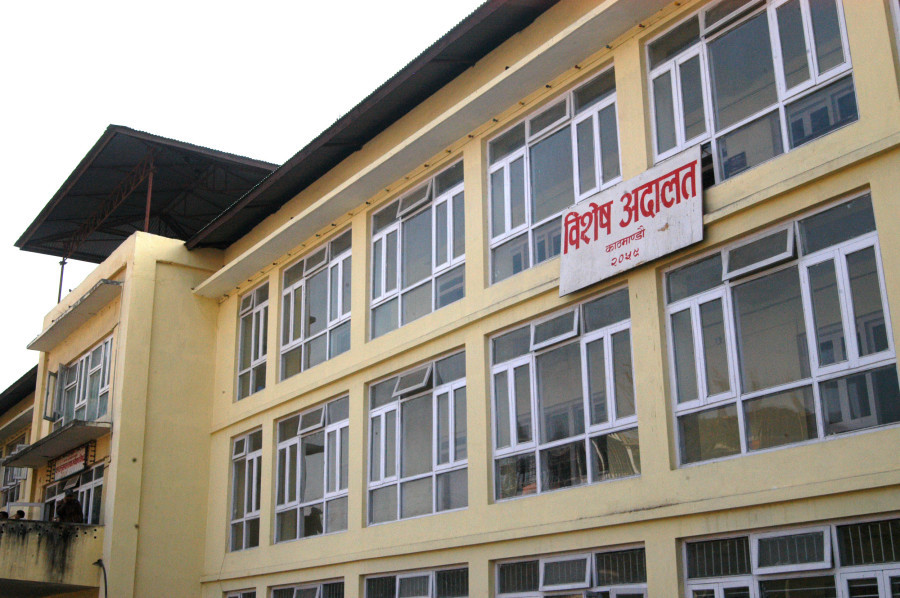
bookmark![]()
Commission for Investigation of Abuse of Authority Post File Photo
Matrika Dahal
Published at : June 4, 2026
Updated at : June 4, 2026 16:27
Kathmandu
Nabin Pokharel, a government under-secretary, was found dead at his residence in Lokanthali on May 24, 2024, three days after the Special Court convicted him in a corruption case linked to the procurement of security printing equipment. A suicide note was later recovered from the scene.
Just three days earlier, on May 21, the Special Court had found Pokharel guilty alongside former Security Printing Centre Executive Director Bikal Paudel and others. The court sentenced Pokharel to six months in prison, imposed a fine of Rs 58.45 million, and ordered him to pay an equivalent amount in damages.
The conviction triggered an immediate consequence: dismissal from government service. Simultaneously, Pokharel lost his eligibility for pension benefits despite being only about a year away from mandatory retirement.
“His retirement was only a year or so away,” said a member of the Pokharel family. "But because he was convicted while still in service, he lost his job and the pension he would otherwise have received."
The case highlights a little-discussed issue in Nepal's anti-corruption regime: government officials convicted of corruption do not always face the same pension consequences. Under existing laws, officials convicted while still serving are generally stripped of future retirement benefits. But officials convicted after retirement often continue receiving pensions because the law does not explicitly address pension forfeiture after retirement.
As a result, two officials convicted of similar offences may be treated differently solely because one was convicted before retirement and the other afterward.
The distinction is visible in several high-profile corruption cases.
On May 17, 2023, Nepal's Supreme Court convicted three former Inspectors General of Nepal Police — Om Bikram Rana, Hem Bahadur Gurung and Ramesh Chand Thakuri — in a corruption case related to the procurement of Armoured Personnel Carriers (APCs) for a Nepal Police Formed Police Unit deployed in Sudan under a United Nations peacekeeping mission.
Although all three were convicted in the same case, their pension outcomes differed. Thakuri lost pension eligibility because he was still in service when the legal process began, while the others, who had already retired, continued receiving pension benefits.
A similar distinction can be found in the Lalita Niwas land grab case.
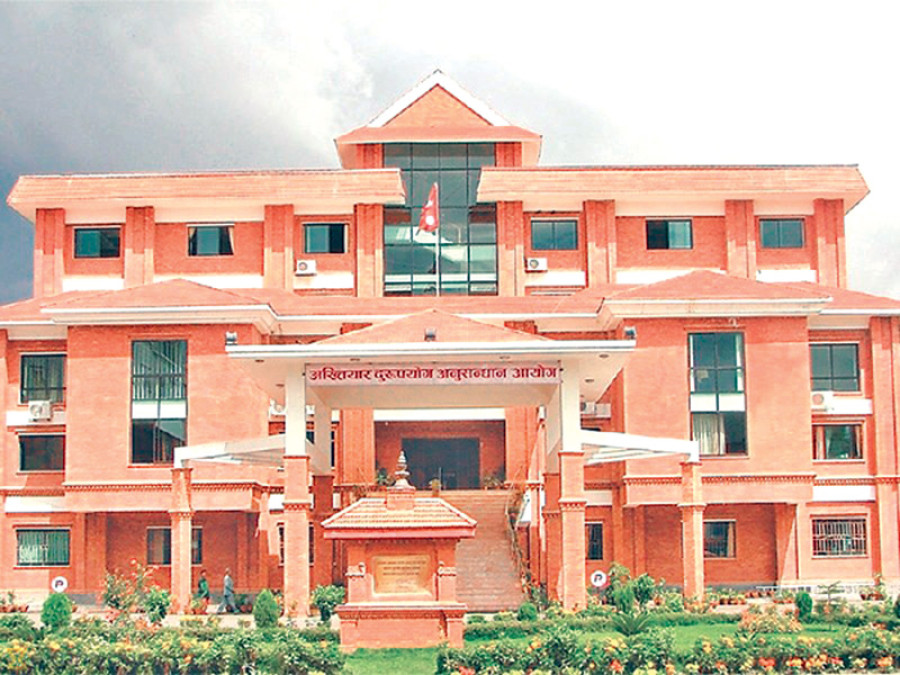
On February 15, 2024, the Special Court convicted 131 individuals, including several former public officials, in the corruption case involving the transfer of government-owned land in Baluwatar.
Among those convicted were former Chief Commissioner of the Commission for the Investigation of Abuse of Authority Deep Basnyat, former minister Chhabiraj Pant, Tikaram Ghimire, Mani Kumar Rana and Phanindra Prasad Dahal.
According to individuals familiar with the matter, some of those convicted continue receiving pensions because they had already retired before being found guilty, while others lost pension rights because they were serving officials when convicted.
The issue has significant implications beyond the individuals involved.
Pensions are regarded as both a reward for years of public service and a form of social protection. Retirement benefits do not support only the former employee; under existing arrangements, a surviving spouse may continue receiving family pension benefits after the pensioner's death.
That income often serves as a financial safety net for elderly households, reducing dependence on children and relatives and helping families maintain a degree of economic stability in old age.
In Pokharel's case, however, his conviction meant his family lost access to those benefits.
"A pension may be a benefit earned through service," the family member said. "If someone is punished for a decision they made, should that punishment also erase benefits earned through decades of service?"
For critics, however, the issue raises a different question: why should taxpayers continue financing pension benefits for officials who have been judicially proven to have engaged in corruption?
The debate reflects a broader tension between pension as a vested employment right and pension as a privilege that can be forfeited through misconduct.
Nepal's pension provisions for civil servants are primarily governed by the Civil Service Act 1993, while police pensions are regulated through the Police Act and related regulations.
Current laws clearly state that serving employees dismissed following corruption convictions lose future government benefits. However, they are largely silent on what happens when a retired employee is later convicted of corruption.
Legal experts describe this as a significant gap in the law.
Because retirement benefits are already being paid when convictions occur, retired officials continue receiving pensions unless specific legislation authorizes the state to suspend them.
Successive governments have attempted to address the issue.
A federal civil service bill tabled in Parliament on March 4, 2024 included a provision that would have stopped pension and family pension payments to retired individuals convicted of corruption, forgery of public documents, crimes against the state, drug trafficking, money laundering, trafficking in persons, kidnapping, rape, bigamy and certain other serious criminal offences.
The bill stated that any retired person already receiving pension or family pension would lose those benefits upon conviction.
However, during committee deliberations, lawmakers removed the provision. The clause was eventually replaced with language dealing with double benefits, and the proposal to terminate pensions after post-retirement convictions never became law.
Former State Affairs and Good Governance Committee Chair Ram Hari Khatiwada says lawmakers had broadly agreed that corruption convicts should not receive state-funded retirement benefits regardless of whether they were serving or retired when convicted.
"There was consensus in the committee that officials convicted of corruption should not continue receiving pension benefits simply because they had already retired," Khatiwada said. "But Parliament was dissolved before the process could be completed."
Not everyone agrees.
Senior Advocate Sri Hari Aryal, a former chair of Transparency International Nepal, argues that pensions should be viewed primarily as compensation for years of service rather than as a reward contingent on future conduct.
"A pension is an economic benefit provided in recognition of a person's contribution to public service and for their livelihood after retirement," Aryal said. "Even when senior officials retire, the government formally thanks them for their service. If someone is convicted after retirement, how does that erase decades of contribution already made?"
Aryal says officials convicted while still serving should lose pension rights because they have not completed service honourably. But once retirement has occurred, he argues, the pension becomes a vested right that should not be retrospectively revoked.
Others disagree, insisting that corruption convictions should lead to pension forfeiture regardless of retirement status.
The debate is not unique to Nepal.
In India, the Supreme Court has repeatedly described pension as a right rather than a discretionary government favour. At the same time, Indian law permits pension suspension or forfeiture in certain circumstances where legislation explicitly authorizes it.
Legal scholars say the Indian experience demonstrates that governments may withhold pensions from convicted officials, but only through clear statutory provisions rather than administrative decisions alone.
For now, Nepal's laws continue to draw a practical distinction between officials convicted before retirement and those convicted afterward.
That distinction remains at the centre of the Pokharel family's grievance.
The security printing corruption case is currently under appeal before the Supreme Court.
Under Nepal's criminal procedure laws, a defendant's death generally extinguishes criminal punishment such as imprisonment, although financial liabilities may still pass to legal heirs under certain circumstances.
Pokharel's family continues to challenge aspects of the case in court.
"Because he was convicted, the Department of National Personnel Records (Civil) refused to process the pension papers," a family member said. "That is the issue we are still fighting over."
Matrika Dahal
Matrika Dahal is a reporter for Kantipur Publications Limited covering crime, national security and social affairs.





Most Read from National
Balendra Shah UN speech: Full transcript of Nepal prime minister’s address to the 81st UN General Assembly
Heavy rains cut off key roads to Kathmandu
The speech Nepal — and the world — had been waiting for

For 26 years, India has searched passengers at Kathmandu airport. Nepal can’t say why

14 Nepalis missing on Himlung after avalanche as bad weather hampers rescue
Editor's Picks

Constitutional Bench caught in seniority, ‘pick and choose’ dispute

A Dom boy’s long road to becoming a doctor

From blankets to handmade dolls, two foreign women bring comfort to flood survivors

News Analysis: When institutional defence exposes institutional fault lines

It’s a bird … it’s a plane … it’s the Indian ambassador’s farewell tweets
E-PAPER | October 10, 2026

×