One in five pregnancy airlift involves teenagers, exposes early marriage
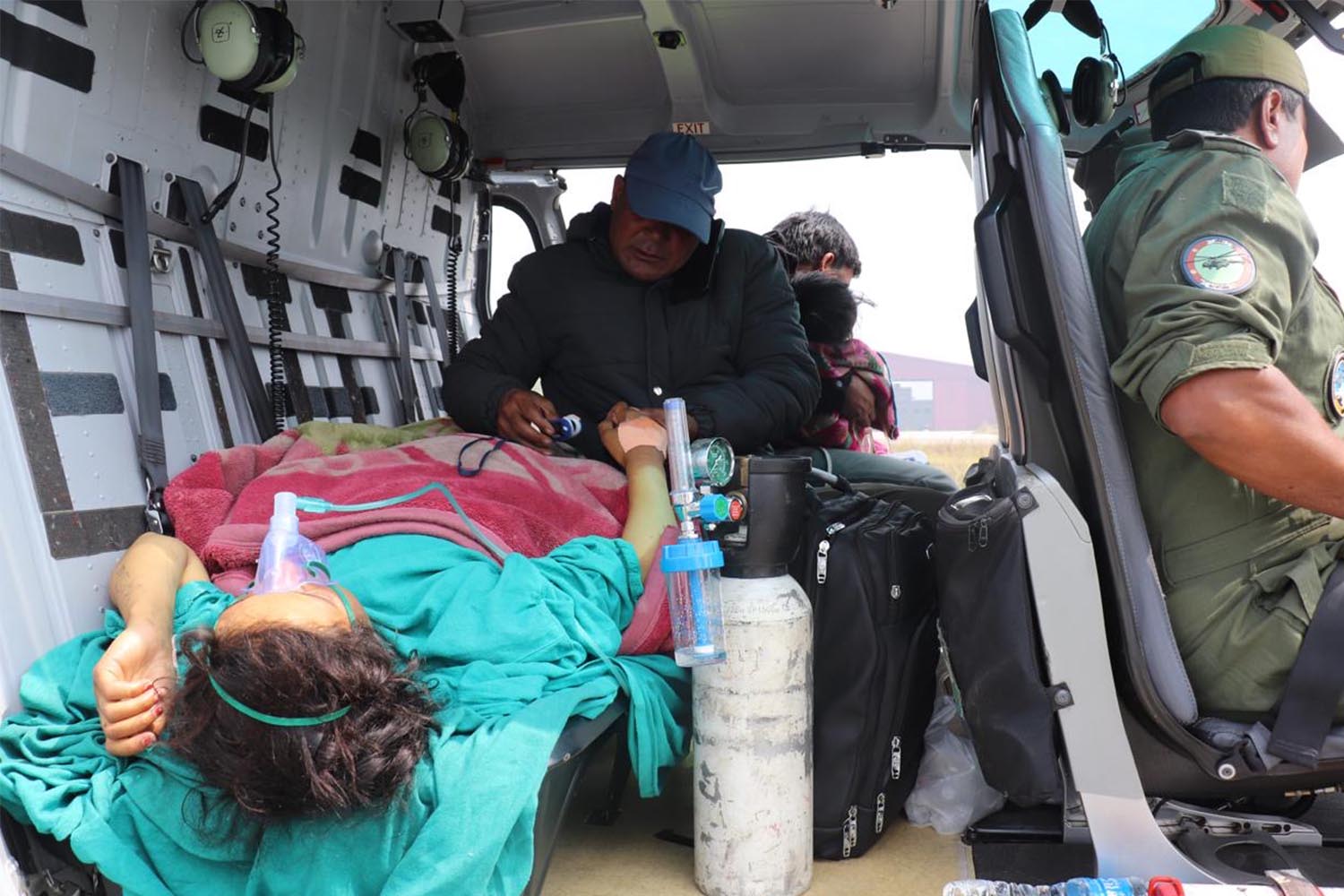
Despite Nepal’s legal ban on marriage before the age of 20, many girls continue to marry underage and become pregnant during their teenage years. Reports on emergency helicopter evacuations, a critical lifeline for pregnant women in Nepal’s remote areas, show that 19 percent of women airlifted for pregnancy-related complications are teenagers. Photo: Courtesy of Nepali Army
For 19-year-old Sushila Roka of ward 14 of Musikot Municipality in Rukum West, June 4 was supposed to be the day her family welcomed the arrival of her twins. Instead, it became a race against time.
As labour complications grew severe, the young mother-to-be was rushed to the district hospital. Doctors there delivered a distressing warning: the delay in reaching the facility had placed both Sushila and her unborn twins in serious danger.
“Prepare yourselves for the worst. She was not brought in on time, and we cannot save the babies,” Sushila’s sister-in-law Nandakala Roka recalled the doctors telling her.
A silence fell over the family.
Sushila was carrying twins. She went into labour at home, but as her condition worsened, her family brought her to the hospital. Doctors initially feared the worst, but after prolonged efforts, she delivered the first baby naturally. The second was delivered through an emergency Caesarean section.
The danger, however, was far from over.
Sushila developed severe postpartum haemorrhage. Doctors advised transferring her and her newborns to the provincial hospital, Surkhet. After receiving emergency clearance from the District Administration Office, a Nepali Army helicopter airlifted them to the provincial hospital.
“I don’t know if it was because she was so young, but even after delivery, the bleeding wouldn’t stop,” Nandakala said. “As her condition deteriorated, we panicked.”
Sushila’s case is not an exception.
On December 7, 15-year-old Karuna Bista of ward 2 of Jagannath Rural Municipality in Bajura delivered her baby after losing consciousness during labour.
Karuna passed out due to prolonged labour. By the time her family reached the district hospital, her condition had become critical.
After she suffered severe blood loss and developed complications, doctors referred her for advanced treatment.
“Perhaps because she was so young, my daughter-in-law passed out during labour,” said her mother-in-law Amrita Bista. “My grandson was born while she was completely unconscious.”
Karuna remained unresponsive for two days after giving birth. Following coordination between local and district authorities, an army helicopter airlifted her to provincial hospital, Surkhet for emergency treatment.
Fifteen-year-old Neelima Sherpa of ward 2 of Makalu Rural Municipality in Sankhuwasabha endured a similar ordeal.
On March 22, she was airlifted by army helicopter to Paropakar Maternity and Women’s Hospital in Thapathali, Kathmandu, after suffering life-threatening postpartum haemorrhage.
Neelima said she had no knowledge about pregnancy, childbirth, or risks involved because of her age.
“Instead of thinking about how I would deliver the baby, I was terrified about whether I would survive,” she recalled. “Becoming a mother for the first time under those circumstances was the most frightening moment of my life.”
She survived after relatives, local authorities and emergency services coordinated a free airlift.
But not every teenage mother survives.
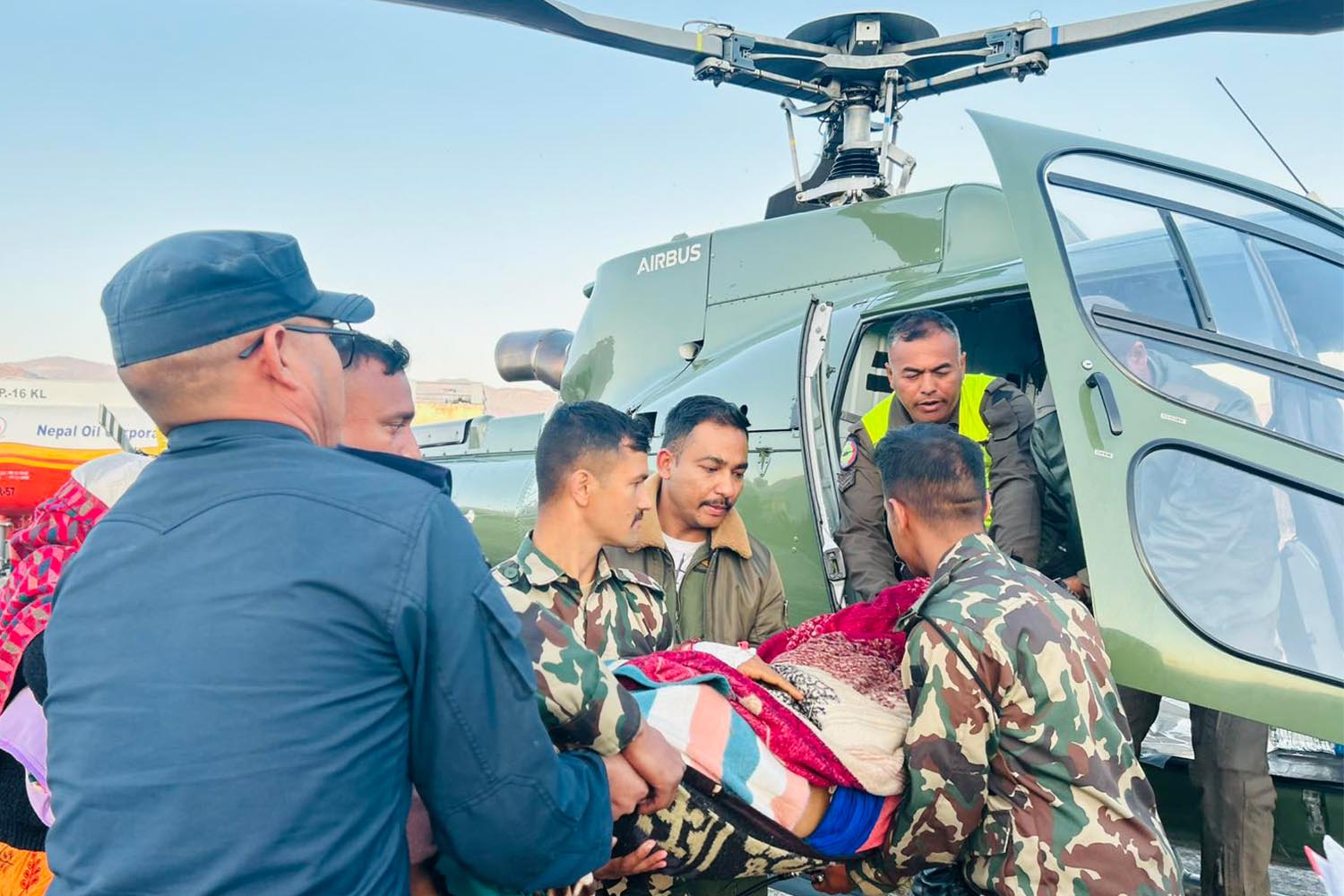
Under the President Woman Upliftment Programme, 54 critically ill pregnant women and new mothers from Karnali province were rescued free of charge in the last fiscal year alone. Photo: Courtesy of Nepali Army
The stories of Sushila, Karuna, and Neelima not only highlight Nepal’s weak healthcare infrastructure, but also reveal how deeply rooted child marriage and teenage pregnancy remain. Their experiences show the grave risks young mothers continue to face and the serious health and social consequences of early marriage and teenage pregnancy.
Reports on emergency helicopter evacuations, a critical lifeline for pregnant women in Nepal’s remote areas, show that 19 percent of women airlifted for pregnancy-related complications are teenagers.
Dr Sijan Rawal of Dolpa District Hospital said rural women face multiple barriers, including a lack of roads, ambulances, specialist doctors and adequately equipped health facilities.
“We lack paediatric specialists, essential life-support equipment and adequate medical manpower,” Rawal said.
Reaching health facilities from remote settlements itself is a major challenge. Many women are forced to give birth at home without skilled medical assistance because travelling to health centres can take hours or even days.
The difficult terrain and delayed access to care significantly increase the risks for both mothers and newborns.
Data from UNICEF Nepal show that child marriage remains widespread across the country. Karnali province has the highest rate of marriage before the age of 18, at 41 percent, while Bagmati has the lowest.
The rate stands at 24.2 percent in Koshi, 38.8 percent in Madhesh, 21.5 percent in Gandaki, 21.6 percent in Lumbini and 26 percent in Sudurpashchim. Records at the Karnali Province Health Directorate also show that teenage pregnancy remains persistently high in the region. The rate stood at 21.64 percent in the fiscal year 2022-23, before declining slightly to 20.64 percent in 2023-24. It then rose marginally to 20.82 percent in 2024-25 and reached 21.34 percent in 2025-26.
Dr Lalit Jung Shahi, a consultant gynaecologist and obstetrician in Karnali, said pregnancy among teenagers carries serious medical risks, particularly related to high blood pressure.
“Because teenagers face a higher risk of pre-eclampsia and hypertension, natural delivery is often unsafe,” Shahi said. “Teenagers brought to us through air rescue generally arrive with four major complications: severe bleeding before or after delivery, severe intrauterine growth restriction leading to low birth weight, acute hypertension and severe anaemia.”
Anju Dhungana, chief of the Women Empowerment Division at the Ministry of Women, Children, Gender and Sexual Minorities and Social Security, said all three levels of government must strengthen efforts to eliminate child marriage.
“Child marriage remains a major obstacle to Nepal’s human development,” Dhungana said. “We need sustained community-level awareness campaigns to educate adolescents about the serious physical and social consequences of early pregnancy.”
The government’s medical air rescue programme provides emergency evacuation for pregnant women and new mothers facing prolonged labour, severe complications or medical emergencies beyond the capacity of local health facilities.
According to the ministry, nearly 950 critically ill women from all seven provinces have so far received emergency air evacuation under the programme.
Under the President Woman Upliftment Programme, 54 critically ill pregnant women and new mothers from Karnali province were rescued free of charge in the last fiscal year alone.
Despite such interventions, maternal and newborn deaths remain a serious concern.
According to the Health Services Directorate, 11 women died from childbirth-related complications in Karnali in the last fiscal year, while 777 newborns have died in the province over the past four years.
Health workers say many women from remote areas reach health facilities only after complications have already become life-threatening, leaving emergency air rescue as the final option.
Reporting gaps weaken fight against child marriage
Despite laws banning child marriage, enforcement remains weak, largely because most cases never reach the authorities.
Stakeholders say families often settle cases within communities to avoid social stigma, family conflict and legal consequences, making official intervention difficult.
Nepal Police Deputy Inspector General Jayaraj Sapkota, chief of the Karnali Province Police Office, acknowledged that child marriage remains widespread but said the lack of formal complaints limits police action.
Rabi Raj Thapaliya, chief of police in Mugu, said the situation remains serious.
“Child marriage is widespread and the situation is grim,” Thapaliya said. “However, formal complaints are extremely rare because families try to avoid legal complications.”
According to DIG Sapkota, Karnali provincial police registered four child marriage cases in the fiscal year 2024-25, and all resulted in prosecution.
However, no formal complaint of child marriage had been filed anywhere in Karnali province in 2026, according to police data.
Couples married before the legal age cannot register their marriages in Nepal, leaving many without official records and limiting access to birth certificates, state benefits and social security services. Photo: Nepali Army
Social and systemic barriers keep the cycle alive
Child rights advocates and experts say child marriage and teenage pregnancy cannot be addressed through legal measures alone. They say progress will require improved access to education, healthcare and community-level enforcement. Nepal prohibits marriage before the age of 20, and those who arrange, conduct, or facilitate child marriage may face criminal penalties, including up to three years’ imprisonment and a fine of up to Rs30,000.
Child rights activist Tika Ram Acharya said many child marriages remain hidden, although some emerge during disputes over money or caste.
“Nearly 40 percent of young people in Karnali marry before reaching the legal age, according to estimates,” Acharya said. “The uncontrolled use of social media and the growing trend of live-in relationships among adolescents have also contributed to early marriages.”
He said families need stronger emotional support systems and better communication with teenagers.
“When young people do not find support at home, they often seek companionship and stability prematurely,” he said.
Sonam Bhuti Gurung, an activist from Kaike Rural Municipality in Dolpa who campaigns for girls’ education, said schools must provide stronger legal awareness.
“Remote areas face a double challenge: weak educational infrastructure and deep gender discrimination in access to schooling,” Gurung said. “Unless girls can continue to higher education, they will remain trapped in this cycle.”
She called for detailed research to identify communities where child marriage is most common.
“Lack of education and awareness encourages parents to marry off their daughters early,” she said. “When girls are denied education, marriage is seen as their only future.”
Kamala Tiwari, an associate professor at Mid-Western University in Surkhet, said policymakers often overlook the emotional vulnerabilities of adolescents.
“The state spends millions on campaigns against child marriage but fails to address the emotional needs of young people,” Tiwari said.
She said teenagers who marry early often face social pressure and legal uncertainty, making them reluctant to seek reproductive health services or use contraception.
“Instead of simply blaming young couples, we need to provide them with non-judgmental access to safe motherhood and reproductive healthcare,” she said.
Tiwari also pointed to legal complications created by Nepal’s marriage laws.
As Nepal outlaws child marriage, couples who marry below that age cannot legally register their marriages. As a result, many remain without official marriage records and may face difficulties accessing state benefits, birth certificates and social security services.
Fear of prosecution often pushes families to conceal early marriages and births, she said.
Tiwari identified hormonal changes during adolescence, digital exposure and a lack of open communication between parents and children as key factors behind early relationships.
She called for comprehensive life-skills and sexual health education in schools to help teenagers make informed decisions.




 24.71°C Kathmandu