Legal hurdles, political rifts stall plan to shift Sudurpaschim capital to Godawari
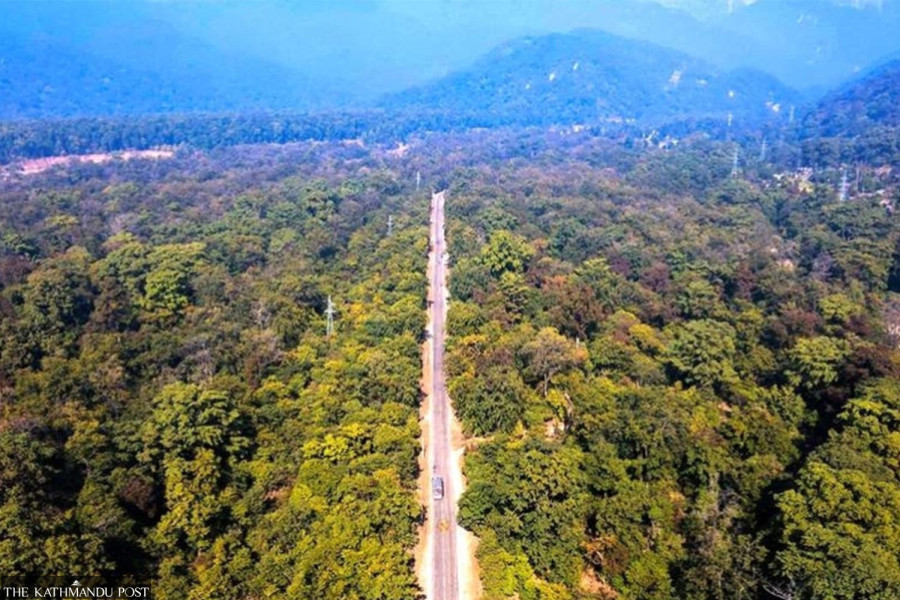
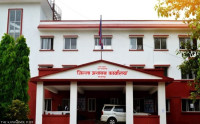
The deadlock has left the province functioning from temporary offices in Dhangadhi. Teghari area in Godawari, Kailali, where Sudurpaschim Province’s capital was declared. Arjun Shah/TKP
The implementation of Nepal’s provincial structure is nearing a decade and the second term of the Sudurpaschim Provincial Assembly is in its final year, yet the province continues to grapple with an unresolved question: where will its permanent capital be?
The province has seen five chief minister changes and frequent Cabinet reshuffles. Since Tuesday, efforts to change the chief minister have resurfaced, but the issue of capital remains unresolved, and no solution is in sight.
Seven years have passed since the Provincial Assembly, by a two-thirds majority, designated Godawari in Kailali as the permanent capital. However, there has been no meaningful progress in implementing the decision.
On September 28, 2018, lawmakers approved Teghari in ward 4 of Godawari Municipality as the site for the capital. Following the decision, the provincial government allocated budgets in two consecutive fiscal years for infrastructure development.
Despite these measures, the decision has not been implemented. The province continues to operate from temporary offices in Dhangadhi, which was designated as the temporary capital.
The capital was decided when the then Nepal Communist Party had a two-thirds majority in the provincial assembly. The Nepali Congress, then in the opposition, boycotted the assembly session in protest. In the vote, 38 lawmakers supported the proposal, while 12 from the Congress and two from the Rastriya Janata Party abstained.
Soon after the decision, petitions were filed at the Supreme Court, challenging the move, arguing that establishing the capital in Godawari would require clearing forest land. The petitioners, Manish Kumar Shrestha and Devi Kumari Joshi, claimed the decision would destroy a biological corridor.
The case remains under consideration, according to Thekendra Prasad Joshi, the province’s attorney general.
Former attorney general Kulananda Upadhyaya said the case has been repeatedly deferred. “The court has not issued a stay order. The issue is not the court case itself, but the lack of land-use permission,” he said.
Meanwhile, no government has taken decisive steps to implement the capital plan. Lawmakers briefly raised the issue in the provincial assembly last year, but it was not pursued further. Lawmaker Shiva Singh Oli argued that reluctance to implement the decision had stalled progress and called for an alternative location if necessary.
After the decision, the provincial government formally requested the federal Ministry of Forests and the Prime Minister’s Office in January 2019 for permission to use444 bigha (301 hectares) of land in the designated area.
However, the federal government has not yet granted land-use approval, effectively halting the project. “The implementation could not proceed because the Forest Ministry did not grant land rights,” Upadhyaya said, adding that multiple attempts were made to secure approval but to no avail.
Former chief minister Trilochan Bhatta said repeated appeals were made to federal authorities, including prime ministers, for land approval. He said construction would have begun long ago if approval had been granted.
Social Development Minister Meghraj Khadka said the matter had been discussed with the federal authorities and senior political leaders, but changing political circumstances prevented any decision.
The government is now considering a 13 bigha (8.8 hectares) area spanning the chief minister’s office and the Drinking Water Office in Dhangadhi as a possible site.
There have also been informal discussions among leaders about relocating the capital to the fish farming centre area in Geta. However, any change in capital location requires a two-thirds majority in the provincial assembly.
At present, the ruling coalition of Congress and CPN-UML does not command a two-thirds majority, meaning support from opposition parties would be necessary.
The capital debate has also influenced land prices in areas around Godawari and Attariya. Local business operators say land prices doubled after the initial announcement, rising from around Rs3 million per kattha (338.63 square metres) to Rs6 million. Prices have since stabilised amid continued uncertainty.
Chief Minister Shah has repeatedly said the earlier decision may be reconsidered, citing unresolved disputes over Godawari and delays in infrastructure development. He has also said he has urged federal leaders, including former prime minister Pushpa Kamal Dahal, to help find a resolution.
Meanwhile, significant public funds continue to be spent on maintaining temporary government offices in Dhangadhi. According to the provincial financial comptroller’s office, Rs275.3 million was spent on maintenance over the past six fiscal years, from 2018-19 to 2023-24.
Offices of the Chief Minister; the Ministry of Economic Affairs; the Ministry of Physical Infrastructure Development; the Ministry of Industry, Tourism, Forest and Environment; the Ministry of Land Management, Agriculture and Cooperatives; the Ministry of Social Development; the Ministry of Home Affairs; the provincial accounts office; the Attorney General’s Office; and the Public Service Commission continue to operate from temporary buildings, incurring recurring annual maintenance costs.
An official at the Ministry of Economic Affairs said permanent infrastructure would have helped avoid repeated annual expenditure on temporary arrangements and saved resources and public funds.




 23.26°C Kathmandu