Children in Palpa walk hours daily to reach school, parents fear for safety
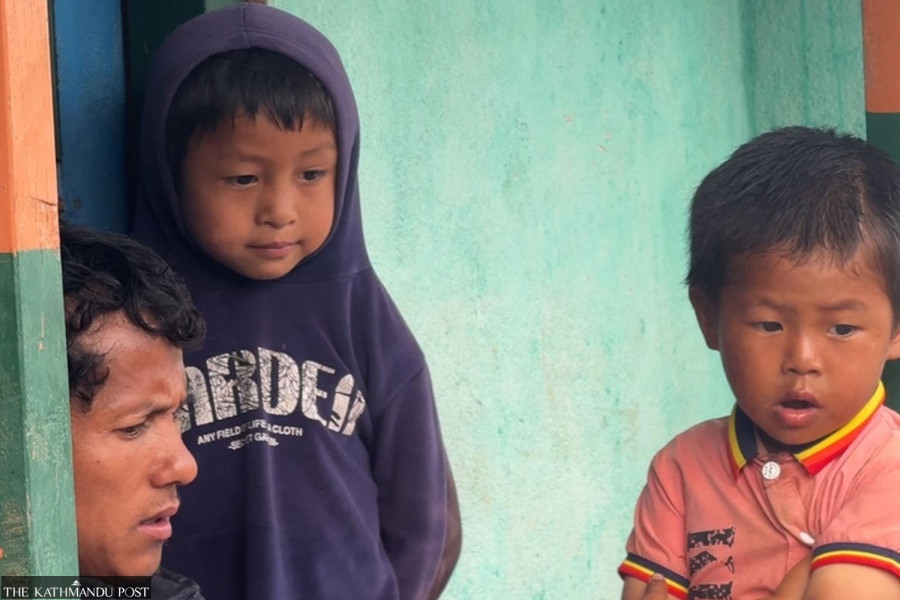
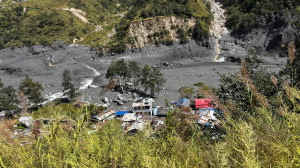
In remote settlements, access to basic education remains out of reach despite policy promises.With no nearby school, 22 students from 14 families in Betini are forced to travel long distances to study. Madhav Aryal/TKP
Education is the basis of a country’s growth. The new government, formed following Gen Z-led protests demanding good governance and anti-corruption, has accorded high priority to education.
According to the government’s 100-point governance reform action plan, school education will be gradually made free and mandatory. The plan states that access to education for all children, including pre-primary level, will be ensured on an equal basis.
However, the situation is different in remote villages of Palpa district. Mathagadhi-8 lacks even a basic school, leaving village children in the lurch. While those who can afford it send their children to nearby areas, others have no option but to walk for hours to reach school.
Gobin, the five-year-old son of Dil Maya Gaha of Betini in Mathagadhi-8, has just completed pre-primary level. He must now attend Bal Bikash Basic School in Bahadurpur, a two-hour walk away.
Dil Maya said Gobin leaves for school at 8 am every morning and returns home at 6 pm. “He gets exhausted just from the walk to school,” she said. “At least I don’t have to worry about him going hungry in the afternoon as the school provides snacks.”
Kalpana Baral Magar of Betini also rushes every day to send her daughter Birisa to school. After completing pre-primary classes in the village, Birisa has also enrolled at Bal Bikash Basic School in Bahadurpur. “It takes four hours for my daughter to commute between school and home,” she said. “We ask older children to accompany the younger ones, but sometimes they leave them midway, and my daughter returns home crying.”
With no nearby school, 22 students from 14 families in Betini are forced to travel long distances to study. “When we send small children to distant schools, we constantly worry whether they might fall on the way or fail to reach school,” Kalpana said. “It would be better if education up to at least Grade 3 was available in the village.”
Currently, a community building in Betini runs pre-primary classes. With support from a Japanese social worker, funds have been invested, and the income is used to hire a volunteer teacher to run classes, said a school employee. The rural municipality does not support this initiative.
According to volunteer teacher Bhim Kumari Saru, only two students have enrolled this year. In recent times, mothers have started renting rooms in nearby Jalpa Bazaar, Tansen or in Tarai to educate their children.
“Now parents want fewer children but better education. So after pre-primary, mothers move to towns with their children,” she said. “Those who can afford go to bigger cities, while others settle in nearby Jalpa.”
Children from Toklokdi, Kihudanda and Charange Tole, Hattilung, Gothadi and Rahabas in Mathagadhi, as well as Jalpa, Argidanda and Sathikol in Purwakhola Rural Municipality, are also forced to walk hours daily to attend school. Sushmita Gaha Magar of Mathagadhi-8 said she studied up to Grade 8 in Bahadurpur but had to move to another local unit for further education. According to her, children from the lower Betini and Argidanda villages also have to live away from home for education.
As a result, children’s education has been affected.
According to parent Tulasi Gaha, some children hide or play on the way and return home instead of going to school due to the long distance. “It is very difficult for young children to travel such long distances to school,” he said. “Parents don’t want to send children as young as four years to school, but they have no option.”
Another parent, Tek Bahadur Saru, said young students face equal hardship in both winter and the rainy season due to the distance. “During the monsoon, it is rare for students to reach school without getting wet. They are forced to carry an extra set of clothes every day,” he said. “At other times, absenteeism and children returning midway are also problems.”
Education regulations require at least 40 students to open a school in hill areas. But in most remote settlements, there are fewer than 25 students. Even existing primary schools face similar constraints. Jettar Singh Rana, headteacher of Bal Bikash Basic School in Bahadurpur, said that if pre-primary classes were operated in remote settlements, young children would not be forced to walk hours daily.
Ward chair Dil Bahadur Dhenga of Bahadurpur in Mathagadhi-8 said discussions are underway at the rural municipality’s education committee to address the issue. Rural municipality chair Yam Chidi said such problems persist in scattered settlements, but concrete decisions have not been taken due to limited resources.




 18.11°C Kathmandu