



 17.46°C Kathmandu
Sun, Oct 18, 2026
Money
DDC to pay dairy farmers every fortnight from 2027
The state-owned corporation plans to expand sales, open new outlets and diversify products to improve cash flow and ensure timely payments to farmers.
bookmark
Krishana Prasain
Published at : October 18, 2026
Updated at : October 18, 2026 06:58
Kathmandu
The state-owned Dairy Development Corporation (DDC) has said it will pay dairy farmers every fortnight from the new year, amid criticism over delayed payments that have made it difficult for farmers to manage household expenses and production costs. The move also follows a Supreme Court order for the authorities to ensure that farmers receive payments on time.
Sharan Kumar Pandey, general manager of the corporation, said the plan to switch from monthly to fortnightly payments would take effect in the first week of January.
“While farmers are demanding the same, the court has also ordered us to settle payments on time,” Pandey said. The corporation plans to borrow funds to ensure regular payments.
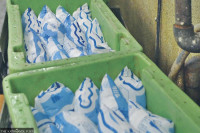
The DDC currently collects between 95,000 and 100,000 litres of milk daily from farmers across the country, paying them around Rs65 per litre. The collected milk is processed into pasteurised milk and other dairy products for domestic consumption.
In August, the Supreme Court ordered the government to develop a system to ensure dairy farmers are paid regularly, in line with a tripartite agreement reached between the Ministry of Agriculture and Livestock Development, dairy entrepreneurs and farmers in June 2024.
When the petition was filed in March 2024, dairy farmers were owed around Rs7 billion. Of the total, private dairy companies represented by the Dairy Industry Association and the Nepal Dairy Association owed around Rs6 billion, while the state-owned Dairy Development Corporation owed around Rs900 million.
The problem of delayed payments became particularly acute from December 2023, after the retail price of milk reached Rs100 per litre and the prices of other dairy products also increased. Both state-owned and private dairy companies said an economic slowdown had weakened demand, disrupting cash flow and increasing their liabilities to farmers as dairy products remained unsold for months.
Although dairy companies struggled to sell fresh milk, they processed the surplus into milk powder and butter. However, demand for these products also weakened, leaving large stocks in warehouses.
Pandey said the corporation had cleared all its outstanding dues. For the first time, the DDC is collecting milk on three days during the Dashain festival from across the country to ensure farmers' production does not go to waste and to maintain supply.
According to the corporation, it plans to ensure timely payments by increasing revenue and cutting expenses. Regular payments will help farmers manage their costs and increase production, the corporation said.
Pandey said the corporation plans to increase revenue by expanding sales.
“Kathmandu Valley consumes 60,000 to 65,000 litres of milk daily, and we are planning to increase the volume to 100,000 litres a day. Increasing consumption will help us generate profits,” he said.
He said the Valley's daily milk consumption was around 1 million litres, making the corporation's target of 100,000 litres achievable.
Around 85 percent of the DDC's milk is sold in Kathmandu Valley, with the remainder distributed in other parts of the country. Sales of its other dairy products are also concentrated in the Valley.
To increase sales, the corporation plans to open eight to 10 new outlets in Kathmandu Valley, where it currently operates 22 outlets.
“We plan to open the new outlets after Tihar,” Pandey said.
The corporation also plans to sell its products through dedicated online shopping platforms. However, it will rely on distributors to provide the service rather than establishing its own online sales operation.
“We do not have the technology or manpower to run an online shopping service of our own, so the distributors will provide the online sales service,” Pandey said.
The corporation also plans to set sales targets for distributors and offer incentives as part of its strategic marketing efforts, he said.
The DDC aims to double sales of other dairy products, including curd, paneer, ghee, ice cream and cheese.
“If we are selling 60 tonnes of cheese, we target 120 tonnes, which will help generate revenue and facilitate timely payment to farmers,” Pandey said.
The corporation also plans to increase its product range.
“We are planning to diversify our cheese products to include sliced and diced varieties, as demand for these products is high in the market. We also plan to package butter in small portions used for breakfast,” Pandey said.
The corporation plans to introduce new flavoured milk varieties and ice cream as well.
As part of its efforts to foray into international markets, the DDC has begun sending its products to new destinations on a trial basis.
In August, the corporation began exporting ghee to Dubai, sending an initial 600-kg shipment under an agreement with Rato ra Chandra-Surya International Pvt Ltd.
The shipment marked the DDC's entry into the Dubai market as it seeks to expand ghee exports beyond its existing destinations and establish a presence in the wider West Asian market.
“We are unable to promote our products in the international market due to production limitations. We have sent butter to Gulf countries on a trial basis. We have also started sending our products to Japan for trial,” Pandey said.
The corporation plans to send its products to Malaysia and Thailand. It is also in talks with South Korean traders, as well as buyers in Tibet and China, to export butter, he said. The DDC is also discussing potential exports to Australia with several traders.
Krishana Prasain
Krishana Prasain is a business reporter for The Kathmandu Post covering markets. Before joining The Kathmandu Post in 2018, she spent 3 years in New Business Age magazine covering business.



Most Read from Money

Nepal travel agents threaten to stop selling Thailand trips over visa rules
Explained: Why does an hour long flight to Dhangadhi cost more than a flight to New Delhi?
Malaysia rejects Nepal’s demand to open recruitment to all manpower agencies

No school, but a graduation cap for women dairy farmers

Nepal arrests four medical service providers as Malaysia recruitment row deepens
Editor's Picks

Dashain paints the country in festive colours
Buying a goat for Dashain? Look for the green mark
Explained: Why does an hour long flight to Dhangadhi cost more than a flight to New Delhi?
Bhotekoshi flood wasn’t a freak event. It’s the Himalaya doing what it does

How Tenzing Sherpa became Nepal’s breakout star at the Asian Games
E-PAPER | October 18, 2026

×