



 22.94°C Kathmandu

Thu, Oct 22, 2026
Money
Insurance scheme to benefit small businesses
New policy covers income losses and other risks faced by small retailers and service providers as report finds only 10 percent of MSMEs have insurance.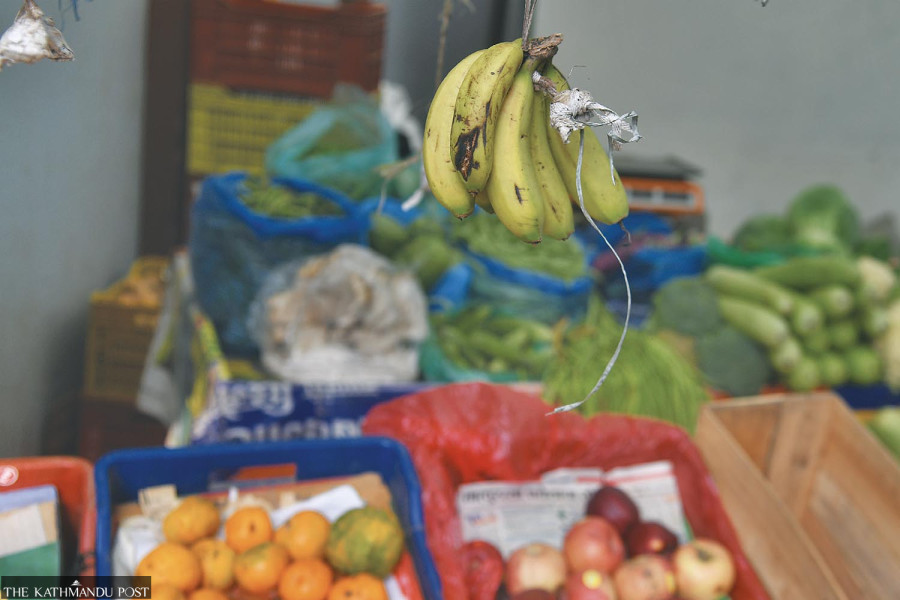
bookmark
Krishana Prasain
Published at : August 10, 2026
Updated at : August 10, 2026 06:52
Kathmandu
Nepal has brought into force an insurance scheme aimed at protecting small businesses from risks that can disrupt their operations and income.
The first-of-its-kind policy, targeting small retail and service businesses such as fruit shops, motorcycle workshops, tailoring businesses and plumbing services, came into effect with the start of the new fiscal year in mid-July.
For instance, if a fruit shop owner is injured or hospitalised, the policy will cover lost income if the shop has to close.
Nirmal Adhikari, director of the Nepal Insurance Authority, said insurance penetration among Nepal’s micro, small and medium enterprises (MSMEs) remains severely low and that the new policy is the first step towards addressing the vulnerabilities of the sector.
He said microinsurance has largely been implemented through cooperatives and community business groups but has failed to reach MSMEs as expected.
“It’s because of limited awareness, weak distribution channels and inadequate public understanding of insurance,” Adhikari said.
Last week, a joint report by the United Nations Development Programme (UNDP) Nepal and the Nepal Insurance Authority was launched, finding that MSMEs, particularly those operating in agriculture and tourism, remain dangerously underinsured.
Existing insurance products fail to cover many of the risks faced by these businesses, leaving them highly vulnerable to climate shocks, disease, pandemics and income losses, according to the report, titled Risk Management in Nepal's MSMEs: The Insurance Protection Gap.
Formal insurance has failed to adequately address the diverse risks faced by MSMEs despite agriculture and tourism being among Nepal’s key economic sectors.
Only about 10 percent of MSMEs in Nepal currently hold any form of insurance. Small businesses face heavy exposure to climate-induced hazards, natural disasters and unexpected business disruptions.
Cumbersome paperwork and unclear policy terms mean existing payouts often cover only a fraction of actual losses.
Based on surveys and focus group discussions involving 134 MSME representatives across the seven provinces, the study found that agriculture-based MSMEs face acute climate, disease and credit-related risks that current insurance products do not adequately cover.
Tourism MSMEs, meanwhile, remain fragile after the Covid-19 pandemic and continue to face significant indirect risks with limited insurance protection.
According to the report, insurance products currently available do not reflect the actual needs of MSMEs, leading many entrepreneurs to view insurance as costly, inaccessible and irrelevant.
In agriculture, insurance products mainly cover crops and livestock while ignoring indirect risks such as income loss, credit defaults and supply chain disruptions, according to the report.
“Although weather index insurance was introduced as an innovative solution, poor calibration means rainfall and temperature triggers often fail to match actual field-level losses, leaving insured farmers without compensation,” the report said.
The report said slow claims processing, lengthy paperwork and unclear eligibility requirements further discourage smallholder farmers from purchasing insurance.
In tourism, insurance coverage is largely limited to vehicles and property, leaving major risks such as business interruption, liability for accidents or employee injuries, and pandemic-related disruptions largely uninsured.
Claims processing, even for mandatory vehicle insurance, is often delayed and disputed, reducing confidence in insurance providers.
Weak distribution networks in rural and peri-urban areas, coupled with high transaction costs, have also limited insurers’ outreach to smaller businesses.
The report further said misconceptions about insurance continue to undermine public trust.
“Many agriculture entrepreneurs mistakenly believe insurance only applies to catastrophic events or expect guaranteed financial returns similar to savings schemes. When claims are rejected or payouts do not reflect actual losses, these misconceptions are reinforced,” according to the report.
“Similarly, many tourism entrepreneurs believe insurance is meant only for large businesses.”
The report attributes these perceptions to low insurance literacy and inadequate communication by insurers.
Despite these challenges, the report says the sectors present significant opportunities for insurers.
In agriculture, provinces such as Karnali, Koshi and Madhesh, where vulnerabilities are high but insurance uptake remains low, offer commercially viable markets if products are redesigned to suit local conditions and distributed through trusted community networks.
The report recommends bundled insurance products that combine protection against climate, livestock, business continuity and credit risks to better meet MSMEs’ needs while improving insurers’ commercial viability.
For the tourism sector, it suggests simplified claims procedures and products covering business continuity and liability risks.
Bundling insurance with licensing, accreditation or association membership could also expand coverage, particularly among trekking, hospitality and seasonal tourism businesses.
Adhikari said the Nepal Insurance Authority has directed insurance companies to market the new product through organised groups to improve outreach.
Nepal has more than 923,000 businesses, over 95 percent of them microenterprises.
These businesses contributed an estimated 22 to 27 percent of the country’s gross domestic product (GDP) and accounted for more than 84 percent of non-agricultural employment.
The report says a handful of SME-focused insurance products exist, but most are narrowly targeted.
For example, the Youth and SME Insurance Policy is available only to borrowers under the Youth and Small Entrepreneur Self-Development Fund.
Although the government has prioritised expanding insurance coverage through the 16th Five-Year Plan (2024-25 to 2028-29) and introduced the Microinsurance Directive, 2023, requiring insurers to allocate 10 percent of their portfolios to microinsurance implementation has been slow.
Insurers cite a lack of incentives, skilled personnel and technological infrastructure as major obstacles to expanding non-life insurance coverage.
The report said the shortage of innovative and inclusive insurance products forces many MSMEs either to purchase multiple policies that cover only a fraction of their risks or rely on informal coping mechanisms such as personal savings, family support, small loans, cost-cutting measures and business diversification.
According to the report, while access to credit has received considerable policy attention, financial risk management through insurance remains largely neglected, leaving most MSMEs exposed to financial shocks and undermining their long-term growth prospects.
Krishana Prasain
Krishana Prasain is a business reporter for The Kathmandu Post covering markets. Before joining The Kathmandu Post in 2018, she spent 3 years in New Business Age magazine covering business.


Most Read from Money
Nepal travel agents threaten to stop selling Thailand trips over visa rules

Why does an hour long flight to Dhangadhi cost more than a flight to New Delhi?
Malaysia rejects Nepal’s demand to open recruitment to all manpower agencies

No school, but a graduation cap for women dairy farmers
Nepal arrests four medical service providers as Malaysia recruitment row deepens
Editor's Picks




E-PAPER | October 22, 2026

×