



 26.18°C Kathmandu

Wed, Oct 21, 2026
Money
Biratnagar’s industrial engine slows. Can it regain its old shine?
Once home to more than 600 factories and 100,000 direct jobs, Biratnagar’s industrial sector is struggling with weak demand, rising costs, cross-border competition and a lack of new investment. Regular cargo rail offers a glimmer of hope.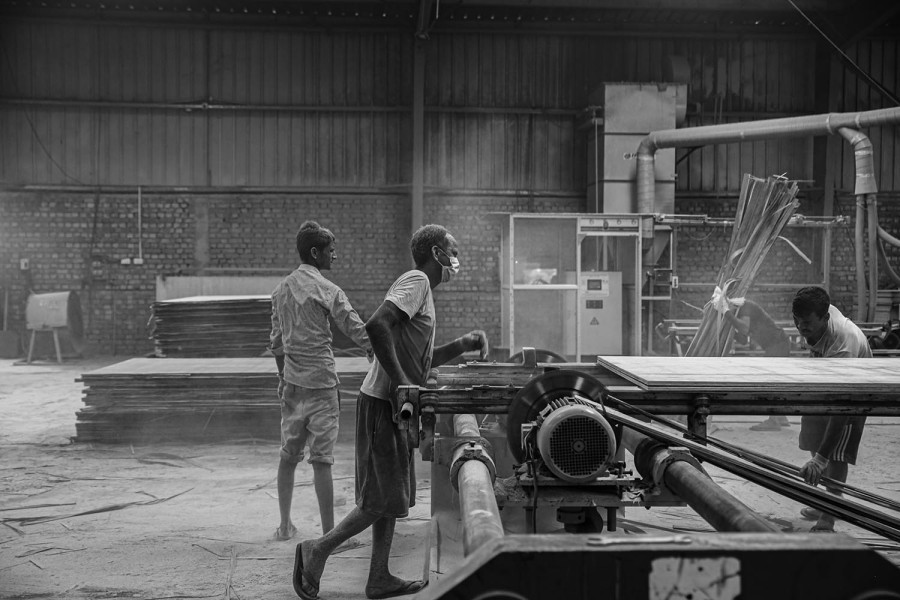
bookmark
Parbat Portel
Published at : September 24, 2026
Updated at : September 24, 2026 17:38
Biratnagar
At one time, more than 600 large and small factories operated along the Sunsari-Morang Industrial Corridor, directly employing around 100,000 people. Markets bustled alongside the industrial activity. From the country’s first jute mills to textile, plastic and steel-rod factories, they helped establish Biratnagar’s identity as an industrial city.
Today, factory chimneys in Biratnagar no longer belch smoke as they once did. Some factories have shut down, while others have cut production. Workers’ shifts have been reduced. Instead of adding new plants, industrialists and businesspeople are struggling to keep existing factories in operation.
Industrialists say factory activity has been affected by the 2015 earthquake, the subsequent Covid pandemic, the ongoing West Asia conflict and, more recently, the Bhotekoshi floods. But the biggest challenge facing the industrial sector is weak market demand.
“There is no environment for opening new factories,” says Rajendra Raut, president of the Federation of Nepalese Chambers of Commerce and Industry (FNCCI) Koshi chapter. “The federal and provincial governments are supposed to create that environment. But the expected work has not been done in that direction.”
He said the private sector still has hopes from the current government.
According to industrialists, falling market demand has forced factories to cut production. This has affected both industry revenues and employment. They say the cost of production has risen because of higher raw material prices, bank interest rates, transportation costs and competition from Indian products in the market.
Biratnagar’s commercial activity is also closely linked to markets across the Indian border.
According to Anil Sah, president of the Morang Industry and Trade Association, even minor changes in markets across the border affect trade in Biratnagar. He said many Nepalis cross the border to shop in Indian markets because of the open border.
Pawan Kumar Sharda, president of the Koshi chapter of the Confederation of Nepalese Industries (CNI), says illegal trade in border markets has put additional pressure on formal businesses.
“We are waiting to see what policy the government adopts to control smuggling,” he said.
According to him, while customs and security checks have been tightened for legitimate trade at border points, the practice of bringing goods into Nepal through illegal routes has not stopped.
“Across the border, shops are so crowded that there is hardly any room to stand,” Sharda said. “Here, traders are left sitting idle.”
From daily consumer goods to electronics and other retail products, competition from Indian markets has put Nepali businesses under pressure. Businesspeople say the formal market could weaken further unless illegal cross-border trade is curbed.
Meanwhile, industrialists and businesspeople have another source of concern. On August 2, police raided the residence of Biratnagar industrialist Prakash Mundada based on “special information.” Although the police did not find any illegal materials or money, industrialists say the incident affected the morale of the private sector.
According to former Koshi chapter president of CNI Bhim Ghimire, the private sector increasingly feels that it is under continuous pressure.
“Unless the morale of the private sector is strengthened, there is little possibility of economic activity becoming dynamic,” he said.
During the Maoist armed conflict (1996-2006), industrialists and businesspeople in Biratnagar and other major cities in eastern Nepal even left the region because of insecurity. Although the current situation is not as serious, industrialist Arun Rathi says the private sector still carries the scars of that period.
“The imprint of the Maoist conflict is still deeply embedded,” Rathi said. “The harassment and crackdown on businesspeople by the government in recent times are having a negative impact on the entire industrial and business sector.”
However, there is not only pessimism. Some new possibilities have also raised hopes. One of the most significant is the commercial operation of the cargo railway, which had remained unused for a long time.
On July 19, a cargo train carrying industrial raw materials imported from a third country arrived in Biratnagar from India’s Kolkata port. The train, which operated commercially for the first time under the Nepal-India transit arrangement, carried 40 containers.
The 7.6-kilometre railway line from Bathnaha to the Integrated Check Post in Biratnagar was jointly inaugurated on June 1, 2023, by then Prime Minister Pushpa Kamal Dahal and Indian Prime Minister Narendra Modi. Although a train arrived once on a trial basis after the inauguration, the service could not become regular because of the lack of legal and customs-related arrangements.
After the Indian government amended the rules related to the Electronic Cargo Tracking System (ECTS) under the Nepal-India Transit Treaty, the way was cleared for cargo to be transported by rail from the ports of Kolkata, Haldia and Visakhapatnam to Biratnagar. Kolkata Customs subsequently made procedural arrangements for transporting cargo to Biratnagar through Jogbani.
Since most firms in the Sunsari-Morang industrial corridor import raw materials through Kolkata port, industrialists expect regular railway services to reduce transportation costs and delivery time. According to Nanda Kishore Rathi, president of the Chamber of Industries Morang, transporting raw materials by rail could cut costs by up to around 40 percent compared with road transportation.
“This is a major achievement for factories in eastern Nepal,” he said. “If the railway service becomes regular, it can help reduce production costs.”
Industrialists believe Biratnagar’s current problems are not confined to any single sector. Market demand, raw material costs, bank interest rates, cross-border trade, customs procedures, and the private sector’s confidence in the state are all interconnected.
Therefore, rather than simply reopening closed factories, the bigger challenges are preserving the capacity of those still operating, expanding markets and creating an environment that encourages new investment.
“The government must prioritise infrastructure, cross-border trade management and industry-friendly policies to improve Biratnagar’s industrial and commercial activities,” says another prominent industrialist, Mahesh Jaju. “Only then will it be possible for the private sector to recover.”
Industrialists say Biratnagar can revive its identity as an industrial city and regain its former shine only if regular and reliable cargo rail services, efficient customs procedures, well-managed cross-border trade, control of illegal commerce and private-sector-friendly policies move forward together.
Parbat Portel
Parbat Portel is the Jhapa correspondent for Kantipur Publications.


Most Read from Money

Nepal travel agents threaten to stop selling Thailand trips over visa rules

Why does an hour long flight to Dhangadhi cost more than a flight to New Delhi?
Malaysia rejects Nepal’s demand to open recruitment to all manpower agencies

No school, but a graduation cap for women dairy farmers
Nepal arrests four medical service providers as Malaysia recruitment row deepens
Editor's Picks



E-PAPER | October 21, 2026

×