



 15.69°C Kathmandu
Sat, Oct 24, 2026
Money
Nepal’s growth holds steady at 3.85 percent despite shocks
Farm losses, protests and global tensions weigh on the economy, but remittance surge and energy output support the outlook.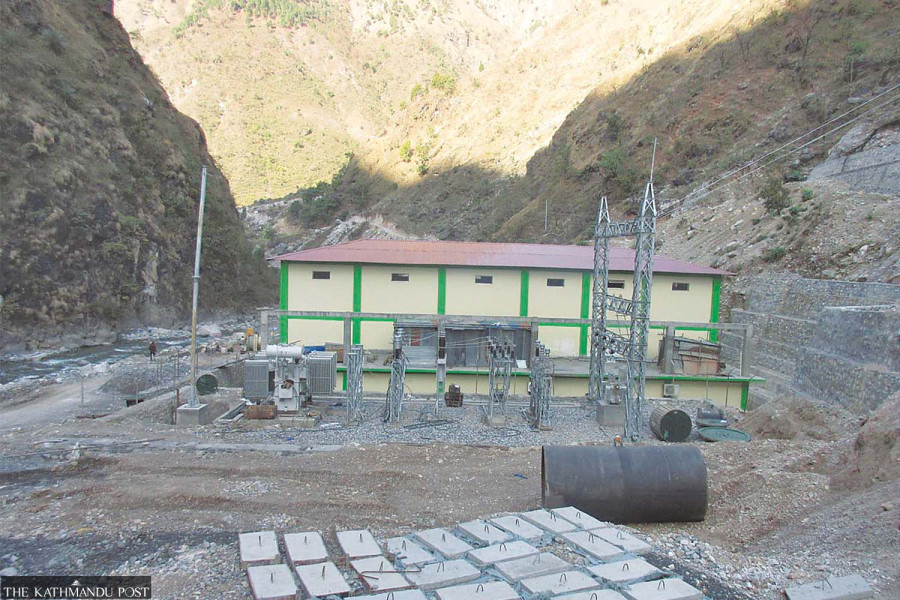
bookmark
Sangam Prasain
Published at : April 28, 2026
Updated at : April 28, 2026 20:41
Kathmadnu
Nepal’s economy has shown resilience in the face of multiple shocks this fiscal year, from heavy agricultural losses and domestic unrest to global geopolitical tensions that drove up fuel and transport costs.
Despite these setbacks, the country is projected to post a better-than-expected growth rate, surpassing forecasts made by major multilateral agencies.
According to the annual national accounts released by the National Statistics Office on Tuesday, Nepal’s economy is expected to grow by 3.85 percent in the current fiscal year ending mid-July. Although slightly lower than last fiscal year’s 4.43 percent expansion, the estimate remains stronger than projections by external lenders.
The outlook hinges on the assumption that economic activities in the remaining four months—from mid-March to mid-July—will not face major disruptions and that the impact of the ongoing West Asia conflict will gradually ease.
In nominal terms, Nepal’s gross domestic product at current prices has reached Rs6.6 trillion, an increase of Rs400 billion compared to the previous fiscal year. GDP at current price is also referred to as ‘nominal GDP’, evaluated at current market prices. It includes all of the changes in market prices that have occurred during the current fiscal year due to inflation or deflation.
The projection is based on actual economic data from the first eight months and estimates for the remaining period. While it falls short of the government’s 6 percent growth target, it exceeds the forecasts of the World Bank, the Asian Development Bank and the International Monetary Fund, which have projected growth at 2.3 percent, 2.7 percent and 3 percent, respectively.
Per capita gross national income is expected to remain unchanged at $1,535. Officials attribute the stagnation to the appreciation of the US dollar against the Nepali rupee, which offsets gains when converted into dollar terms.
Per capita GDP is estimated to decline marginally to $1,513 from $1,516 last fiscal year, reflecting modest production growth relative to population.
Consumption continues to dominate the economy, with final consumption expenditure projected at Rs5.95 trillion, accounting for 90.29 percent of GDP. This marks a decline from 93.11 percent last fiscal year, indicating a slight improvement in savings behaviour, though savings still account for just 9.71 percent of income.
On average, Nepalis spend nearly half of their income—48 percent—on food, with 19 percent going to non-food items and 33 percent to services.
Remittances remain a key pillar of the economy, projected to account for 33.02 percent of GDP, up sharply from 27.80 percent last year. Gross national savings are also expected to rise significantly to 44.77 percent from 38.39 percent.
The agricultural sector, which contributes 24.03 percent to GDP, is expected to grow by only 1.58 percent, down from 3.05 percent last year, reflecting the impact of extreme weather events.
Unseasonal rainfall in 2025, influenced partly by Cyclone Montha in the Bay of Bengal, caused widespread damage to paddy crops. The farming season was further disrupted by drought conditions during the transplantation period in June, particularly in Madhesh Province, followed by floods in October that destroyed remaining harvests.
Paddy production alone is estimated to have declined by 4.16 percent, although gains in other crops such as legumes and cereals helped partially offset the losses.
In contrast, the non-agricultural sector is projected to expand by 4.54 percent, driven largely by energy and financial services.
Electricity and gas, contributing 2.08 percent to GDP, are expected to post the fastest growth at 20.93 percent, supported by the addition of 14 new hydropower projects this year. The finance and insurance sector is also set to grow robustly at 9.16 percent.
However, sectors such as general administration and security, and education, are expected to see the slowest growth.
The manufacturing sector is projected to grow modestly by 2.83 percent, while wholesale and retail trade, including vehicle repairs, is expected to expand by 4.51 percent.
Construction growth remains subdued at 2.21 percent, unchanged from last year, reflecting weak investment sentiment. Accommodation and food services are projected to grow by 3.12 percent, while real estate is expected to expand by 2.69 percent.
Economists say the overall growth outlook reflects a recovery tempered by persistent risks.
Ram Sharan Kharel, executive director of Nepal Rastra Bank, said that the estimate aligns closely with their own projections, highlighting that the economy has managed to withstand a series of disruptions.
Nepal faced a weak monsoon at the start of the fiscal year, followed by protests that disrupted economic activity and raised concerns over political stability and the investment climate.
“Adding to the challenges, escalating tensions in West Asia pushed up fuel prices by around 50 percent, increasing transportation costs and affecting tourism and development activities,” said Kharel.
While the current projection assumes that the negative impacts of the conflict will gradually subside, officials caution that risks remain.
“The trajectory of global energy prices, domestic political stability and climate-related shocks will be critical in determining whether Nepal can sustain its growth momentum in the months ahead,” said Kharel.
Sangam Prasain
Sangam Prasain is Business Editor at The Kathmandu Post, covering tourism, agriculture, mountaineering, aviation, infrastructure and other economic affairs. He joined The Kathmandu Post in October 2009.




Most Read from Money

Why does an hour long flight to Dhangadhi cost more than a flight to New Delhi?
Nepal travel agents threaten to stop selling Thailand trips over visa rules
Malaysia rejects Nepal’s demand to open recruitment to all manpower agencies
No school, but a graduation cap for women dairy farmers
Nepal arrests four medical service providers as Malaysia recruitment row deepens
Editor's Picks




E-PAPER | October 24, 2026

×