



 14.82°C Kathmandu
Sat, Oct 24, 2026
Money
Parties court startups with big poll promises
Youth entrepreneurs welcome pledges on innovation, loans and diaspora engagement but question parties’ track record on implementation.
bookmark![]()
Despite the parties’ sweeping statements, youth entrepreneurs say similar commitments were made in the past with limited follow-through. Post Illustration
Post Report
Published at : March 1, 2026
Updated at : March 1, 2026 06:59
Kathmandu
Political parties have rolled out ambitious promises to boost Nepal’s startup ecosystem ahead of the general election, but young entrepreneurs remain sceptical, citing years of policy delays and weak implementation.
The government had first announced a Rs500 million fund for startups and innovation in the fiscal year 2015-16. However, it took seven years to finalise the working procedure and begin distributing the fund, and the definition of a startup business was only clarified last year.
Nepal’s startup ecosystem saw noticeable growth between 2016 and 2019, driven largely by youth-led initiatives in technology, e-commerce and digital services. Yet the sector struggled amid the absence of a clear policy framework, limited government support, and a series of crises, including the 2015 earthquakes, India’s trade embargo and the Covid-19 pandemic.
Following the pandemic, youth migration has surged, with both men and women leaving the country in large numbers for foreign employment and higher education, draining the domestic startup landscape of talent and energy.
After the September Gen Z-led movement against corruption and a proposed social media ban — protests that turned violent and left 77 people dead — many young voters say they are hoping for change as elections approach. Still, their optimism is tempered by doubts over whether political pledges will translate into action.
The Rastriya Swatantra Party (RSP), backed by former Kathmandu Metropolitan City Mayor Balendra Shah, popularly known as Balen, has pledged to immediately remove legal and technical barriers preventing domestic startups from connecting to global markets through international payment gateways.
The party says it will eliminate rent-seeking practices, policy corruption and artificial barriers to create a business-friendly environment that promotes innovation, entrepreneurship and fair competition.
RSP argues that if Nepal fails to achieve structural economic transformation within the next 10 to 15 years by utilising its youth-centred demographic dividend, the country risks falling into a long-term low-income trap. The party has prioritised productivity growth, skill development, capital formation and technology-based industrialisation as national goals.
To protect small investors, RSP has proposed financial literacy campaigns and mandatory automated reporting systems to ensure transparency and good governance in the financial disclosures of listed companies.
The CPN-UML has also laid out a broad startup-focused agenda. The party envisions simplifying online business operations and providing youths with concessional bank loans equivalent to $10,000 to encourage startup enterprises. It says the initiative will facilitate training and services in Artificial Intelligence, content creation, digital marketing, app development and other IT-related sectors, with a target of directing 100,000 youths towards self-employment.
The party has pledged to simplify legal provisions to allow Nepali entrepreneurs abroad to establish companies and purchase shares in foreign firms. It also promises to promote women’s entrepreneurship through concessional loans of up to Rs2 million, to be made easily accessible through banks and financial institutions, with business loans carrying free insurance coverage.
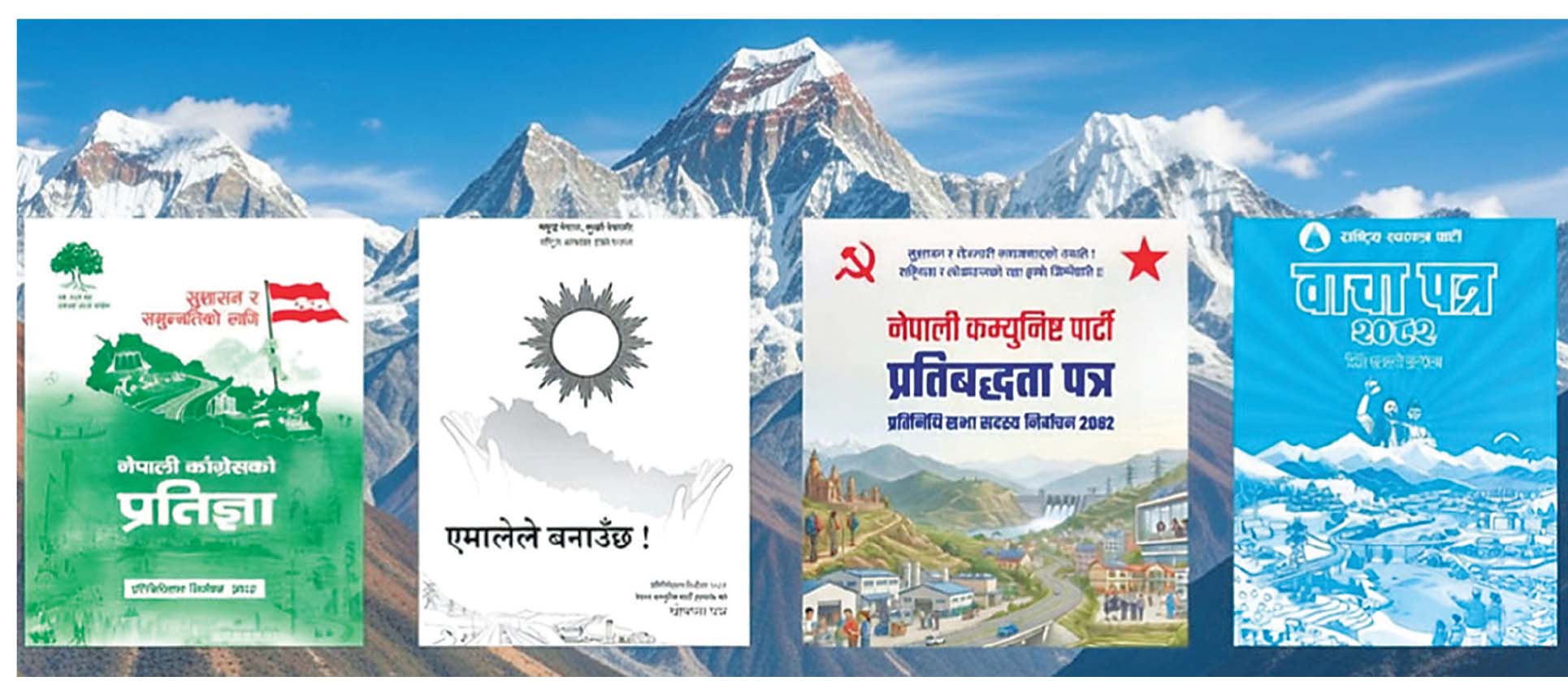
The UML manifesto emphasises expanding skill-based and practical higher education and creating opportunities in IT, digital and remote employment. It pledges to promote startups through innovation hubs and incubation centres by simplifying processes, offering tax incentives and providing initial investment support.
Additional commitments include facilitating access to mentoring networks and venture capital and coordinating with local governments to implement annual youth-centred industrial development programmes. These would include training, internships, startup support and seed capital to promote entrepreneurship.
The Nepali Congress has proposed establishing a “Brain Gain Centre” aimed at connecting the knowledge, skills and experience of youths abroad to nation-building efforts. The party says it will create an environment to effectively mobilise diaspora expertise and ensure easier access to capital and technology for returnee migrants wishing to start enterprises based on skills acquired overseas.
The party has also committed to empowering women and youth farmers with appropriate technologies, subsidies, concessional loans and digital innovation support to build a sustainable agricultural system. It pledges to ensure that women, youth, small-scale farmers and marginalised groups have access to adequate land, irrigation and modern tools, along with concessional loans delivered through digital systems.
Other commitments include improving market access, providing training and extending social security benefits to small-scale farmers, while strengthening cooperative-based savings and credit groups and community organisations.
The Nepali Communist Party led by Pushpa Kamal Dahal has promised to establish a network of technically skilled youths capable of developing software, programs and applications for foreign companies. The party has proposed launching programmes to promote technology development and exports, with government investment in technical entrepreneurship.
It also plans to form a network of youths returning from foreign employment and encourage them to establish collective or private enterprises. The party has pledged seed capital, interest subsidies, insurance discounts and technical support for such initiatives.
To promote collective entrepreneurship, it has proposed that if more than 10 youths jointly establish an enterprise, the government will provide investment participation or grants of up to 50 percent of total investment. Over the next five years, it aims to engage at least 5,000 youths in such ventures.
Despite the sweeping promises, youth entrepreneurs say similar commitments have been made in the past with limited follow-through.
“If the manifesto has been prepared through deep research and analysis and the political parties have a clear roadmap to implement it, then we can be hopeful,” said Juna Mathema, executive committee member of the Startup and Innovation Forum at the Federation of Nepalese Chambers of Commerce and Industry.
She noted that while parties often make large promises in their manifestos, implementation frequently stalls. She added that parties also need to focus on supporting and retaining existing startups, not just announcing new schemes.
Entrepreneurs say the fact that many youths decide to leave the country immediately after completing higher education reflects deep systemic failure.
Surakchya Adhikari, executive committee member at the Nepalese Young Entrepreneurs’ Forum, Kathmandu Chapter, said some work has been done in the past but not at the pace required by the rapidly changing startup ecosystem.
“There are many problems in implementation,” Adhikari said. “For instance, when I went to renew my company, officials told me to pay renewal charges despite government rules stating that company registration and renewal should not be charged.”
She added that the next government must ensure that bureaucratic systems function effectively and transparently so entrepreneurs do not feel discouraged by administrative hurdles.





Most Read from Money

Why does an hour long flight to Dhangadhi cost more than a flight to New Delhi?

Nepal travel agents threaten to stop selling Thailand trips over visa rules
Malaysia rejects Nepal’s demand to open recruitment to all manpower agencies

No school, but a graduation cap for women dairy farmers

Nepal arrests four medical service providers as Malaysia recruitment row deepens
Editor's Picks




E-PAPER | October 24, 2026

×