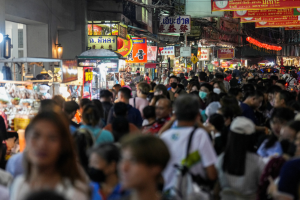
After weeks of disruption in the Valley, authorities claim distribution has improved and urge consumers to avoid panic buying. According to the Nepal Oil Corporation, there are over 10 million LPG cylinders in circulation across the country. post Photo: Bibek Pokhrel
The state-owned oil monopoly, Nepal Oil Corporation (NOC), and the Nepal LP Gas Association have said that the cooking gas shortage in the Kathmandu Valley is gradually easing, with supply expected to fully normalise within a week.
Manoj Kumar Thakur, deputy director of the corporation, said distribution of liquefied petroleum gas (LPG) has returned to normal in most parts of the Valley, except for a few areas where minor delays persist. As supply improves, panic buying has subsided, helping stabilise distribution.
“Cooking gas supply is normalising, so there is no need for consumers to hoard cylinders,” Thakur said. “Once consumers stop hoarding, the distribution system will function smoothly.”
Amid the deepening shortage over the past few weeks, LPG bottlers had arranged a temporary depot at the corporation’s Teku office, from where cooking gas has been distributed for the past week. Major brands including Nepal Gas, Everest Gas and Sugam Gas are being supplied through the Teku facility to ease pressure on retail outlets.
Thakur said there is now less consumer pressure at the Teku office compared to previous days, indicating that the market situation is gradually stabilising.
According to the corporation, around 100 gas bullet tankers are currently receiving customs clearance and entering Nepal through southern border points. Under normal circumstances, the Kathmandu Valley consumes between 40,000 and 45,000 LPG cylinders daily. At present, more than 45,000 cylinders are being supplied to meet accumulated demand.
A total of 23 LPG bottlers are supplying cooking gas to the Valley, most of them located in Dhading and Chitwan districts.
Officials said that not only households but also commercial users—particularly hotels and restaurants—appear to have stockpiled cylinders during the shortage. Despite widespread complaints from households, no major hotel or restaurant reported shutting down operations due to lack of cooking gas, the corporation noted.
The NOC has directed LPG bottlers not to provide two cylinders to a single customer through dealers, to refrain from creating artificial shortages, and to distribute cylinders strictly based on need.
As of February 15, the corporation said it had received 26,000 tonnes of LPG out of a monthly quota of 45,000 tonnes.
Diwan Bahadur Chand, president of the Nepal LP Gas Association, the bottlers’ lobby, said customers may still need to wait a day or two to obtain a refill, but the situation has significantly improved compared to a week ago.
“It may take about a week before customers can get a cylinder anytime they visit nearby stores,” Chand said. “Supply is easing day by day.”
For nearly a month, consumers across the Valley reported difficulties obtaining LPG cylinders, despite repeated assurances from the corporation and LPG suppliers that overall supply remained normal. The shortage disrupted daily life, forcing many families to queue for hours or visit multiple outlets in search of refills.
Last Monday, the corporation issued a public notice listing contact numbers of major LPG brands reportedly facing shortages in the market, including Nepal Gas, Everest Gas, Sai Baba Gas and Shree Krishna Gas in the Kathmandu Valley. Consumers were urged to contact the companies directly or purchase cylinders from factories if they encountered problems at retail shops.
Industry representatives attributed the supply disruption to maintenance work at the Barauni refinery in India during November and December. The temporary shift to an alternative refinery created logistical challenges, including delays in obtaining transport permits, which they said disrupted regular supply chains.
The shortage initially surfaced with Nepal Gas, which holds the largest consumer base in the country. Disruptions linked to the Barauni refinery maintenance, combined with internal conflicts within the company, affected its distribution network.
The unavailability of Nepal Gas cylinders triggered panic among consumers, contributing to what officials described as a “shortage-like situation,” even though overall LPG stock levels were said to be adequate.
According to the corporation, there are over 10 million LPG cylinders in circulation across the country. Of these, around 3 million are with consumers, 3 million are at bottling plants for refilling and another 3 million are in the distribution chain. Filling 3 million cylinders requires approximately 45,000 tonnes of LPG per month, officials said.
Observing the persistent shortage and rising public complaints, the Department of Commerce, Supplies and Consumer Protection formed a dedicated market inspection team to monitor LPG distribution in different parts of the Valley after consumer rights activists filed complaints.
Authorities say with fresh consignments entering the country and tighter monitoring of distribution, the supply situation is expected to stabilise fully in the coming days, provided consumers refrain from hoarding and dealers comply with distribution guidelines.




 25.92°C Kathmandu