FDI commitments see over 52 percent rise despite political uncertainty
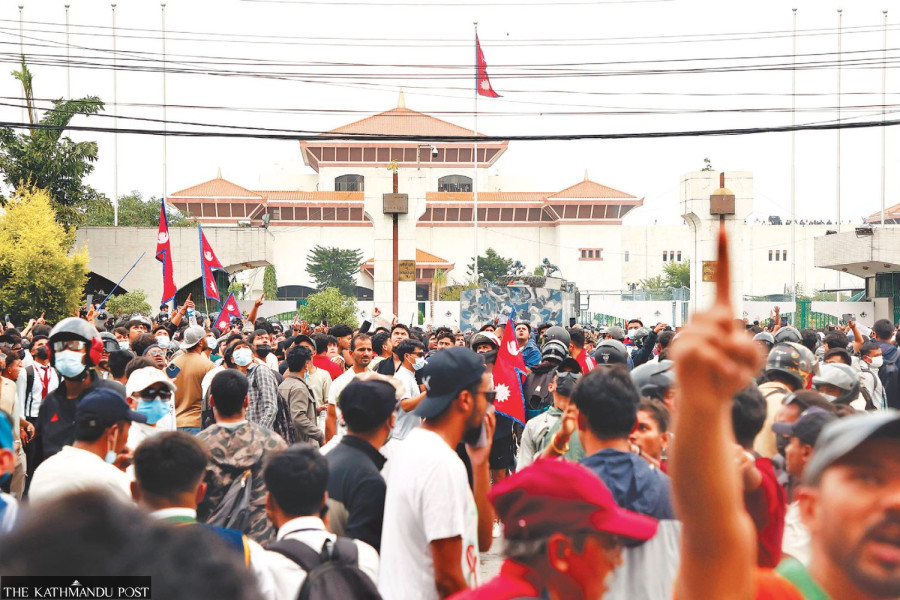
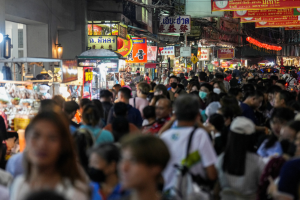
Industrialists call for a conducive investment climate to better utilise Nepal’s growing cash reserves.The private sector has repeatedly warned that the post-protest environment has eroded investor confidence. POST FILE PHOTO
Foreign direct investment (FDI) in Nepal increased by 52.11 percent in the second quarter of the current fiscal year.
According to the Department of Industry, Nepal received FDI commitments worth Rs39.25 billion across 476 projects in the first six months of the current fiscal year until mid-January. This marks an increase from Rs25.79 billion committed through 355 projects during the same period last fiscal year. The committed investments are projected to generate employment for 20,122 people.
These improved figures come despite global geopolitical uncertainty pushing investors to safe-haven assets, particularly commodities, as long-term secure investments, said Gunakar Bhatta, former executive director of Nepal Rastra Bank.
The post-election political configuration and the ability of the new government to assure and attract international investors will determine Nepal’s FDI prospects in the coming years, Bhatta said.
Large-scale industries accounted for the bulk of commitments, attracting Rs23.14 billion across seven projects. Small-scale industries received Rs13.72 billion through 460 projects, while medium-scale industries secured Rs2.39 billion from eight projects.
Sector-wise, agro and forestry topped the list with Rs21.88 billion committed for 13 projects. Tourism followed with Rs10.54 billion across 145 projects. The services sector received Rs3.48 billion for 32 projects, while manufacturing attracted Rs2.03 billion for 24 projects. The information, communication and technology sector saw commitments of Rs1.07 billion across 257 projects, while the energy sector received Rs184.25 million for a single project.
Despite the commitments, the actual inflow of FDI remains low. According to Nepal Rastra Bank, net FDI inflows stood at Rs7.47 billion in the first five months of the current fiscal year until mid-December.
Nepal is scheduled to graduate from the least developed country (LDC) category in November next year, a transition that experts say will increase the need for foreign capital. To achieve its goal of becoming a middle-income country by 2026, Nepal would require around $20 billion in annual FDI—an almost impossible target under the current circumstances, economists say.
The private sector has repeatedly warned that the post-protest environment has eroded investor confidence. Without a secure investment climate and consistent policies, economic activity is unlikely to recover.
Without political stability, economic activity will not improve, Kamlesh Kumar Agrawal, president of the Nepal Chamber of Commerce, recently told the Post. Despite its record-breaking foreign exchange reserves, investment in Nepal is not happening as expected, he noted.
Nepal’s foreign exchange reserves surged to an unprecedented Rs3.2 trillion by mid-December 2025—more than half of the country’s gross domestic product (GDP)—underscoring a paradox at the heart of the economy: ample liquidity amid sluggish growth, weak investment and widening job deficits.
Editor’s note: An earlier version of the news erroneously reported that foreign direct investment (FDI) in Nepal declined by nearly 40 percent in the second quarter of the current fiscal year. Actually, the FDI commitments saw an increase of 52.11 percent in the period. We deeply regret this breach of our readers’ trust.




 20.58°C Kathmandu