



 14.81°C Kathmandu
Sat, Oct 24, 2026
Money
Few small businesses in Chitwan and Makawanpur using digital technology
A study by the central bank of micro, small and medium enterprises finds most firms face credit constraints and are affected by economic and political instability.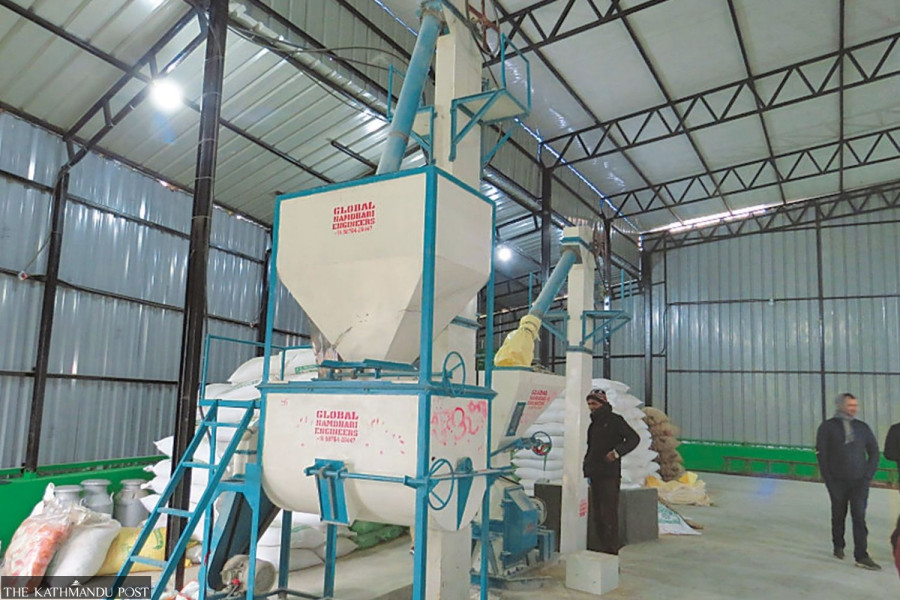
bookmark
Post Report
Published at : January 13, 2026
Updated at : January 14, 2026 07:46
Kathmandu
Very few micro, small and medium enterprises in Chitwan and Makawanpur districts view technology positively, indicating the need for more support in digital and technological capacity building, according to a study by the central bank.
According to a study report titled ‘Present Situation of Micro, Small and Medium Enterprises (MSMEs) in Chitwan and Makwanpur’ published by the research unit of the Nepal Rastra Bank, Birgunj Office, on Tuesday, just 17.8 percent of MSMEs view technology use positively.
NRB’s Birgunj office surveyed 321 MSMEs from Chitwan and Makawanpur to identify various characteristics of enterprises during the last fiscal year.
The two districts collectively host 45,278 establishments, which is 4.9 percent of total national establishments, and employ 151,209 people, accounting for 4.7 percent of national employment, as per the National Statistics Office’s survey of 2020.
“The problem of digital technology adoption is not limited to MSMEs of the two districts, but affects MSMEs across the country. As most investors are small capital holders, there is a lack of skill to use digital technology,” said Narendra Kumar Khadka, chairperson of the Cottage and Small Industry Committee of the Federation of Nepalese Chambers of Commerce and Industry.
He added that digital technology is often not user-friendly, and most business operators in rural areas find it difficult to adopt.
The report showed that 45.5 percent of MSMEs rated overall technology adoption as average, while 36.8 percent rated it bad to very bad, reflecting a moderate but insufficient technological integration.
MSMEs in Chitwan and Makawanpur use digital technology mostly in payment and production activities. Usage in production, marketing, payment, accounting, administration, and other areas was mostly rated average or bad, with very few rating it good or very good.
Most MSMEs view the overall macro environment in the country as having low to high negative impact on their business. The study showed 40.8 percent of MSMEs rated the overall macro environment as having a low negative impact, while 25.1 percent perceived a high negative impact, showing widespread concern over instability, the report said.
Economic, political, and social instability were cited as major challenges that cause delays in investment decisions and increase the preference for saving. The report states that stability in all sectors builds trust among investors and consumers.
Khadka said frequent changes in the country’s political situation have a negative impact on MSMEs. Since the Covid pandemic, frequent policy changes have created difficulties for enterprises.
A high number of MSMEs rated overall credit finance as bad to very bad.
The report showed that 44.6 percent of MSMEs considered credit finance bad to very bad, which reveals their dissatisfaction with overall credit finance.
Interest rates were the most critical issue, with 43.3 percent rating them poorly, followed by repayment status (31.3 percent) and procedures (29.3 percent).
The report also showed that digital financial services work best when other sectors also adopt digitisation and procedural reforms, especially in credit assessment and collateral management.
Digital literacy and digital financial literacy also play a role in increasing demand for such services, the report said.
The government and central bank have initiated various programmes with the aim of supporting the establishment and growth of MSMEs. However, the report said, their effectiveness has been measured only occasionally and is limited by various factors.
The report said that personal savings are the primary source of funding for MSMEs, followed by credit from banks and financial institutions. But reliance on personal savings tends to decline as the business progresses.
There has been little change in how MSMEs use cooperatives, business loans, and other funding sources, suggesting that financing habits remain consistent, the report said.
Small firms are more likely to shift from personal finance to credit finance as a source of funding, while medium-scale firms reduce reliance on cooperatives.
Despite playing a central role in the local economy and employment, these enterprises are operating at approximately half of their potential capacity, with significant dissatisfaction reported regarding administrative complexities, high tax burdens, and labor market rigidities, the report stated.
While physical infrastructure such as road transport and communication is perceived positively, these facilities alone have proven insufficient to drive business growth in the face of rising operational costs and regulatory hurdles.
The study identifies economic and political instability as strong negative determinants, indicating that frequent policy shifts and macroeconomic volatility are severely hampering business confidence and expansion.
Conversely, the empirical results highlight that labor availability, technology adoption, and government incentive support are the most significant positive drivers of performance, the central bank report said.
In Nepal, MSMEs account for 99.8 percent total establishments (923,356 establishments), 84.7 percent of the total persons engaged (3,228,457 persons), 62.2 percent of total annual sales (Rs2915.6 billion), and 99.96 percent of the female-managed establishments (273,436), according to National Statistics Office’s report in 2020.
In terms of distribution by industrial sectors, a large proportion of MSMEs—53.9 percent—operate in wholesale, retail, and repair services, followed by 14.1 percent in accommodation and food services, and 11.3 percent in manufacturing.
Meanwhile, education and health services emerge as dominant sectors for small and medium-sized enterprises.




Most Read from Money

Why does an hour long flight to Dhangadhi cost more than a flight to New Delhi?
Nepal travel agents threaten to stop selling Thailand trips over visa rules
Malaysia rejects Nepal’s demand to open recruitment to all manpower agencies

No school, but a graduation cap for women dairy farmers
Nepal arrests four medical service providers as Malaysia recruitment row deepens
Editor's Picks




E-PAPER | October 24, 2026

×