Jumla students work as porters in Kedarnath to fund higher studies
Financial hardship drives youths from Sinja to India’s pilgrimage route, where earnings are higher but work is physically demanding and risky. Post photo
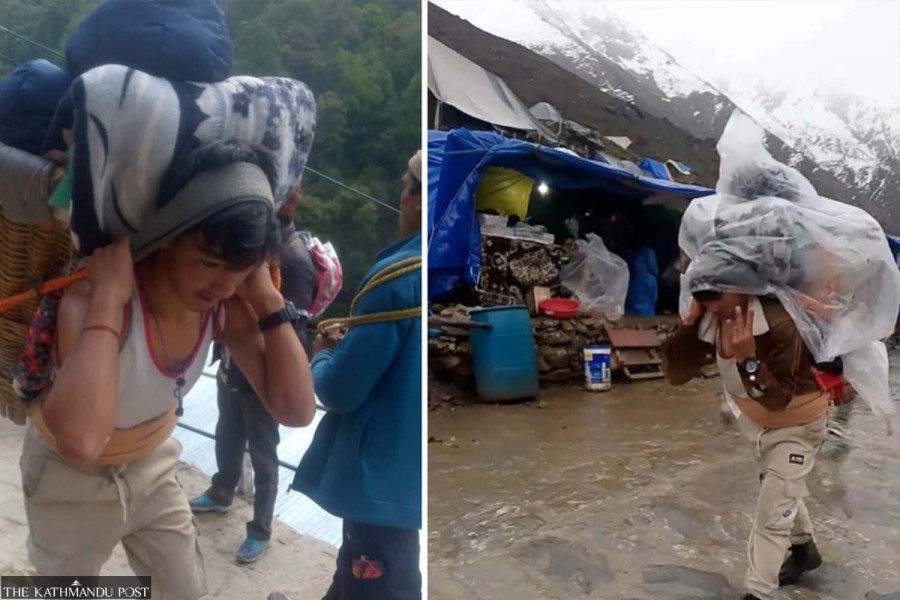
Bhim Bahadur Rawat from ward 6 of Sinja Rural Municipality, Jumla, is currently in the mountainous region in the Indian state of Uttarakhand, working as a porter during the Kedarnath pilgrimage season. He left home in mid-April to earn money to support his undergraduate studies after completing Grade 12.
He carries pilgrims on the steep 22-kilometre uphill route from Gaurikund to Kedarnath, where thousands of devotees travel daily during the annual pilgrimage season. With demand for porters surging, he said he starts work early each morning, waiting for pilgrims and taking on loads based on his capacity.
He earns between 5,000 and 15,000 Indian rupees a day, depending on the number and weight of passengers. In peak cases, he said, carrying heavier pilgrims brings significantly higher pay.
“At this age, I should be going to college carrying books,” he said. “But because of financial hardship, I am here carrying people in a foreign land.”
Bhim Bahadur is one of several students from his village working in Kedarnath. According to him, wages are determined by body weight. Carrying an 80 kg pilgrim earns about 22,000 rupees, a 70 kg person around 15,000 rupees, and lighter loads between 10,000 and 12,000 rupees.
“I can carry only those between 45 and 70 kg,” he said. “This is not an easy job. It takes strength, balance, and endurance.” He added that after expenses and seasonal fluctuations, he is often left with savings of just 2,000 to 3,000 rupees when returning.
He previously studied in Surkhet but said rising living costs and rent made it unsustainable to continue. “I had no option but to come here,” he said.
He plans to stay in Kedarnath from April through October, the main pilgrimage season. He plans to return home in winter and attend tuition classes.
Another young man from the same village, Hari Bahadur Rawat, has also completed Grade 12 and hopes to pursue a bachelor’s degree. He is currently working to finance his education.
“If I don’t work, I cannot even afford food,” he said. “Education feels very far right now. I plan to return home during Dashain after saving some money.”
Their friend Ramesh Rawat is also working in Gaurikund with similar hopes of earning for higher studies.
Nepali workers in the area said Kedarnath offers comparatively higher earnings than other parts of India during the pilgrimage season. Some said what they earn in a month here would take nearly a year elsewhere. But the work is physically demanding and risky, involving carrying elderly pilgrims, children, and those unable to walk up the steep trail.
At present, more than 30,000 Nepalis are estimated to be working in Kedarnath during the April–October pilgrimage season. Workers from Jumla alone are believed to number between 8,000 and 15,000, according to those on the ground.
Kedarnath Temple, one of Hinduism’s four major pilgrimage sites in India, draws more than 35,000 pilgrims daily during peak season. Those unable to walk are carried in palanquins supported by four people, basket carriers operated by one person, or on horseback.
Min Bahadur Rawat, another worker from Jumla, said the lack of local employment is pushing young people abroad for seasonal work.
His wife is preparing for the civil service examination in Surkhet. “We cannot live together while we are studying due to financial pressures,” he said. “I plan to return home after five or six months of work.”
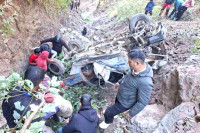
He also referred to a deadly landslide in 2023 when nine people, including seven members of a single family from Chaurgaun in Jumla, died in the Kedarnath area.
“There are earning opportunities here, but the risks are equally high,” he said. “Every year we leave hoping not to come back, but circumstances force us to return.”




 24.91°C Kathmandu