The youth must occupy spaces that actually dictate policy
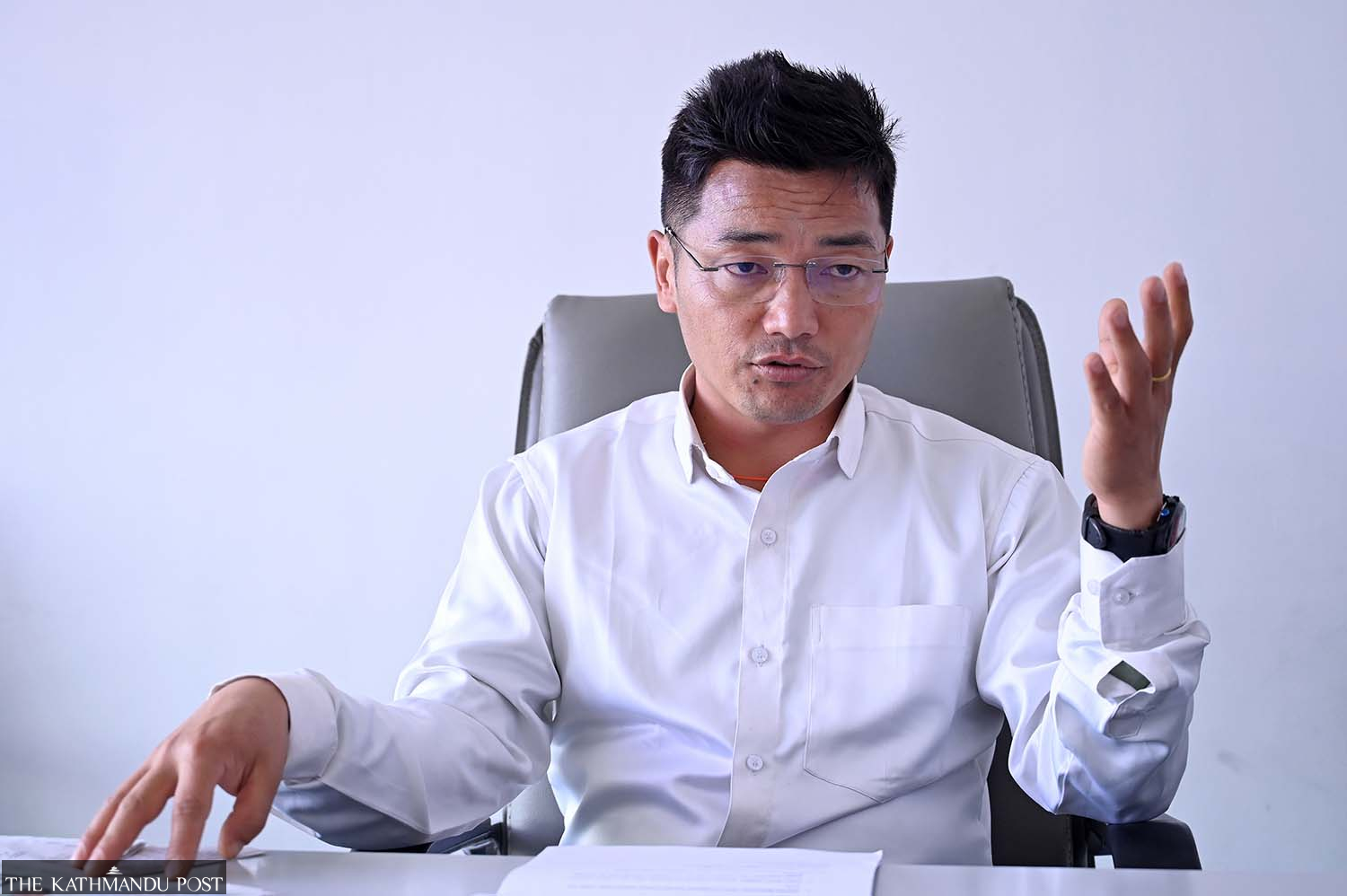
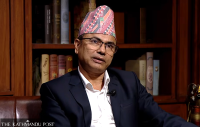
The future of the Nepali Congress depends on its ability to evolve while staying rooted in its values Nishcal Rai, a Member of Parliament Angad Dhakal/TKP
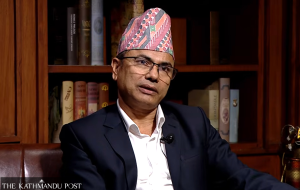
At 35, Nishcal Rai carries the weight of a generation that is no longer content with the status quo. Recently elected as the Member of Parliament from Ilam-1, Rai stands as one of the youngest directly elected representatives from the Nepali Congress, a party often criticised for its geriatric leadership. His victory comes at a time when Nepal’s political landscape is shifting beneath the feet of the traditional elite, driven by the Gen Z spirit and a demand for tangible service delivery over abstract ideology.
In a conversation with The Post’s Biken K Dawadi, Rai discusses his journey from the grassroots to the federal parliament, the internal fractures within the Congress, and his vision for bridging the gap between the institutional memory of the old guard and the innovative energy of the youth. Excerpts:
You are one of the under-35 leaders heading to the federal parliament. Beyond the celebratory atmosphere of your victory, what are the core emotions and pressures you are feeling as you prepare to take your seat?
It is a mix of profound responsibility and a clear-eyed recognition of the challenges ahead. While there is a natural sense of achievement, it is immediately tempered by the massive expectations of the voters. We are currently facing what I call a ‘delivery gap’—a systemic failure where the previous styles of politics and traditional methods of governance have failed to meet the public’s needs. My primary focus isn’t just on the prestige of the office, but on addressing those failures and working tirelessly to bridge that gap.
You’ve talked about the delivery gap. We noticed a major departure in this election cycle where voters seemed to care less about ideological principles and more about immediate service delivery. As a young representative of a party with deep ideological roots, how do you reconcile these two worlds?
It is true that a significant portion of the electorate has become stuck purely on the delivery aspect, moving away from abstract ideology. However, as a young MP, I see my role as that of a bridge between these two requirements. We must bridge the gap between the institutional experience of the old guard and the new thinking of the youth; between national policy and the people on the ground; and between local realities and federal decisions. We need to transform the Congress into a forward-looking institution that is more accountable and policy-driven. While people want delivery, we cannot abandon ideology; we must work on both simultaneously.
Let’s talk about the party’s internal health. Before the election, there was significant talk about Congress 2.0—a reformist push to present newer faces. Yet, many critics dismissed this as a mere face-saving tactic. The election results seemed to reject Congress 2.0. What is your reading of this?
The perception that Congress had become a status-quo-oriented party is, in many ways, true. We are an old democratic party with a strong institutional memory, but in today’s context, that memory must be complemented by innovation and responsiveness. We did try internal reforms, but we failed to effectively communicate the reformation to the people. We couldn’t deliver the message of change clearly enough, and that is why we saw the results we did. The path forward is not to reject the party’s legacy, but to modernise our approach. We must make our policies crystal clear, strengthen internal democracy, and move toward a model of performance-based leadership.
You mentioned the vitality of youth integration. Is this just about having young faces on posters, or is there a deeper structural change happening?
We are not looking for the symbolic inclusion of youth; we are demanding meaningful involvement in decision-making roles. The party must evolve from being personally driven to institutionally driven. This means youth must occupy spaces that actually dictate policy. We need to foster a mechanism that is transparent and based on merit rather than patronage. To do this, we need to lean heavily on research, data and sectoral expertise.
There is a lot of buzz behind the scenes about your potential roles. We’ve heard rumours that you are being considered for a position as a Whip, Chief Whip, or even the leader of the parliamentary party. These are roles usually reserved for leaders over 60. How are you navigating these rumours?
I have heard these rumours as well. Ultimately, the Congress operates on democratic values and collective decisions. The central party leadership will need to reach a consensus on these appointments. However, if given the opportunity, I am ready. I believe I represent a generation that combines vision with a deep connection to the people. I have shown leadership during challenging times, proving I can make responsible choices. If the party believes I can bridge the gap between traditional and modern governance and help build public trust, I will embrace that responsibility.
Looking back to the Gen Z protests of September 8 and 9, many see that movement as the real engine behind the party’s Special General Convention. Do you think this generational shift would have been possible without that external pressure?
The reforms within the Congress are undeniably rooted in the spirit of the Gen Z movement. While I respect leaders like Gagan Thapa and Bishwa Prakash Sharma for their earlier attempts to initiate change, it perhaps happened a bit late. Thapa has contributed significantly by bringing policy debates and accountability into the public sphere. But we must remember that the Congress is a large, diverse party where direction is set by collective leadership and institutional processes, not just individuals. The emphasis now must be on team-based leadership that reflects both reform and continuity.
Angad Dhakal/TKP
We’ve seen reports of the Nepal Student Union (NSU) distancing itself from the mother party. As someone who rose through the ranks of these sister organisations, how do you view this departure? Is it a healthy reform or a sign of fragmentation?
Leaders have their own perceptions, but we must always remain clear on our core ideology: democracy, inclusiveness and balanced economic progress. While some organisations may feel they are distancing themselves, no one can—or should—go beyond the institutional process. We need to be more articulate and forward-looking, but we must stay within our core values. The leadership needs to rethink how we maintain institutional integrity while allowing for diverse viewpoints.
Some candidates elected recently, especially from the Rastriya Swatantra Party (RSP), are being criticised for being well-educated but disconnected from the grassroots reality. How do you find the balance between your academic background and the reality of the voters?
The rise of parties like the RSP is a natural development in any democracy. We should welcome competition based on ideas and performance. However, the real challenge is connectivity. In the past, we failed to connect people’s expectations with the leadership. My advantage is that I live among my constituents; I understand the ground reality. To balance education with grassroots needs, we must work on the institution’s capacity for effective delivery. Being well-educated is only a tool to better translate the citizens’ voices into measurable outcomes.
With the ruling alliance potentially holding a two-thirds majority, there is a fear that the opposition will be sidelined. How do you plan to ensure a vocal and effective opposition?
Even if the government is near a two-thirds majority, democracy requires a robust opposition. The Congress will be a very strong opposition. A strong opposition does three things: it holds the government accountable, it improves policy through constructive critique, and it represents public concerns effectively. We will not criticise for the sake of criticism; we will support policies that benefit the country while questioning every decision that does not. Accountability is about the strength of the argument, not just being loud.
Do you truly see a future where the Congress can bounce back from its recent setbacks?
I definitely believe in a revival, but it requires more than just talk. We must move from symbolic inclusion to meaningful participation in decision-making. The future of the party depends on its ability to evolve while staying rooted in its values. If we combine our democratic legacy with accountability, innovation, and delivery, we will remain central to Nepal's political future.
As a youth leader, what are the specific issues you refuse to let fall through the cracks in parliament?
I am focused on national growth driven by productive sectors rather than just consumption. We need to shift away from our dependence on remittance, toward democratic productivity and job creation. This means focusing on agricultural value chains, tourism, small and medium enterprises (SMEs) and the digital economy. These are the keys to a sustainable future for Nepal’s youth.
You represent Ilam-1, a district that elected two young MPs. What specific message are the people of Ilam sending to Kathmandu?
Ilam has set a great example for all parties: The youth need to be at the forefront. I am honoured by the trust my constituents have placed in me. Even for those who did not vote for me, I am their representative. I need to consult with them, look at the manifestos of other parties, and integrate those ideas. We cannot change everything within the flick of a finger, but we can work on sustainable policies.
What are the economic levers you want to pull for your constituency?
Ilam-1 has incredible potential in high-value crops like tea, cardamom and coffee. We also have massive opportunities in tourism, dairy products and the digital economy. The demand for infrastructure is high, but we must work as a team—not just one MP, but the entire community—to achieve this.
Your father is a tea farmer. As a son of a farmer, what are the systemic failures in Nepali agriculture that you intend to challenge?
The primary issues are market access and lack of value addition. We produce crops, but we fail to develop them into high-value products. Farmers face constant struggles with the timely availability of fertilisers and the lack of a progressive pricing system. But the biggest issue is crony capitalism. This isn’t just an agricultural problem; it’s a national crisis. The government must make dismantling these exploitative structures its first priority.
There is significant friction within the party. The Deuba camp still holds sway, and some don’t even recognise the Special General Convention. How can the party function if it is constantly at war with itself?
Differences in opinion are natural in a large democratic party. The key is how those differences are managed; they should be handled constructively to strengthen the party’s decision-making. I believe our leaders will negotiate and reach a consensus. Our focus must be on a unity of purpose.
You talk about collaborative leadership, but the old guard carries the baggage of past scandals and crony arrangements. How do you navigate their influence without becoming part of the problem?
A generational shift is not about one group replacing another; it’s about combining experience with new energy. We must focus on collective leadership rather than individuals. We have to learn from the mistakes of the past, such as the controversies surrounding the Proportional Representation (PR) candidate list. That list was prepared before our reforms and was widely criticised for nepotism. These mistakes are lessons in institutional maturity. We must improve our candidate selection and enhance our policy capacity so these errors aren’t repeated.
We’ve seen new faces being given chances by the Congress this time. How do we ensure this isn’t a one-time occurrence?
The younger generation must prove their worth through accountability and a deep understanding of the party’s core principles. It is a big challenge for me to raise my voice effectively in parliament. If I can be a loud and accountable voice for the people, for human rights, and for national prosperity, it will prove that the youth belong in these roles. If we do better, the party will have no choice but to continue involving the youth so they don’t eventually overtake the institution from the outside.
On a more personal note, you have a very calm, almost low-toned way of speaking. In a parliament that often rewards the loudest shouter, do you fear this will be a drawback?
My nature is a product of my culture and my community; in Ilam, people often speak in a lower tone. There is a viral negative mindset in Nepal today, where people expect a leader to have a high volume, a high pitch, and to constantly criticise everyone. We need to change that. We don’t need a louder voice; we need an accountable one. In parliament, the microphone will be right in front of my desk; I don’t need to shout. It’s the content of the words that matters, not the pitch of the voice. I will let my arguments and my work speak for themselves.




 13.8°C Kathmandu