Those in power now may avoid probe of their own action
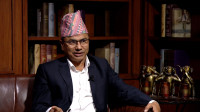
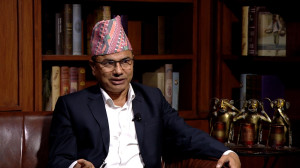
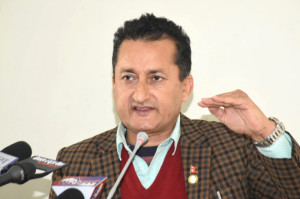
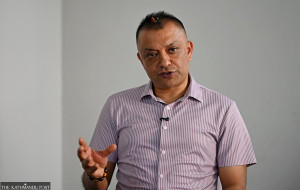
The Karki Commission stepped outside its scope and its members failed to understand their primary mandate. Arnab Chaudhary, Gen Z activist advocate Post Photo: Deepak KC
In the wake of the high-profile arrests of former Prime Minister KP Sharma Oli and former Home Minister Ramesh Lekhak on the second day of the Balen Shah-led government, the political landscape of Nepal is in a state of flux. Yet the report of the commission formed to investigate the Gen Z protests, on which these arrests were made, is yet to be made public.
The Post’s Biken K Dawadi sat down with Gen Z activist advocate Arnab Chaudhary, who has been continuously demanding that the full report be made public, to dissect the legal nuances of the arrests, the contradictions within the Karki report, and the long road to justice for the victims of the state brutality in September. Excerpts:
Why has the publication and implementation of the Gauri Bahadur Karki Commission report become the central pillar of your activism recently?
Our campaign at Maitighar, where we sit daily with fellow Gen Z activists, is rooted in a fundamental demand for accountability. If you look at the history of this country—whether it is the Rayamajhi Commission report or the Lal Commission report over the Madhesh protests—the pattern is clear: The state spends massive resources on investigations that ultimately lead nowhere. In any democracy, there must be a system of checks and balances because power, by its very nature, tends to corrupt.
When a leadership becomes ruthless to preserve its own survival, it often resorts to excessive force. Whether it is the loss of life, injuries to citizens, or the destruction of private and public property during the Gen Z protests, people have a right to know the truth. We are advocating for a precedent where no one, regardless of their status, is immune from the law. An investigation must be impartial, conducted by qualified individuals, and its findings must be made public so that justice is not just done, but seen to be done.
The movement reached its peak on September 8 and 9. Looking back at those two days, how do you characterise the state’s response, especially given the claims of ‘infiltration’ that complicated the narrative?
Our generation led that movement, but on the 8th and 9th, we believe there was significant infiltration by impostors who played a role in escalating the violence. This led to a catastrophic series of events where we saw our friends falling right in front of us. The autopsy reports were chilling; most of the deceased had gunshot wounds to the head and chest. This wasn’t just crowd control; it looked like a massacre. We saw minors in school uniforms lying dead on the streets, killed by state-issued bullets. As an advocate, I am careful with my words, but I cannot call it anything other than a mass killing orchestrated by those who abused their power within the state structure. There was a mind behind that force, and that is why we demanded an investigation. This led the then-civilian government under Prime Minister Sushila Karki to form an investigation committee under Gauri Bahadur Karki.
You’ve mentioned that your group remained quiet during the transition period despite your demands. Why was that?
The commission was given an initial three-month window, which was later extended by another three months. Our expectation was that those with ‘malicious intent’—the masterminds behind the violence—would be barred from the democratic election process. We wanted clean candidates, not individuals under the shadow of criminal investigations, to lead the country. However, we were in a very fragile, transitional state. We feared that if we pushed too hard during the elections, it could lead to further instability, so we remained somewhat quiet while continuing to raise our voices for the report’s release. Even now, the official report has not been made public by the government.
As the report hasn’t been officially tabled, we are relying on leaks. What are your primary critiques of the report’s content? Does it actually address the core issues of the September protests?
There are several problematic aspects. First, it seems excessively focused on the events of the 8th, perhaps neglecting the broader context. More importantly, the report is not written in a way that the general public can easily digest. It touches upon widely divergent topics like reforms in the postal service and parliamentary improvements. While those might be important for the state, they are trivial compared to the primary concern: Justice for those who were killed and those who lost their property. It feels as though the commission stepped outside its scope or failed to understand its primary mandate. We haven’t seen the Terms of Reference (ToR) provided by the government, which would clarify what they were actually asked to investigate. Furthermore, the report seems to rely heavily on media reports, some of which are biased, rather than digging deeper into the facts.
You’ve also pointed out internal contradictions in the document. Could you elaborate on those?
The report contradicts itself in several places. For instance, regarding the events of the 8th, the findings seem to be based almost entirely on the testimony of police officials, like the then chief of the Kathmandu District Police Range, SSP Bishwa Adhikari. It feels like the researchers started with ‘driving questions’ that were designed to lead to a specific conclusion rather than an open-ended investigation. There is also heavy criticism because the report largely ignores the events of the 9th.
The government is now talking about forming a separate committee to investigate the events of the 9th, but doesn’t that just delay justice even further? By separating the two days, you miss the after-effects of the 8th on the 9th. There were people on the 9th who weren’t even part of the original protest. We need to know who the provocateurs were—those on platforms like Discord who were allegedly teaching people how to make bombs and use chemicals. The report is superficial; it cites articles from Kantipur Daily about Discord but fails to track down the admins or the actual individuals behind those digital handles.
There is a lot of talk about Gauri Bahadur Karki himself. Some argue he was biased from the start.
Yes, many have raised questions about his impartiality, particularly because of his social media activity during the protests. His tweets created a perception of bias. Furthermore, by excluding the 9th from the scope, the report avoids implicating the leaders currently in power.At the time, some of the leaders who are now elected to the Parliament were protesting on the streets. Leaders and cadres of the Congress and the UML, the parties in power during the protests, would obviously criticise any report that didn’t look at the violence on the 9th from their perspective. This is something the current government or any intelligent administration should have anticipated; the political climate in Nepal is constantly shifting, and using brute force to maintain power is a mindset that still persists among the leadership.
Let’s get into the legal mechanics. The report recommends action under Sections 181 and 182 of the Criminal Code against Oli, Lekhak, and the then-IGP Chandra Kuber Khapung. As a lawyer, can you explain what these charges entail?
The report essentially accuses the state of gross negligence and recklessness. The state has a duty to ensure the safety of protesters and provide a ‘safe landing’ for any movement. Instead, there was a failure to follow the standard escalation of force—moving from batons to tear gas to water cannons. No one, not even a criminal, can be deprived of their life without the due process of law. As a signatory to international human rights treaties, our nation cannot justify the killing approach over a protective approach.
Under Section 181, if someone causes death through negligence, they can face three to ten years of imprisonment and a fine of Rs30,000 to Rs100,000. It’s a serious charge. However, the law also looks at Mens Rea (intent) and Actus Reus (the act). The ‘act’—the killing—is undeniable. The ‘intent’ is where it gets complicated. Was it just negligence, or was there an order to ‘hit them’? Oli has publicly denied this, often asking rhetorically whether he was the one holding the gun. But in legal terms, those in power don’t pull the trigger; they command.
What about Section 177? That seems much more severe.
Section 177 is clear: No one shall kill with intent. If you shoot someone in the head or chest, you know death is the likely outcome. Even if you claim you only meant to injure them, if they die from that specific wound, the law treats it as intentional killing. The penalty for this is life imprisonment, which is the maximum sentence in our criminal justice system. Section 178 also states that if you perform an act knowing it is likely to cause death, you are liable. Section 179 provides for 10 to 15 years in cases of ‘grave provocation’.
As an activist who saw the blood on the pavement on September 8 and 9, do you think a three-year sentence for negligence is enough?
Personally, and speaking for the Gen Z movement, we believe it should be heavier. This wasn’t just a lapse in judgment; it was a massacre. Agreeing with former Prime Minister Sushila Karki, we used the term ‘genocide’ or ‘mass killing’. We want an investigation that reflects that gravity. However, there is also Section 182, which deals with ‘accidental death’ or ‘homicide by misadventure,’ which carries a much lighter sentence of six months to two years. There is a fear that the legal process might lean toward these lighter interpretations.
The news of the hour is the arrest of Oli and Lekhak from their residences. Some senior lawyers argue this didn’t follow due process—that a court warrant was needed or that the report itself isn’t a sufficient legal basis for arrest. What is your take?
The implementation of the report is a positive step, but from a legal standpoint, the report should have been officially published first. On the surface, it appears the police followed the necessary procedures for the arrest. Whether ‘due process’ was violated will depend on the evidence and the basis provided by the police. Lawyers for the arrested leaders are already claiming the process was bypassed, while the government insists it is following the law. I don’t see a clear reason why the political leadership was separated from the security leadership in the report’s implementation, but any decision made by a public body must be a ‘reasoned decision’ to withstand judicial review. If this is just about throwing someone in jail without a solid legal foundation, it will be overturned.
Is there a concern that the home minister is being a little biased? He was, after all, a signatory to the Gen Z agreement.
There is certainly a populist element to it. Home Minister Sudan Gurung himself rose to prominence through the movement, and he wants to institutionalise that spirit. But as a lawyer, I have to look at the ‘due process’. An arrest doesn’t make someone a criminal; they are an accused person. The police have taken them into custody for investigation based on the commission’s recommendations. Even without a newly appointed Attorney General, the Home Ministry has the executive authority to direct the police to investigate.
However, every action has an equal and opposite reaction. These leaders have massive followings. When you arrest them overnight, their supporters will hit the streets. We saw this yesterday with UML workers clashing with police and trying to enter Singha Durbar. The state must be mature enough to handle this. It shouldn’t just be about ‘arresting and then hearing’; it should be about ‘hearing and then arresting’. The state needs to explain why it is taking these actions to prevent a total breakdown of national unity.
What is the next move for the Gen Z activists? Are you satisfied with these arrests?
This is a symbolic message, but it is not enough. We need the report to be fully public. We need investigations into the 9th as well. There is a fear that those currently in power might avoid investigation for their own actions during the protests. The criminal justice system must be universal. We also have high expectations because this government has a two-thirds mandate and a Cabinet where the oldest minister is only 51. They have apologised to the Dalits, Tharus and the people of Karnali for historical exclusions, but an apology is not enough without a roadmap for implementation.
Finally, you’ve mentioned the economic and human costs that are missing from the report. What has been overlooked?
The leaked report mentions an economic loss of Rs85 billion, but it doesn’t break down where those losses happened. It doesn’t detail the damage in districts like Dang, where the High Court and CDO office were burned. Most importantly, it ignores the 2,500 injured survivors. The government has announced job quotas for the injured, but the bureaucracy doesn’t even recognise the victims of the Gen Z movement as a legal category for benefits. These are young people who have lost limbs or are living in poverty because they spent their savings on medical bills. We need to map who these victims are—many are from the indigenous and marginalised communities of Sudurpaschim province. Justice means rehabilitation, not just arrests. The system needs to be rebuilt so that a victim doesn’t have to go through an ordeal just to get the services they are entitled to.




 15.26°C Kathmandu