Free and fair election key to restoring Nepal’s international reputation
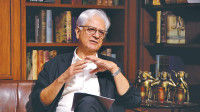
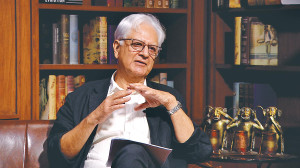
Use of force on Gen Z protesters fell outside standards of legitimacy, necessity and proportionality. Surya Subedi, former UN Special Rapporteur for human rights in Cambodia Photo: Courtesy of Surya Subedi
The country burned during the two days of the Gen Z protests and in the four months since, Nepal is marked by an overall state of uncertainty. The investigation into the state suppression of the protests is yet to be finalised. The Gen Z-ers are still divided over the agendas of the movement. Amidst the chaos, the only silver lining seems to be an increasingly conducive climate for the upcoming elections on March 5.
The Post’s Biken K Dawadi sat down with veteran international jurist Surya Subedi, professor at the University of Leeds and former UN Special Rapporteur for human rights in Cambodia, to discuss the human rights violations during the protests, the investigation and report of the probe panel formed to investigate the incident, international observation of the upcoming elections and the recent capture of Venezuelan President by the US. Excerpts.
How do you analyse the recent Gen Z protests and the subsequent state suppression?
First of all, the Gen Z movement was a medium; there was widespread dissatisfaction in the country. There was a lack of good governance, corruption was rampant, and the government had failed to deliver. This widespread discontent in Nepali society was expressed through the protests. Consequently, the force used—including targeting people above the knee—was a condemnable act. International standards do not accept such actions. Further, after so many people died, there should have been an immediate investigation to collect evidence. In this regard, the government of Nepal and various state mechanisms failed.
Nepal has a history of making immature decisions during crises. One must have patience. Instead of dissolving Parliament, it should have been used as a platform where Gen Z could voice their demands for new laws.
What is your view of the state investigation into the incident?
There is a saying, ‘Hit the iron while it is hot’, but that did not happen in Nepal. The momentum of the Gen Z movement and its dissatisfaction should have been made legally meaningful. Before the President dissolved Parliament, there should have been a week or two of ‘homework’ to address why the Constitution was not working, what contemporary institutional changes were needed, and what new laws should be drafted.
Instead, the demand of the Gen Z movement was in one direction, and the government’s response was in another. They likely weren’t asking for mid-term elections or the dissolution of Parliament. In Nepal, it often happens that there is a movement for one demand, but a completely different decision is made. This movement was an opportunity; as a Nepali poet said, ‘one who misses an opportunity is a fool’.
While the constitutional structure is generally fine, there are many problems in its implementation. Power is centralised in the hands of the prime minister and the leaders of the major parties. Neither the Members of Parliament nor other government mechanisms have much value; the country revolves around the clashes of three or four top leaders who lack capacity, study and vision.
Experts often emphasise the international law doctrines of proportionality, necessity and legitimacy on the use of force. The terms ‘proportionality’ and ‘necessity’ sound a bit vague—how are they actually measured?
I dealt with similar violence in the context of Cambodia, where I served as the United Nations Special Rapporteur for six years. When casualties happened there, I went immediately and questioned the rulers. I had a three-hour meeting with the prime minister and most of the Cabinet members, where I told them they had not met the international criteria of proportionality, necessity and legitimacy. This put them under pressure to accept my suggestions for judicial and political reforms.
In Nepal, however, there was a lack of international involvement, and national power centres were in a state of confusion. If the protest on the first day had been managed properly, the destruction on the following day would likely have been less. The state machinery failed to manage the initial protests. Regarding proportionality, the force used was far beyond what the demonstration called for. It was not necessary to start shooting immediately. If they hadn’t opened fire, the movement would not have turned so violent, and the next day’s destruction might have been avoided. The use of force in Nepal fell outside the standards of legitimacy, necessity and proportionality.
Did the absence of significant international pressure on Nepal contribute to the delay in the investigation?
The international community’s reaction was different as the situations in Cambodia and Nepal are different. Cambodia was a country emerging from long-term conflict, and I was a country-specific mandate holder for the UN, so they had to listen to me. In Nepal, such a representative isn’t present, and arguably wasn’t necessary. After the 2015 Constitution, Nepal was trying to get back on a democratic track. In such a country, a heavy international presence is not required.
However, the National Human Rights Commission (NHRC) and other structures in Nepal failed to work effectively. The issues I raised in Cambodia as a UN representative could have been raised by the NHRC. They could have immediately told the government they were using force against international standards and held them accountable. Instead, they are just taking statements and conducting studies; I fear this issue will simply fade away.
The Karki Commission is to submit its report to the government in 10 days. What are the ‘must-haves’ of that report?
They should focus on two things. First, they should look at international practices, such as those in South Africa or Cambodia, to see what international standards for the use of force are. Nepal is legally more developed than Cambodia in terms of structure. Second, they must analyse national and international laws based on objective facts and offer two types of suggestions: immediate actions for the government and long-term policy recommendations.
In Cambodia, I arrived five days after the casualties to collect evidence immediately. If you delay, evidence is lost. The government must act on immediate tasks, but it’s already getting late. Memories of the September protests are fading, and the commission’s job is to ensure that doesn’t happen. Leaders in Nepal do not seem to value human life. A single casualty is a major crisis for a country, but here, many young people died, and their blood was spilled. What is the result of that sacrifice? Is it just a mid-term election? I fear we are just returning to the same old state.
Regarding the state's response, how much moral or legal responsibility can we tie to the political leaders who were in power at that time?
Former Prime Minister KP Oli resigned, partly because he was forced to. However, based on international standards, he should have resigned on moral grounds anyway. When there is such destruction and loss of life at the seat of the government—like the fires at Singha Durbar and the Supreme Court—the state machinery he headed failed. But the tradition of taking moral responsibility is not established in Nepal.
Let’s change track to the upcoming elections. Are there necessary changes needed in our electoral laws and rights protections?
Democracy is maturing in Nepal. In the last two elections, no major party claimed there was fraud; the electoral process was, by and large, free and fair. We should hope for the same now. Nepal has well-established electoral systems, laws and practices. I am optimistic that the election will be free from rigging. Further, the international community is watching Nepal closely. To regain the trust of foreign investors and partners in our democratic system, a free and fair election is essential. If that happens, Nepal will bounce back.
Are there specific international law indicators or thresholds that allow us to say an election is ‘free and fair’?
In international law, we talk about ‘hard laws’ (binding treaties) and ‘soft laws’ (principles, declarations and recommendations). To ensure an election is free and fair, three things are key: the period before, during, and immediately after the election. Specific indicators include the neutrality of security apparatuses, the neutrality of the civil service, no misuse of government-owned media and proper tracking and regulation of election spending.
In some countries, like under Saddam Hussein in Iraq or Hosni Mubarak in Egypt, leaders would get 99 percent of the vote by misusing the entire state machinery. Nepal is different; as in India, the electoral practice is generally established as free, fair and neutral. If we can send the message that our system is robust, the results will gain international recognition and legitimacy.
How will international organisations like the UN be watching this election, especially given the state of uncertainty and questions about the government’s constitutionality?
Some might question the legitimacy of the government led by Sushila Karki, but the international community understands that it came into power under extraordinary circumstances. What they look at is not just the government’s legitimacy but whether all major political powers are participating. In some Asian or African countries, the main opposition boycotts the election, which draws international concern. In Nepal, almost all of the roughly 150 parties are participating, which is a very positive sign. Election is the way out of this chaos.
The political parties are acting responsibly by participating. After the election, we must convey the message that Nepal is back on track to build confidence, not just with nation-states but with investors. We must show we have addressed the concerns of Gen Z.
A major weakness I see is that while parties are contesting elections, they are focused only on how to reach and share power. I don’t see specific programs for economic progress.
Nepal’s international reputation has suffered due to corruption and the destruction caused by the recent uprising. This has created a crisis of confidence internationally, particularly regarding the decision-making capacity of Nepali leaders. A free and fair election is key to restoring Nepal's international reputation.
Let’s move on to a topic of worldwide interest: The recent capture of Venezuelan President Nicolas Maduro via a US military operation. What are your impressions of this from an international law angle?
I look at this from two perspectives: as a human rights activist and as a student of international law. From a human rights perspective, there were long-term violations in Venezuela, as highlighted by UN reports; some form of address was necessary. However, the intervention was against the UN Charter. From an international law standpoint, it was a violation.
While the previous elections in Venezuela were questioned internationally for their fairness, kidnapping a sitting president at night and bringing him to New York is a violation of various international laws, not just the UN Charter.
For smaller states in the Global South like Nepal, does this ‘Might is right’ approach set a dangerous precedent? Should we be worried?
Not just small countries like Nepal, but all countries should be worried. This development challenges the concept of a rules-based international order and the global governance framework established after World War II.
To understand the current state of international law, we can think of it as a fragile glass bridge; it allows for passage and connection, but when a major power stomps heavily by ignoring the rules, the cracks threaten everyone walking upon it.




 15.34°C Kathmandu