RSP is a residual power of older parties, not a true alternative
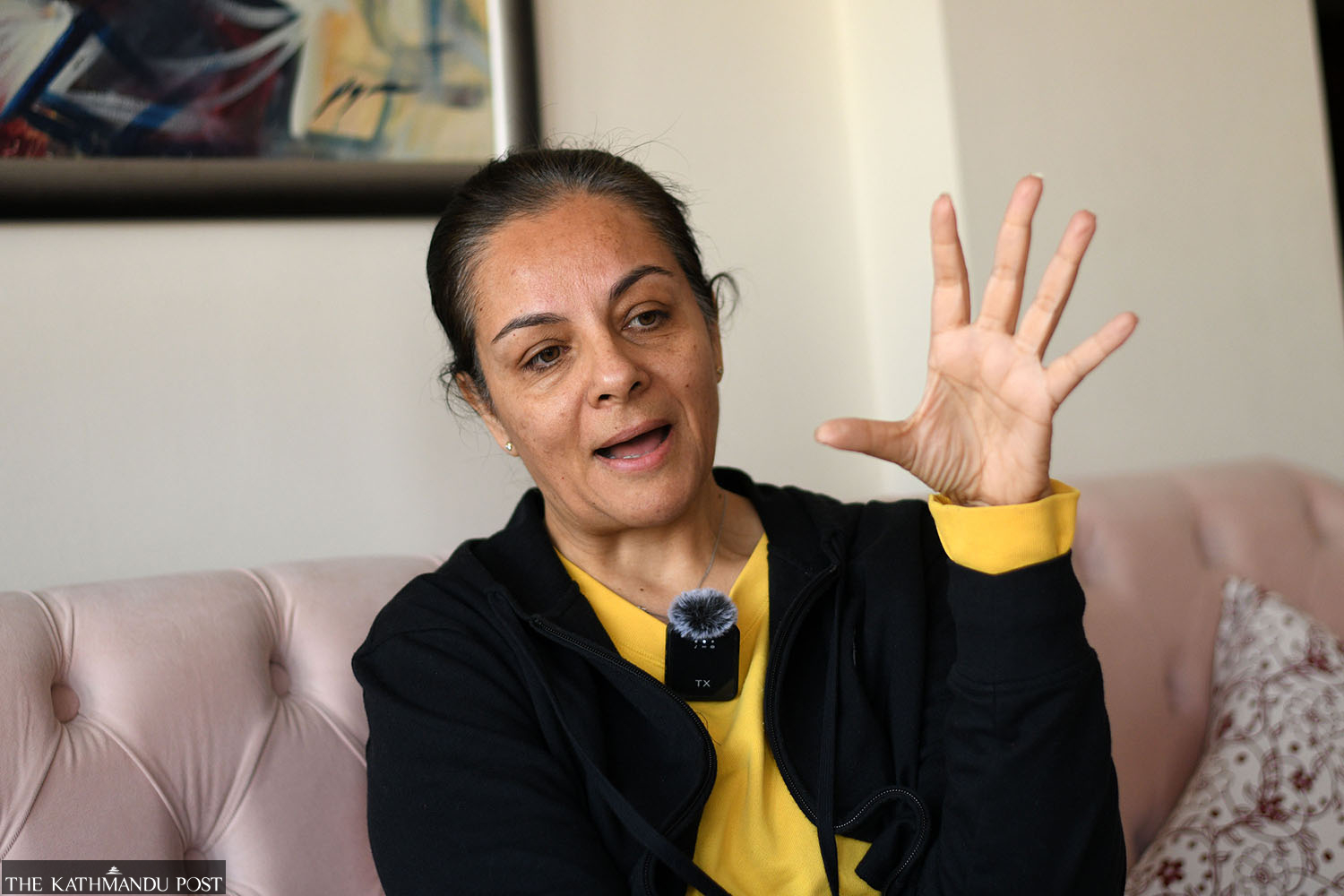
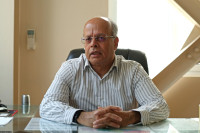
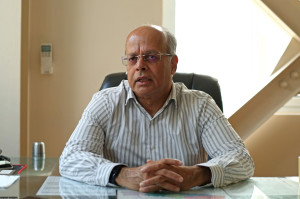
Leaders are still using rhetoric to shape their narrative rather than engaging in substantive policy work. Sucheta Pyakuryal, visiting professor, Department of Gender Studies, Tribhuvan University Deepak KC/TKP
Nepal has witnessed a socio-political upheaval following the Gen Z protests of September. With elections slated to take place on March 5 and political parties gearing up accordingly, it seems the country is election-bound. Multiple parties have come together in electoral alliances and mergers, with more than half a dozen communist forces unifying and popular political leaders Balendra ‘Balen’ Shah and Kulman Ghising coming under the fold of the Rastriya Swatantra Party.
The Post’s Biken K Dawadi sat down for an interview with visiting professor at the Tribhuvan University’s Department of Gender Studies, Sucheta Pyakuryal, to discuss the public perception of the Gen Z movement, the recent merger of ‘alternative’ forces and the dynamics of the upcoming elections. Excerpts.
How do you perceive the current political and social climate in Nepal following September’s Gen Z movement?
Looking at the situation from a neutral perspective, there are two distinct groups or factions in the Nepali society. There is the optimistic group, which is characterised by a belief that the recent changes were for the best. They are described as extremely optimistic and are waiting expectantly for something new to happen. Then there is the disgruntled group, which is a much larger, more complex group. They are not necessarily vocal or loud; instead, they are very observant. They view the current upheaval as meaningless and worry that the existing structures are being destroyed without a viable replacement. This disgruntled group includes ‘retainers’—people within every industry and political institute who have spent years building and benefiting from the established system. For these individuals, their professional success is tied to the status quo, leading them to believe that ‘if life is good, it’s because of the system’. They find it difficult to align with the Gen Z movement because, while their own children might be involved, they themselves are deeply invested in the system they helped build.
Many are calling the movement a ‘Gen Z revolution’. Do you believe the movement will bring about the change the optimistic group is hoping for?
There is a significant segment of the population that remains sceptical of the movement’s staying power. Many believe the Gen Z revolution is merely momentary. They argue that the movement will ‘come, fizzle out, and go’ without leaving a lasting impact. However, we must acknowledge that there is a counter-narrative: Those who insist that something must happen and that some change is necessary. Currently, society is caught between these two currents—one that views the movement as a passing trend and another that holds onto hope for a fundamental shift in the political landscape.
What specifically makes the current moment so politically intense compared to other times?
This is the phase where realpolitik is most active, primarily because it is the pre-election phase. The focus shifts entirely away from governance and towards the acquisition of authority. Everybody is vying for power, creating a visible tussle among political actors, which creates a specific problem where alternative forces and the older established powers do not work together. The lack of unity among different political factions complicates the landscape, as the primary objective for everyone involved has become the pursuit of positions of power rather than a unified vision for the country.
Recently, Kathmandu mayor Balendra ‘Balen’ Shah and Ujyalo Nepal Party under Kulman Ghising merged with the Rabi Lamichhane-led Rastriya Swatantra Party (RSP). What is your assessment of their current motivations?
These political leaders are more focused on individual positions than on the democratic spirit. Everyone wants power. Everyone wants a position. Specifically, Balen and Kulman are known to be figures seeking these roles.
Lamichhane is the most shrewd of all these political actors. He is riding high on populism. While he may present himself as a tyagi (one who sacrifices or renounces), this is a strategic move necessitated by his pending cases. Even if he wants to, he may not get the position due to his legal circumstances, so he frames his lack of a position as a voluntary sacrifice to shape a specific narrative.
In addition, it is disappointing to see that even someone like RSP vice-chair Swarnim Wagle is heard talking about the abundance of seats and mayor positions for the newly welcomed groups in the party. His rhetoric suggests that if people are patient, everything will work out in terms of distributing positions, which is a departure from principle or philosophy.
Deepak KC/TKP
How are these newer political forces, such as the RSP, using language and organisational structures to influence the public?
Modern politics has become very rhetorical. Leaders are still using rhetoric to shape their narrative rather than engaging in substantive policy work.
The RSP’s narrative regarding primaries can be taken as a prime example of a convoluted message. What is a primary? It is unheard of in the rest of the world for a political politburo or central committee to retain 50 percent of the authority within a primary system. This structure allows the party to project an image of internal democracy while maintaining centralised control over who actually gets the power.
Do you think that the recently unified alternative forces are capable of mounting a proper challenge to the older parties?
First, we need to be clear whether these forces are even ‘true alternative’ forces. The forces that brandish themselves as alternative are residual powers of the older mainstream parties rather than alternatives. What we can observe at the moment is that many political leaders who have come together under the banner of RSP are actually leaders who were sidelined from the ‘mainstream’ parties. In that sense, they are residues of the same mainstream whose political practices led to the Gen Z revolution of September.
Moving on to whether they can mount a challenge to the older parties, I think the recently unified force has the potential to emerge as the main force from the elections. Especially with the growing public frustration over the practices of the older political parties and the suppression of the Gen Z protests by the erstwhile government, people will have a soft corner for the unified force. In addition, all of the three key players in the merger have their considerable support.
Do you think the RSP merger is sustainable in the long-run? Why?
The merger is not sustainable in the near future because of various reasons. First, theoretically speaking, if you have created an agency for yourself, you tend to be loyal to that agency and place the agency before yourself. Your self-interest is secondary compared to the agency. This phenomenon is called an agentic shift. The relationship that one has with the agency is special. Considering them as separate agencies, there could be a clash, especially between the Ujyalo Party and the RSP, and their members. The same can be said of Balen. Although his agency is loosely crafted now, his faction still comprises his followers. So, there are three individuals who are leading three different agencies with three different agency memberships who may clash with each other due to agency loyalty. This deems the merger as something that does not have a sustainable and unified future.
Second, because they do not have a political stand that binds everyone in one thread, one ecosystem, what you have is people in an allied force of interest. Given the way they stand, if they win, they’ll probably have various pressure groups or interest groups latching onto them. In the course of charting out the course and policies for the government, churning out policies, sanctioning those policies and implementing them, it will be very difficult to come to a conclusion. Given these theoretical angles, it will be very difficult for these three factions to emerge as one solid political force.
With the CPN-UML setting some unrealistic demands for elections, do you see the elections taking place soon?
There is no alternative to elections at this point. We need timely elections to provide a political and social way out of the current crisis. There will be an election, even a month or two later, if it is not possible to hold the elections on March 5 due to technicalities involved. The recent submissions of the list of Proportional Representation (PR) candidates for the House of Representatives have set the country on an election path.
Talking about the PR lists, the so-called ‘alternative’ RSP has courted controversy over the lack of proper women’s representation. How do you see this?
The RSP has never empowered its women leaders despite their claims of progressivism in the internal party politics. The likes of Sumana Shrestha, Toshima Karki and Sobita Gautam are women leaders of the party who have a significant political following. However, they are used only for ‘optics’, distanced from the decision-making in the internal politics of the party. Even the PR lists were prepared by the three figureheads behind closed doors, without proper consultation with Karki and Gautam, which shows the pitiful condition of women leaders in the party. In addition, the priority ranking for the women cluster is convoluted. Ranju Darshana, who amassed 23,000 odd votes in the 2017 Kathmandu mayoral election, sits at rank nine in the khas/arya women cluster, while candidates like Sumnima Udas, who garnered significantly fewer votes, are ranked above her.




 14.69°C Kathmandu