Government, Gen Z agreement could hinder timely elections
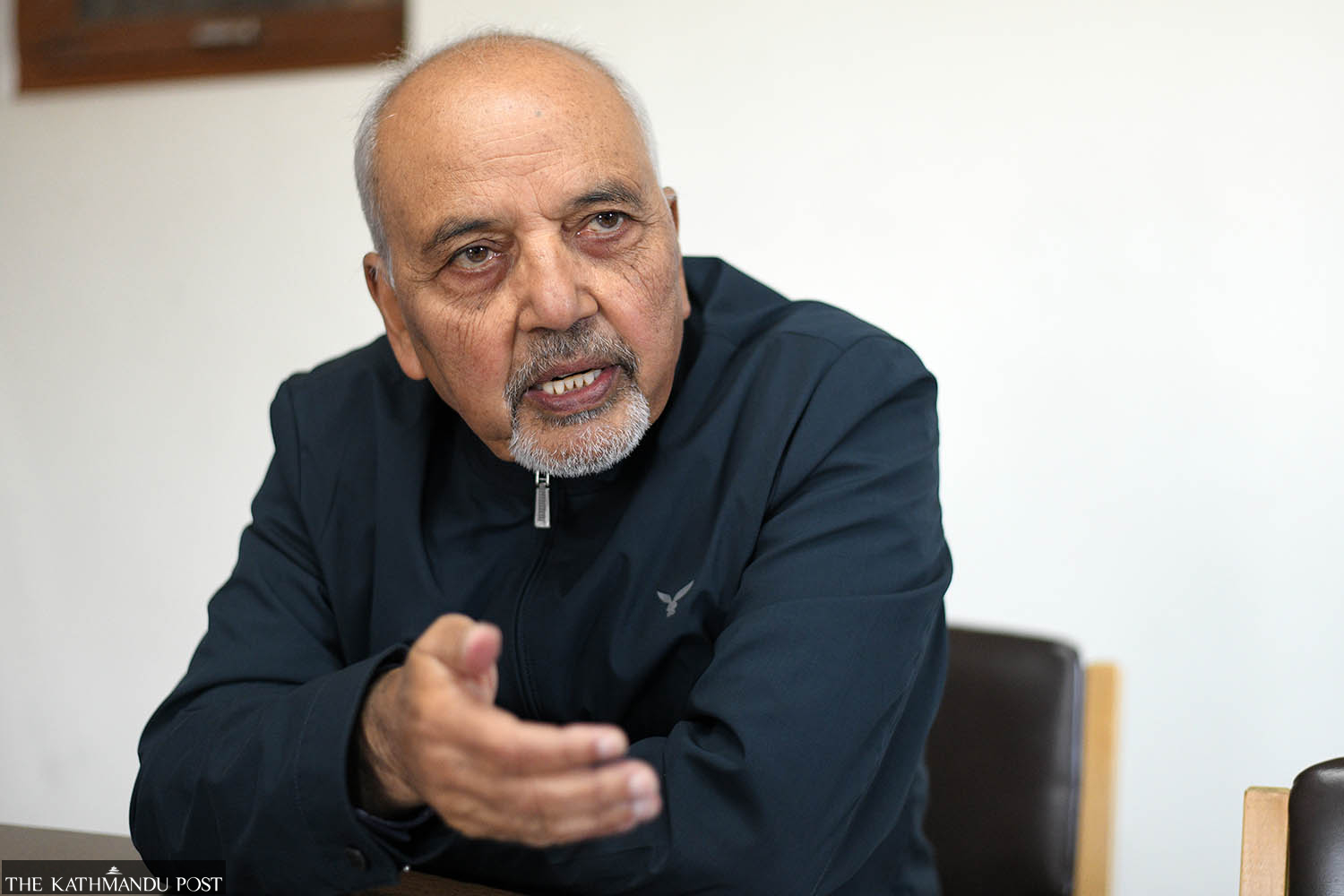
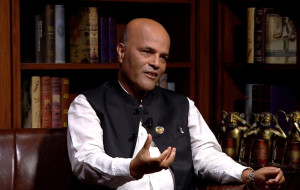
An agreement should be implementable. I do not think the one between the Gen Z representatives and the government will be implemented in full. Radheshyam Adhikari, former lawmaker Post Photo: Deepak KC
On Wednesday, the interim government and Gen Z representatives signed a 10-point agreement to give legitimacy to September’s Gen Z uprising that ousted the KP Oli government. Many points of agreement necessitate constitutional amendments, sparking debates in the legal circles. While the agreement has been hailed as the tangible blueprint for desired changes, many still question whether the agreement is implementable. The Post’s Biken K Dawadi sat down with senior advocate, constitutional expert and former lawmaker Radheshyam Adhikari to discuss the roadblocks to the agreement’s successful implementation, the legitimacy of signing such an agreement with an interim government, the problems it can create for timely elections, and whether the Gen Z representatives focused on the right agendas while signing it. Excerpts.
What are the requirements for the implementation of the 10-point agreement between Gen Z representatives and the interim government?
First, if we really want to implement the agreement, a constitutional amendment is necessary. But the interim government does not have the mandate or the jurisdiction to amend the constitution. The mandate of the interim government is to hold snap elections on March 5 and transfer power to the elected government. We also need to ask: Will the 10-point agreement be a catalyst or a roadblock for the elections?
So is the agreement a catalyst or a roadblock, in your view?
This agreement seems to be a roadblock to the elections. Many of the agreement’s stipulations could hinder the holding of timely elections. How can we expect the political parties that have rejected even the Gauri Bahadur Karki-led commission formed by the interim government to now accept the new commissions the agreement envisions?
For example, the Commission for the Investigation of Abuse of Authority (CIAA) is the only constitutional body capable of dealing with corruption. The agreement envisions another powerful body to deal with corruption cases. This is a populist agenda. The Gen Z representatives might take pride in forming such a public body, but one should remember that former King Gyanendra Shah had also formed a similar body, which did not come to much. The Supreme Court scrapped the body constituted under the chairmanship of Bhakta Bahadur Koirala. So it is not just the political parties but also the judiciary that will have a say in the agreement. When they try to solve these quandaries, the focus will shift from the all-important elections.
The government’s focus needs to shift to the March 5 elections. Even the political parties that have taken a stand against the unconstitutionality of the interim government have registered with the Election Commission and are ready to contest the elections. If the interim government is to work as per its mandate, then it simply must hold the elections on time.
What points of the agreement require a constitutional amendment?
There are multiple such points. For example, the full proportional inclusivity envisioned by clause six of the agreement would require a constitutional amendment. Clause 4.2 of the agreement mentions that voters in foreign countries and areas outside their constituencies will be able to vote from their temporary address. This, too, will require a constitutional amendment. An agreement should be implementable. I do not think that the agreement between the Gen Z representatives and the government will be implemented in full.
So should the Gen Z representatives sign an agreement with the government elected through the March 5 elections?
There are rules and processes in place for a constitutional amendment. It needs to be passed by a two-thirds majority of the parliament. So it is the right of the parliament rather than the government to sign an agreement with long-term importance. If the parties that agree with the Gen Z agreement secure a two-thirds majority in the House, then the constitutional amendment, as per the agreement, is possible. Any issue that needs to be addressed by the parliament falls outside the jurisdiction of the government.
Are you suggesting the Gen Z representatives do not have adequate understanding of the political system?
Perhaps that is true. To analyse their understanding, we would have to contrast their agenda on the first day of the protests and the changes they have demanded now. The Gen Z-ers who took to the streets on September 8 were driven by the main agenda of good governance, anti-corruption and the suppression of freedom through the social media ban. Now, they demand a shortcut to the delicate process of constitutional amendment.
Deepak KC/TKP
They need to understand that the circumstances are not conducive to such amendments. They have strayed from the protest’s main mandate of holding snap polls on March 5. They have forgotten that if the interim government cannot hold the elections on March 5, the legitimacy of the interim government will come into question.
What then should be the focus of the Gen Z representatives?
I think they should focus on identifying and vetting honest candidates with a good vision across all 165 constituencies for the upcoming elections. They could perhaps run campaigns against cases of nepotism and favouritism in candidate selections. If they do so, we will finally be able to harness the positive youth energy. If the representatives elected are hard-working, honest and disciplined, and have a vision, then they can bring about changes in line with the Gen Z agendas of good governance and anti-corruption.
The economic sector is all-important. We see an exodus of hordes of youths daily. The focus should shift to creating job opportunities in Nepal. This requires boosting the confidence of the private sector and creating a business environment which helps promote domestic and foreign investments. The Gen Z-ers need to intervene in this matter. They need to sit down with business leaders and find out why they are not investing, what legal amendments will help them grow enterprises, and what can be done to create good jobs. If they can answer questions, they will be working as per the spirit of the movement.
If that is the case, did the Gen Z representatives commit an error by not including the case for boosting morale of the private sector in the agreement?
Yes. The agreement should also have encompassed points on how to create an investment-friendly atmosphere. They could have set agendas, which could have become the guiding principles for future governments. They should have come up with ideas for capital formation, ending the exodus of youths, creating jobs, and helping with infrastructure development.
What in your view needs to be done to guarantee free and fair investigation into the incidents of September 8 and 9?
First, the government has formed a panel to investigate the incidents. All of us must support the panel. The panel members must be allowed to form independent perspectives on the incidents. Second, no attempt should be made to save individuals who face clear criminal cases for their actions on September 8 and 9. Or it will promote impunity. If the Gen Z representatives promote impunity, they will also go against the spirit of the movement.
The Gen Z-ers kick-started the peaceful protests on September 8. They have accepted infiltration in the protests during the second half of the day and the rest of the protests. Look at how the walls of the parliament building were damaged on the second day. It does not look like the work of agitating youngsters. Should Gen Z-ers take responsibility for the damage of September 9? I, for one, would hand the youth a clean chit for the actions of the second day.
Then Home Minister Ramesh Lekhak had resigned by the end of the first day. Even then Prime Minister KP Oli had resigned before a lot of arson and vandalism took place on the second day. So the question remains: Who was in the government as the events unfolded?
For which action should Gen Z-ers take responsibility?
The Gen-Zers should take responsibility for the peaceful protests of September 8. They should denounce the state’s suppression of the protest. But they need not take the responsibility for the second day or the second half of the first day. If they do so, they will also be held responsible for the vandalism and arson. Again, I do not think that they had anything to do with the violent acts. But they cannot get blanket impunity. The Gen Z-ers need to separate themselves from the vandals.
How can the Gen Z-ers navigate this dilemma better?
They need to draw a line between what they can do and what they need to let the government do. This understanding is clearly missing in many Gen Z representatives. If they realise the need for drawing such a line, the agendas of the Gen Z movement will find better traction.




 22.92°C Kathmandu