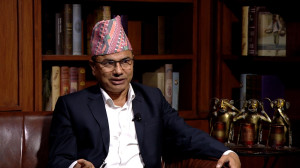
Many injured during the Gen Z protests have not been in touch
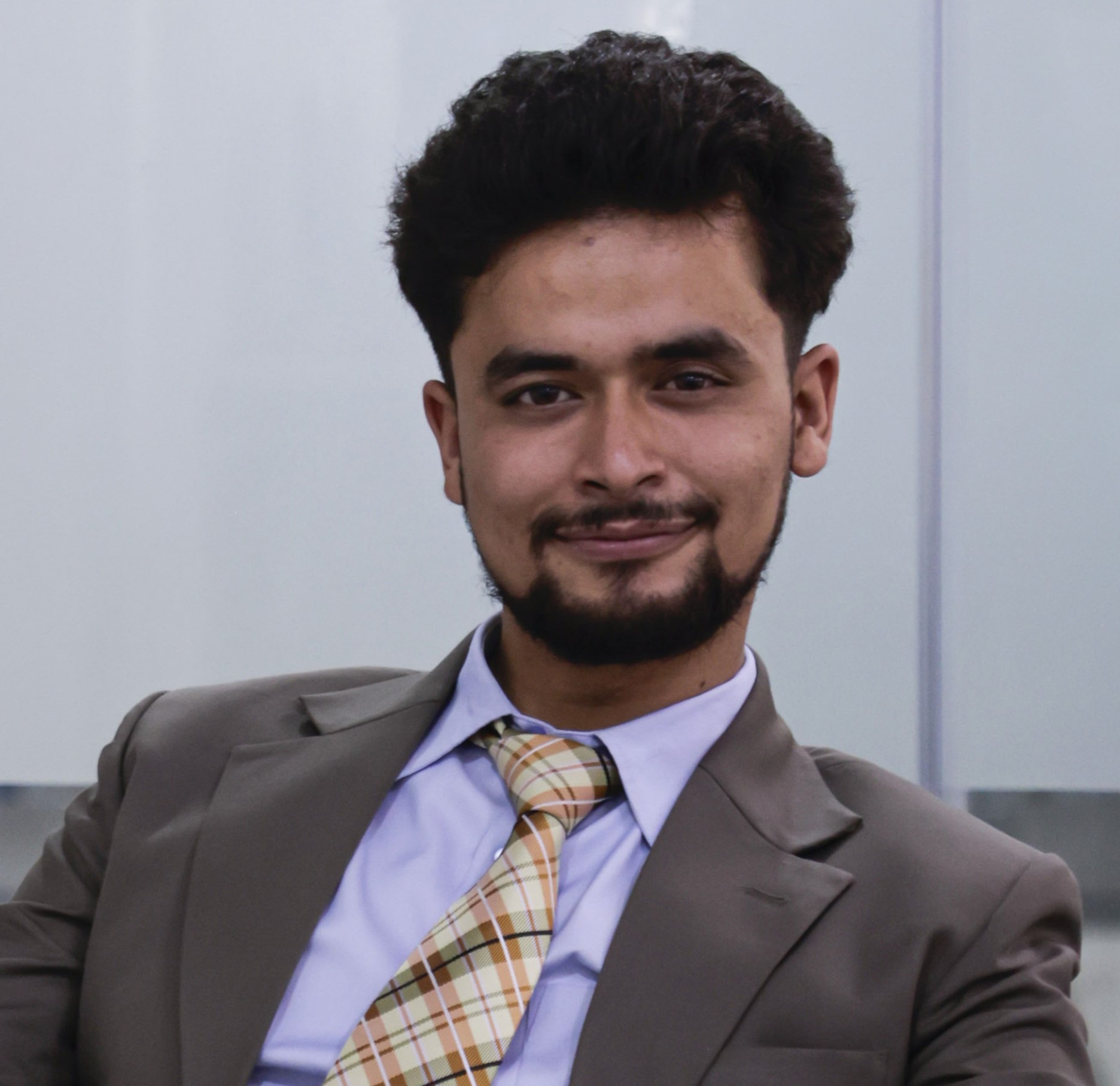
We produce enough doctors, including specialists. The problem lies in our failure to create enough lucrative positions for those doctors. Dr Sudha Sharma Gautam, minister for health & population Deepak KC/TKP
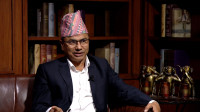
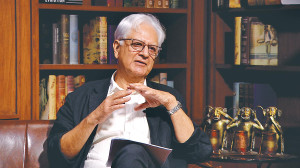
In the third expansion of her Cabinet on October 27, Prime Minister Sushila Karki recommended former health secretary Dr Sudha Sharma Gautam as the minister for health and population. It has been just over a month since gynaecologist and obstetrician Gautam, who was active in the health sector after retiring from government service, took charge of the ministry. Her illustrious career in the health sector, from doctor to hospital administrator to health secretary, made her appointment as the minister to be considered the among most merit-based appointments in the entire Cabinet.
Nepal’s healthcare sector is facing unprecedented headwinds, with the ministry building torched during the protests, funding cuts from foreign donors and an exodus of healthcare professionals to foreign countries. The Post’s Biken K Dawadi sat down with Minister Dr Gautam to discuss her experience, the state of the ministry in the aftermath of the protest, her priorities and the state’s handling of the individuals injured during the protests.
How do you compare your experiences as a doctor, a bureaucrat and a minister?
As a doctor, I was primarily working on patient care. But I knew there were a lot of things that needed to be done to ensure quality care to the patients. When I was an administrator, I did my best to improve the country’s health sector in whatever way I could. But as a minister, I can influence policy, staffing, infrastructure and other aspects of healthcare, which I otherwise would not be able to do. But at the end of the day, work is work. Whatever I was doing and what I am doing now is the same to me.
What targets have you set for your tenure as the health minister?
In addition to improving the daily administration and healthcare quality, we have set six priorities for the health ministry. Three of the priorities are associated with service, and three with improving the system. To improve the service, I have prioritised mental health, health of migrant workers and intensifying efforts in Madhesh, Karnali, Sudurpaschim and Lumbini provinces, where the indicators of maternal and child health are disappointing. To improve the system, I have set out to improve the Department of Drug Administration, boost the supply of medical professionals and medicines, and revamp the health insurance programmes.
Do you think you get some extra freedom as a minister that you didn’t enjoy previously?
Not necessarily. Most of the things that need to be done are regulated by our laws. Sometimes the laws restrict what I would prefer to do. And since the House of Representatives was dissolved, we have had difficulties in amending the laws when necessary. I could have done much more, even in such a short period of time, if those restrictions were not in place. If a person were to occupy the office of the minister under normal political circumstances, they would be freer. For me, the tenure is short, and there are multiple restrictions.
The health ministry’s building was torched during the Gen Z uprising. How are you operating in such a situation?
We currently have a rather basic infrastructure. We do not have necessary equipment. The work definitely suffers. And as the ministry is open to the public, many people come with high expectations. I make time for everyone, but meetings are not enough. To deliver, our team has to sit down and work on each problem. However, the current situation is not conducive to that end.
Many documents were burned in the arson. How are you making up for the loss?
Many of our documents were burned, but fortunately, some relating to human resources were saved. Some data stored in cloud services was also retrieved. In addition, people who work here, including staff doctors and administrators who have served for long, have institutional memory. People often criticise me for not changing the staff at the ministry. But they often forget that the staff retrieved the documents from the cloud services, and their collective memory is crucial for our day-to-day work. Whenever we need something, we have to rely on them for their memory and expertise.
Many aid agencies working with the ministry have cut their funding for various programmes. How can the ministry tackle this problem?
While the donor agencies used to provide us with around 25 percent of the health budget, now they contribute less than 10 percent. With the country’s upcoming graduation from the Least Developed Countries, this funding is expected to be cut even further. This is why we need to work more economically. We need to reduce the duplication of efforts and focus on the essential services. For this, without compromising the quality of our services, we need to identify our priorities and change our way of doing things.
Deepak KC/TKP
Many equipment that we procure are not used, and many medicines expire before use. For example, we build hospitals but without plans on how to equip them with enough doctors, nurses, technicians and medicines. This ad hoc approach needs to stop. Right from the planning stage, we need to identify our essential needs and make use of competitive mechanisms to ensure that the equipment procured will be used optimally. By taking such steps, we will also be aligning with the Gen Z spirit of anti-corruption and good governance.
Our annual budget might not have increased in terms of the percentage of the national budget. We get around 4.5 percent of the budget on average. However, the budget increases each fiscal year, which means that the percentage might remain low, but the budget volume is up. Our focus should be on using that budget optimally.
We do not have a separate plan to increase the population. However, we have the National Population Policy, which encompasses the steps needed to be undertaken by various ministries for population management. For example, it touches upon the demographic dividends, i.e., how we can increase the productivity of the youth population. It also includes the need to improve the nutrition of infants. Even research has shown that most of the mental development of children takes place within two years of birth. If we do not focus on their nutrition in this period, their mental development is hampered. This will affect the productivity of the population when those children grow up.
We also need to change our understanding of population management. It is not simply about increasing the birth rate. Women do not want to bear children now. The reason is poor access to affordable, quality healthcare. The government cannot ask people to bear children without first creating a situation where people can access quality as well as affordable healthcare and education. We have heard our political leaders blurt out controversial, arbitrary statements, asking couples to bear 2-3 children. But how will people give birth to 2-3 children? Is it easy to raise 2-3 children? First, we must create an environment conducive to population growth.
Addressing the issue of non-communicable diseases is a priority for the ministry. The right way to address high deaths from the diseases is to focus on prevention rather than cure. To achieve this, we have initiated alternative medical programmes, such as local yoga programmes and mental health camps. In general, unhealthy lifestyles increase the vulnerability to these diseases. To improve people’s lifestyles, we have initiated programmes to discourage smoking, drinking and drug abuse.
First, we are producing a sufficient number of doctors, including specialists in a plethora of sub-fields, for our domestic use. The problem lies in the failure to create a sufficient number of positions for those doctors. In the absence of such opportunities, doctors get frustrated and either join private institutions or venture abroad.
After the National Health Policy of 1991 was implemented, we have rarely seen any increase in the number of employment positions for doctors. Even the existing positions have a rather low pay scale. In addition, our legal mechanisms affect promotions of qualified doctors, further frustrating healthcare professionals. Our society is also not positive about doctors’ work. In fact, our society is critical and aggressive, even when doctors make no mistakes in treating patients.
What is the ministry doing to stop this exodus?
Recently, we saw nurses protest demanding an increase in their pay. We managed to persuade the private sector to match the pay level of public health institutions for the nurses. We are also working to include healthcare professionals under the labour laws and set a minimum salary for each position to avoid exploitation. If we do not improve the situation for specialist doctors, the exodus will not stop. The tenure of this government is rather short. If future governments do not keep the welfare of the specialists as their priority, the situation will further deteriorate.
What is being done to ensure proper medical attention for the individuals injured in the Gen Z protests?
We have set their medical care as a priority. Except for the ones who sustained grave injuries, most other demonstrators have received treatment and have been discharged from hospitals. We are also categorising the injuries of the individuals. The government will distribute relief for the victims based on the categories.
However, a big number of individuals injured during the Gen Z protests have not communicated with the government. We do not know why. We have been calling the ones whose phone numbers are available. We have also published public notices calling the ones whose phone numbers are not available to us. Still, many of them are out of touch.
As for the martyrs of the movement, once we ascertain the number of such individuals, I plan to propose providing free health insurance for their family members. We also plan on providing education and employment opportunities for their capable family members in the medical sector.




 15.26°C Kathmandu