Hospitals in the hills and mountains seek anti-venom
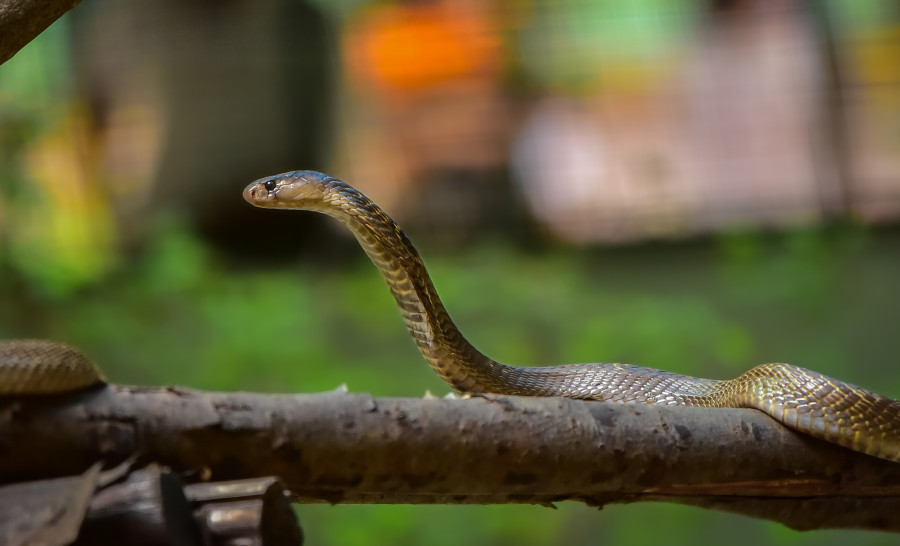
Shortages at some snake bite treatment centres have forced officials to shift antivenom from centres with extra stocks. At least 22 people have died, and 320 others have been injured from snakebites since April 14 this year, according to data from the National Disaster Risk Reduction and Management Authority. SHUTTERSTOCK
The spread of venomous snakes into Nepal's hills and mountains has prompted hospitals to prepare for a medical emergency once largely confined to the southern plains.
Sotang Primary Hospital in the mountain district of Solukhumbu recently requested the Ministry of Health and Food Safety for the supply of antivenom, which is critical to saving the lives of snakebite victims.
The health facility has completed an internal assessment and submitted its report to the Epidemiology and Disease Control Division. The division then deployed an expert team to assess whether the health facility meets the criteria for providing antivenom treatment, officials said.
“Around 30 snakebite victims have sought treatment at our hospital since mid-April,” Dr Pawan Moktan, medical officer at Sotang Primary Hospital, told the Post by phone from Solukhumbu. “Two of the victims were bitten by venomous snakes. One was referred to Kathmandu and the other to a snakebite treatment centre in another district.”
Solukhumbu is home to Mount Everest, the world’s tallest peak, and several other popular tourist destinations, including Lukla, Gokyo, and Sagarmatha National Park. Sotang Rural Municipality lies at 2,426 meters above sea level, with an average elevation of around 2,173 meters.
“Health officials told us that our hospital meets all required criteria and that they would inform us about the decision on anti-snake venom,” said Moktan. “If we receive antivenom, we will be able to treat patients here instead of referring them elsewhere.”
Officials at the division said that, like Sotang Rural Municipality, several other health facilities in the hills and mountain regions have requested antivenom after seeing a surge in venomous snakebite cases.
“We will supply anti-venom to health facilities that meet all required criteria to start anti-venom treatment,” said an official at the division, asking not to be named, as he is not authorised to speak to the media. “But it will take time, as this year’s procurement process has yet to begin.”
Officials say shortages at some snakebite treatment centres have forced them to shift antivenom from centres with extra stocks.
Snakebites and related deaths are common in Nepal during the summer.
At least 22 people have died, and 320 others have been injured from snakebites since April 14 this year, according to data from the National Disaster Risk Reduction and Management Authority.
However, figures from snakebite treatment centres suggest the actual number of cases is much higher. Kapilvastu’s Gorusinge-based treatment centre alone has treated over 500 snakebite cases since mid-April, including over a dozen venomous cases.
Experts link the spread of venomous snakes to rising temperatures driven by climate change.
Nepal is among the countries vulnerable to the climate crisis and has witnessed multiple extreme weather events over the past decade and a half.
Evidence suggests that maximum temperatures in Nepal are rising at a faster annual rate of 0.056 degrees Celsius, compared to the global average rise of 0.03 degrees Celsius each year.
Compared to the districts of the Tarai region, those in the hills and mountains have been witnessing a more rapid increase in daytime maximum temperatures, which could have helped venomous snakes survive there, according to the experts.
Herpetologists and public health experts say that global warming might be pushing venomous snakes from the Tarai into the hilly and mountainous districts, where they were previously not found.
“People at high risk of snakebites, including children, those working in the fields, and those living in thatch-roof homes, must be made aware of the risks,” said Dr Sanjib Kumar Sharma, a snakebite expert with the World Health Organisation. “Antivenom should be supplied to health facilities that treat large numbers of snakebite cases, health workers should be trained accordingly, and people should be encouraged to seek medical care as soon as possible after a snakebite, as early treatment improves the chances of survival.”
Around 2,700 people, mostly children and women from the plains, die from snakebites in Nepal, according to a report published in The Lancet, a leading international medical journal, in March 2022.
Poor health infrastructure, including lack of trained health workers, antivenom, ventilator support and dialysis facilities, as well as delays in reaching health facilities are blamed for many snakebite deaths.
Experts warn that consulting shamans instead of physicians after a snakebite can waste precious time and prove fatal.
“Keep your surroundings clean, prevent children from playing near the bushes or walking outside at night, and use a torch while walking at dark,” said Sharma. “Teach children to inform immediately if they are bitten by a snake or even feel something prick them.”
The government has committed to halving the deaths and disabilities caused by snakebite envenomation by 2030, a national target aligned with the World Health Organisation’s ‘Snakebite Roadmap’.
Arjun Poudel is a health reporter for The Kathmandu Post. Before joining the Post, he worked for Sagarmatha Television, Naya Patrika, Republica and The Himalayan Times.




 21.12°C Kathmandu