Bird flu outbreak and uncertainty hit poultry sector, raising fears of meat and egg shortage during festivals
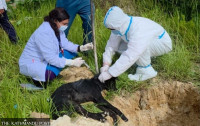
Under official protocol, farms where bird flu is confirmed must cull poultry, destroy eggs and feed, and remain sealed for 45 days. Poultry entrepreneurs say that hesitation among farmers to place chicks due to ongoing bird flu alerts could affect supply in the coming months. Ramesh Kumar Paudel/TKP
The poultry sector is facing growing uncertainty as repeated bird flu outbreaks and farm closures disrupt the peak chick-raising season, raising fears of possible shortages of chicken meat and eggs during the upcoming festive period.
Poultry entrepreneurs say that hesitation among farmers to place chicks due to ongoing bird flu alerts could affect supply in the coming months.
According to the Department of Livestock Services, bird flu (H5N1) was confirmed in Morang on March 18 this year. By June 28, the disease had spread to 11 districts across the country.
In Chitwan, cases were confirmed in Bharatpur on March 26 and in a layer chicken farm in Khairahani on June 6. No new cases have been reported in Chitwan since then, and officials say the situation is currently under control.
Prabhat Neupane, chief of the Veterinary Hospital and Livestock Service Office in Bharatpur, said bird flu is currently contained in Chitwan. Mukul Upadhyay, bird flu focal person at the department, said the infection remains active in Kathmandu Valley’s three districts and Kavre, while it is under control elsewhere. He said the disease has been confirmed in more than 100 locations across 11 districts.
Under official protocol, farms where bird flu is confirmed must cull poultry, destroy eggs and feed, and remain sealed for 45 days. In Chitwan alone, around 57,000 chickens from two farms have been culled, according to Neupane. All were layer chickens raised for egg production. Nationwide, 569,858 birds had been destroyed by June 23, along with 989,000 eggs, according to the department.
The outbreak has already begun affecting market behaviour. Consumers remain uncertain about whether to consume chicken and eggs, while demand has reportedly declined over the past few weeks.
Deepak Pandey, who has run a fresh house in Gaindakot for 18 years, said chicken consumption has dropped in the past 20–22 days. He said that while consumers were previously less alarmed by isolated cases, repeated outbreaks have increased concern. He also said retail chicken prices, which had earlier reached Rs430 per kg, have now dropped to around Rs400 per kg due to reduced demand.
Pandey said his daily sales have fallen from around four quintals to about two and a half quintals. He added that he usually raises 1,500 to 2,000 broiler chickens, which are typically sold before the hot season, but is now unsure whether to place chicks this cycle.
Nepal Poultry Entrepreneurs Forum chair Rewant Kumar Bhattarai said farmers remain uncertain about whether to continue or halt chick placement whenever bird flu cases emerge.
Broiler chickens, raised for meat, are typically ready for market within 45 days. Layer chickens, raised for eggs, begin production after about four and a half months. Bhattarai said the latest outbreaks in layer farms in Chitwan have caused significant setbacks.
He noted that Chitwan alone accounts for nearly half of the country’s poultry production, meaning any disruption there affects national supply. With high demand for chicken and eggs during Dashain and Tihar, businesses fear a possible shortage during the festive season.
Bhattarai said farms affected by bird flu remain sealed for 45 days, and full recovery can take an additional 45 days depending on conditions. He warned that repeated outbreaks across more than 100 locations in 11 districts require urgent attention to avoid deeper production losses.
He added that farmers whose birds and products are destroyed are entitled to government compensation. Under district rate committee guidelines, up to 75 per cent of production cost is covered. However, he said compensation processes have not yet begun in Chitwan.
“This is the time for chick placement and expansion. If uncertainty continues, production will be affected, prices may rise, and illegal imports of poultry products could increase. That is a major concern for the sector,” Bhattarai said.
He added that Nepal’s poultry industry has been declining since the Covid-19 pandemic. According to the 2025-26 economic survey presented by the Finance Minister, the country has 57.8 million chickens, down from 66.8 million in fiscal year 2020-21. Annual egg production stands at 1.12 billion, while in 2023-24 it had reached 1.65 billion eggs.
Bhattarai said hatcheries have also declined sharply, falling from around 280 to nearly 100. He warned that a sector worth around Rs60 billion, employing about 400,000 people directly, could face a deeper crisis if bird flu disruptions continue.




 26.12°C Kathmandu
1.jpg)











.png&w=300&height=200)