Drought-like conditions, contaminated water spark outbreak risks
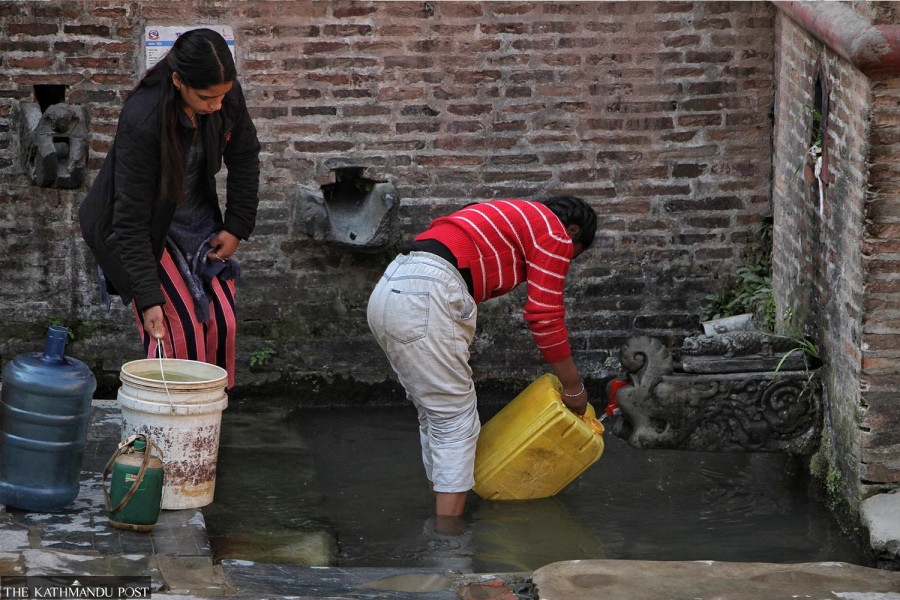
Sixty percent of drinking water samples in Lalitpur’s Konjyosom have been found contaminated with faecal coliform. Contaminated water is a recurring public health concern in Nepal, where outbreaks of diseases such as cholera, dysentery, and typhoid have repeatedly been linked to poor water quality. Post File Photo
Of the 20 drinking water samples collected from various places in the Konjyosom Rural Municipality of the Lalitpur district, 12 have been found contaminated with faecal coliform, meaning 60 percent of the water samples tested were unfit for drinking.
The findings suggest that worsening water scarcity could increase the risk of water-borne disease outbreaks, as people may be forced to rely on unsafe sources during the dry season, health experts warn. Contaminated water is a recurring public health concern in Nepal, where outbreaks of diseases such as cholera, dysentery, and typhoid have repeatedly been linked to poor water quality.
Officials at the Public Health Office, Lalitpur, say water samples were collected from household taps, public taps, schools and government offices two weeks ago for quality testing.
“Due to a busy schedule and a human resource crunch, we have not been able to carry out testing of water quality in other areas,” said Shree Bhadra Sharma, an official at the Public Health office in Lalitpur. “We will resume testing water in other areas from next week.”
Faecal coliforms are microscopic organisms found in the intestines of warm-blooded animals and their faeces. Their presence means the water used by locals in the rural municipality is contaminated with sewage, doctors say.
The presence of faecal coliforms, including E. coli, or other microscopic organisms in drinking water samples is not new in Nepal, and even the so-called purified jar water samples are often found contaminated with hazardous microbes, according to experts. Every year, thousands of people are infected with water-borne diseases, including dysentery, typhoid, hepatitis A and E, and cholera.
They, however, warn that apathy towards taking basic preventive measures and raising awareness about the risks could trigger major outbreaks of water-borne diseases, like the one the country witnessed last year in Parsa district. Several people died, and hundreds were infected with diarrhoeal disease and cholera that spread across various local units in Bara and Parsa districts last year.
Vibrio cholerae 01 Ogawa serotype was confirmed in the stool sample of an infected patient at the time. Cholera is a highly infectious disease that causes severe diarrhoea and vomiting, which in turn results in dehydration and can lead to death within a few hours if left untreated.
Health facilities were overwhelmed with seriously ailing diarrhoeal patients, academic institutions were shut to contain the spread, and authorities were forced to launch a cholera vaccination campaign after all other measures failed to contain the outbreak.
“Such a scenario could repeat this year also, as drought-like conditions have created water scarcity in various places,” said Dr Sher Bahadur Pun, chief of the Clinical Research Unit at Sukraraj Tropical and Infectious Disease Hospital. “When the water crisis deepens, people could use the water from any available source without considering its quality.”
Before the cholera outbreak in Birgunj last year, most parts of the Madhesh province were reeling under acute water scarcity. Doctors say similar conditions are emerging this year as well, as many local health agencies have not begun assessing the quality of drinking water and this could put the general population at risk.
“People take the issue lightly until it affects them or their family members,” said Pun. “They understand how serious the ailment can be only after they themselves become infected.”
Every day, around half a dozen people suffering from severe diarrhoea visit the Teku-based Sukraraj Hospital for treatment. Many people first try to manage their symptoms with over-the-counter medicines bought from pharmacies, then seek treatment at private clinics, and finally come to the hospital when their condition does not improve.
A report from the Nepal Multiple Indicator Survey (MICS) 2024-25 published last year, showed the presence of potentially deadly microbes, including E. coli, in over 60 percent of drinking water samples collected from households across the country.
The report showed that 98.2 percent of the population uses an improved source of drinking water. However, contamination of over 60 percent water samples with hazardous microbes indicates the so-called improved sources have failed to deliver safe water.
Arjun Poudel is a health reporter for The Kathmandu Post. Before joining the Post, he worked for Sagarmatha Television, Naya Patrika, Republica and The Himalayan Times.




 17.29°C Kathmandu