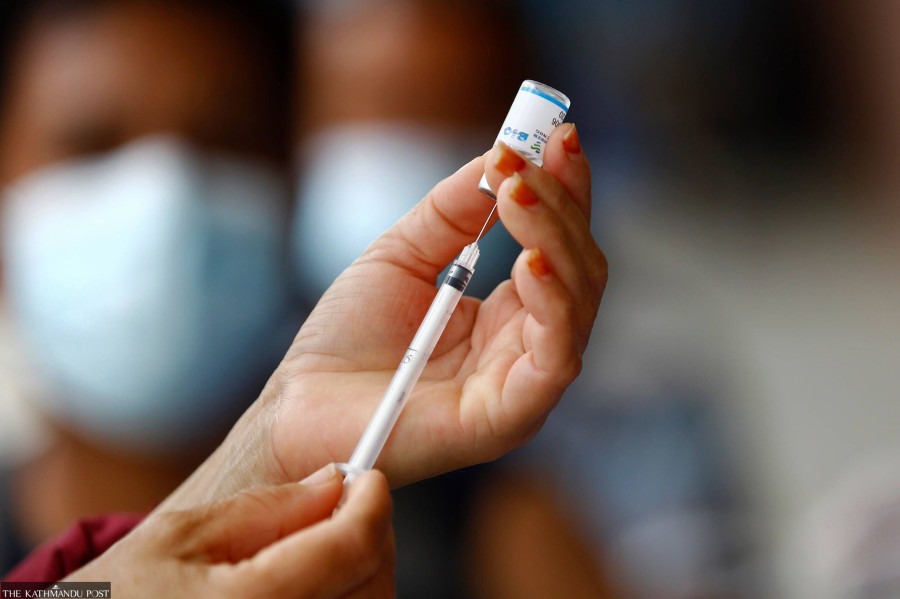
At least 1.7 percent of children aged 12 to 23 months receive no childhood vaccine provided free of cost under routine vaccination programmes, according to the new Nepal Multiple Indicator Survey (MICS) 2024-25 report.
The study carried out by the National Statistics Office in partnership with the United Nations Children’s Fund (UNICEF), also shows that 11 percent of children in the same age group did not complete all basic antigens.
The figure was four percent in 2021, according to the Nepal Demographic and Health Survey-2022 carried out by the Ministry of Health and Population, and 1 percent in 2016.
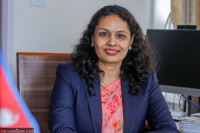
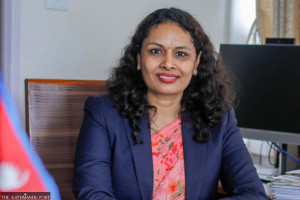
‘This report shows more than 50 percent reduction in zero doses and 10 percent increase in the coverage of basic antigen compared to the 2022,” said Dr Abhiyan Gautam, chief of the Immunisation Section at the Family Welfare Division under the Department of Health Services. “But still a lot of gaps have been identified, and we have to make additional efforts to address those gaps."
Health officials estimated that around 400,000 babies are born in Nepal every year, and if 1.7 percent of children aged 12 to 23 months are not receiving any vaccine dose provided under routine vaccination programmes, over 6,000 children miss vaccines every year.
Child health experts say the report exposes persistent gaps in vaccination and urge relevant authorities to make additional efforts and micro-planning to address the issues identified.
“Although the gap has narrowed since 2021, 1.7 percent of children who have not received any antigen is still a huge number,” said Dr Shyam Raj Upreti, former director general at the Department of Health Services. “This report contradicts our claims of achieving fully immunised status.”
The Ministry of Health and Population declared Nepal fully immunised last year, but experts had immediately warned that government data lacks independent verification. Recurring outbreaks of vaccine-preventable diseases show continuing gaps such as the recent measles outbreak in the Malangawa Municipality in Saptari, which exposed gaps accumulated over the past 24 years.
The nationwide study conducted between December 15, 2024 and May 10, 2025, also shows variation in gaps across provinces.
According to the report, 1.1 percent of children (12-23 months) from urban areas and 2.8 percent of children of the given age group receive no vaccine at all. The report shows that 4.6 percent of children from the rural setting of Bagmati province, three percent of children from Lumbini and Karnali provinces, and 2.8 percent of children in other areas did not receive any vaccines.
The report shows nearly 11 percent of children did not complete all doses of vaccine provided free of cost by the government.
“This (NMICS report) is an authentic report prepared by government agencies and it contradicts some of the past claims of progress,” said Upreti. “It shows serious gaps in the routine immunisation programme.”
The government provides 14 types of vaccines through the national immunisation programme. Earlier, only 11 antigens were included in the programme. Later, the Ministry of Health and Population added rotavirus, typhoid, and human papillomavirus vaccines to the routine immunisation schedule. There are more than 16,000 immunisation clinics across the country.
The percentage of children aged 12-23 months who are fully vaccinated (received all basic antigens) has fluctuated over time, rising from 43 percent in 1996 to a peak of 87 percent in 2011, then decreasing to 78 percent in 2016, and increasing slightly to 80 percent in 2022.
The new report shows only 81 percent of children from the said age group in Karnali receive basic antigens, followed by Madhesh 87.3, Lumbini 89.8 and Gandaki Province 95.5, the highest in the country.
Immunisation is the most cost-effective and efficient way to control and eliminate vaccine-preventable diseases that contribute to childhood illnesses and deaths.
Arjun Poudel is a health reporter for The Kathmandu Post. Before joining the Post, he worked for Sagarmatha Television, Naya Patrika, Republica and The Himalayan Times.




 15.92°C Kathmandu