Malnutrition ravages Sudurpaschim as politics ignores a silent crisis
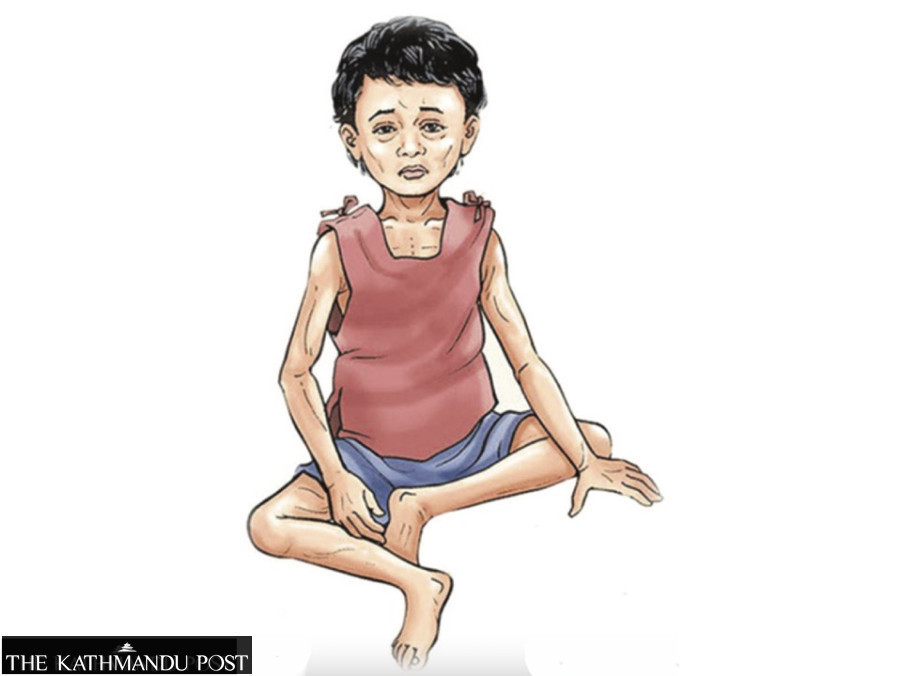
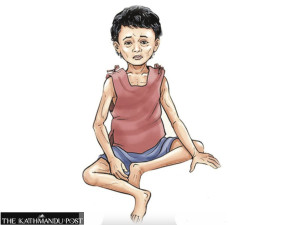
A recent report shows 11.4 percent children under five years of age in Darchula, 9.6 percent in Bajura, 8.8 percent in Bajhang, 7.7 percent in Doti, and 6.8 percent in Achham suffer from severe stunting. Post Illustration
Over one-third of children under five in Surma Rural Municipality in Bajhang have been found suffering from malnutrition, a recent Smart+ survey shows. The survey also found that 11.4 percent of children in the district suffer from severe stunting, which is the highest rate among nine districts of the Sudurpaschim province.
Experts say the crisis is worsening due to poverty, migration of working-age adults, and political neglect.
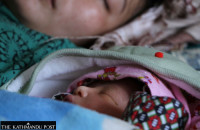
“Adult males have gone to India for work, and there isn’t sufficient food to eat at home,” Shiva Lal Bohara, chief of the Health Section of the rural municipality, told the Post over the phone from Bajhang. “Not only small children, their mothers are also malnourished.”
Malnutrition has remained a silent crisis in Nepal. Severe acute malnutrition, the most extreme and visible form, requires urgent hospital care. Nutritionists, as well as public health experts, say nutrition issues are linked not only to health but also to education, poverty, awareness and several other social factors. Despite this, nutrition has never been on the agenda of any political party, even during elections, which they say is very unfortunate.
“Health workers and health agencies alone cannot solve the nutrition problems affecting hundreds of thousands of children,” said Dr Aruna Uprety, a public health expert. “It is largely a political issue, and without political will, these problems cannot be addressed permanently.”
Earlier, Nepal had made significant progress in reducing severe forms of malnutrition among children under five. According to the Nepal Demographic Health Survey (NDHS) report, stunting decreased from 57 percent in 2001 to 25 percent in 2022. Wasting, a debilitating condition that causes muscle and fat tissues to waste away among children under five, decreased from 11 percent in 2001 to eight percent in 2022.
In Bajhang, health workers say, most villages have only elderly people, women, and small children. Villagers do not take malnutrition seriously, as it is not a new problem.
“Forget about nutritious food. People from marginalised communities even struggle to fill their stomachs,” said Bohara. “People tell us that we only ask them to eat nutritious foods, but do not ask why they cannot.”
The new prevalence rates are notably higher than those reported in the Nepal Demographic Health Survey (NDHS)-2022, which shows a national average of stunting 25 percent, underweight 19 percent and eight percent wasting.
The NDHS-2022 report showed that the wasting rate of Sudurpaschim province was below 10 percent.
Experts say malnutrition is limited to Bajhang district. Across the province 25.3 percent of children are stunted and 25.5 percent are underweight. Both indicators point to acute undernutrition, according to the World Health Organisation classifications.
In Bajura district, 46.8 percent of children are stunted, including 37.2 percent with moderate stunting and 9.6 percent with severe stunting. In Baitadi 38.4 percent children have been found stunted, and 23.6 percent children are moderately malnourished.
Health workers say they saw stunted and wasted children in almost every village. “Nutrition is a multisectoral issue. Health workers are doing their part, but health alone is not enough to solve the problem,” said Bhanu Bhakta Joshi, chief of Health Office, Bajhang.
Nutritionists stress that without strong political will, malnutrition problems cannot be resolved.
“Nutrition is purely a political issue,” said Dr Atul Upadhyay. “Without a strong political will and initiative, poverty cannot be eliminated, and without addressing poverty, malnutrition cannot be tackled properly. It is very unfortunate that no political party raises nutrition as an election agenda.”
Experts say nutrition directly affects a country’s development. Malnutrition impairs children’s physical and mental growth, weakens intellectual capacity, limits productivity in adulthood, and increases vulnerability to certain diseases.
Children who remain malnourished without timely treatment are likely to become stunted and face a higher risk of multiple non-communicable diseases later in life. Children with severe acute malnutrition are 10 times more at risk of dying compared to healthy children, doctors say.
Malnutrition plays a major role in the under-five mortality rate, according to the nutrition section at the Family Welfare Division under the Department of Health Services.
Arjun Poudel is a health reporter for The Kathmandu Post. Before joining the Post, he worked for Sagarmatha Television, Naya Patrika, Republica and The Himalayan Times.




 14.69°C Kathmandu