Nepal issues Nipah testing guidelines amid India outbreak
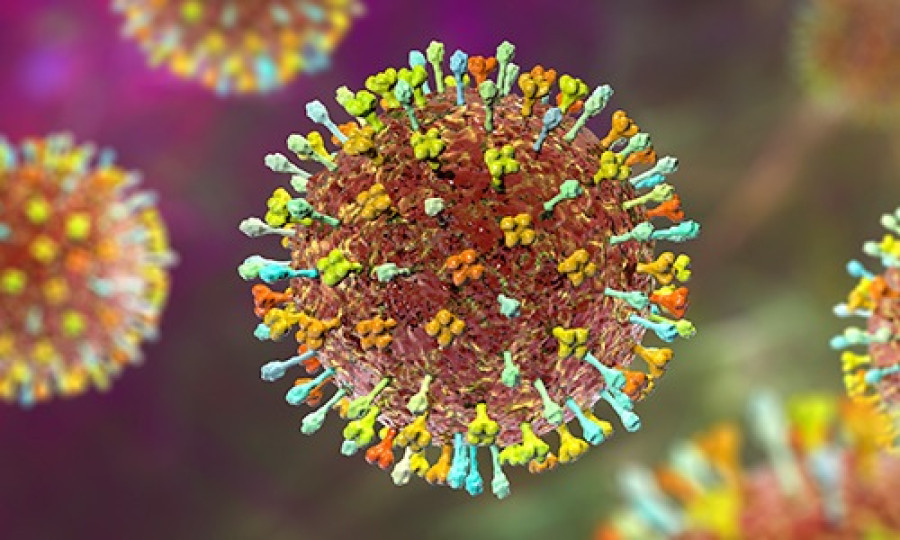
Ailing patients with fever, breathing difficulties, or coma, and known exposure are suspected Nipah cases. The Nipah virus. Photo: European Centre for Disease Prevention and Control’s website
Amid growing concern over the current Nipah virus outbreak in West Bengal, India, and rising fear and testing demands, Nepal’s Epidemiology and Disease Control Division has issued an interim testing guideline for suspected cases.
As per the new protocol, suspected Nipah cases are people whose health is rapidly deteriorating or who have died, and who show symptoms such as fever with breathing difficulties or coma. The protocol states that such persons must also have an epidemiological link, such as drinking raw date palm sap, contact with infected animals, particularly fruit bats, and have a history of travelling in the Nipah endemic areas.
Probable Nipah cases include deaths, severe acute respiratory infections, or cases of acute encephalitis, and anyone who has been in contact with confirmed Nipah patients.
“Dozens of people, including those who have recently travelled to India’s West Bengal and are experiencing influenza-like symptoms, have been contacting us for testing,” said an official at the Epidemiology and Disease Control Division, asking not be named, as he is not authorised to speak to the media.
“We don’t need to panic, as Indian health authorities and the World Health Organisation have informed us that the outbreak has been successfully contained, and the risk of spread is not high even though Nepal shares a land border with West Bengal.”
Nipah is a zoonotic virus that is transmitted from animals to humans. But Nipah is far deadlier than the coronavirus that wrought havoc worldwide for years since its outbreak in 2019. India confirmed two cases of Nipah virus infection this month in the state of West Bengal.
Infected patients are healthcare workers, who showed symptoms in the last week of December last year, according to the UN health body.
Transmission generally occurs when people come in direct contact with infected animals or consume their meat. But cases of human-to-human transmission of the virus have also been reported in many places, including in India, among the families and caregivers of the infected people.
Public health experts say Nepal is at risk of a Nipah virus outbreak, as fruit bats, the virus's primary hosts, may also be present in Nepal. West Bengal borders Nepal’s Koshi province, where hundreds of people cross daily.
Officials say that health workers have been asked to admit suspected Nipah cases to hospitals designated as coronavirus treatment centres in the past, with respiratory and contact precautions (personal protective equipment).
“We are also working to prepare a treatment guideline,” said the officials.
Earlier, the disease control body had directed hospitals nationwide to report sudden patient deaths and patients exhibiting Nipah virus-like symptoms. Health desks at the land crossings and Tribhuvan International Airport have been alerted to the possible arrival of a Nipah virus case and have directed health workers to remain vigilant.
The World Health Organisation says that people infected with the Nipah virus typically develop symptoms within 3 to 14 days, with fever, headache, cough, sore throat, and difficulty breathing. Some people may also experience brain swelling or encephalitis, where severe symptoms can include confusion, drowsiness and seizure. In some cases, patients can fall into a coma within 24 to 48 hours.
The disease has a fatality rate of 40–70 percent, according to the UN health body.
The Nipah virus was first detected in 1999, after farmers and others who came into close contact with infected pigs in Malaysia and Singapore developed severe respiratory problems and brain inflammation. According to the US Centres for Disease Control and Prevention, nearly 300 people were diagnosed with the disease then, and more than 100 of them died.
India’s West Bengal recorded the deadliest Nipah virus outbreak in 2001, in which 66 people were infected, and 45 of them died. The virus resurfaced in 2007 when five people were infected, and all died.
The virus claimed 17 lives in Kerala, India, in 2018. Between 2018 and 2025, outbreaks were reported almost annually in Kerala. The deadly virus has resurfaced in West Bengal after a 19-year gap, according to media reports.
So far, India documented the seventh Nipah outbreak
Experts said that authorities should take the issue seriously as the virus is far deadlier than the coronavirus, with up to a 70 percent death rate in humans.
Doctors say that fruit bats from India, which carry the Nipah virus, can easily enter Nepal due to the proximity and similar environments. Moreover, there is a high likelihood that any disease seen in India will enter Nepal due to the free movement of people between the two countries, doctors say.
The World Health Organisation said that although the virus has caused only a few known outbreaks in Asia, it infects a wide range of animals and causes severe disease and death in people, making it a public health concern.
Doctors say most Nipah virus symptoms overlap with those of other common viruses, including the coronavirus, increasing the risk of misdiagnosis.
There is no treatment for the Nipah virus at present. Health workers provide only symptomatic treatment, according to them.
Arjun Poudel is a health reporter for The Kathmandu Post. Before joining the Post, he worked for Sagarmatha Television, Naya Patrika, Republica and The Himalayan Times.




 18.86°C Kathmandu