Six-month maternity leave proposal gutted in September protests
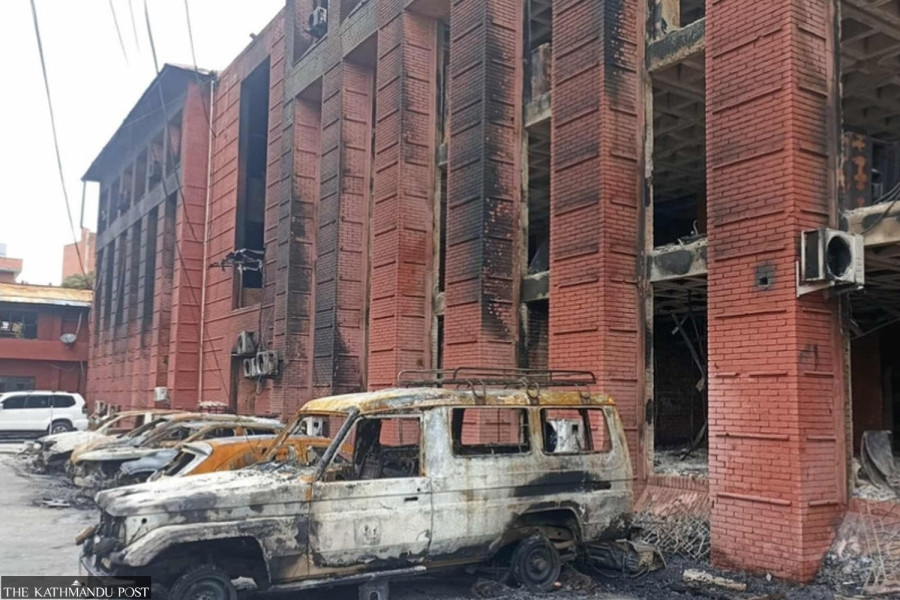
Officials say the proposal aimed at promoting breastfeeding among new working mothers will have to be rewritten.Burnt down vehicles pictured in front of the health ministry building after the Gen Z uprising in September. Post file photo
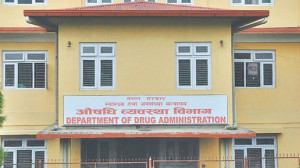
A proposal to grant six months’ maternity leave to working mothers, prepared by the Ministry of Health and Population as part of broader public health reforms, was destroyed during the September Gen Z protests. Now officials say they have to draft the proposal all over again.
The ministry had prepared a proposal to replace the Mother’s Milk Substitutes (Control of Sale and Distribution) Act-1992, which also includes a proposal to grant six months’ leave to new mothers.
The proposal had been forwarded to the Ministry of Law, Justice and Parliamentary Affairs for its suggestions. The ministry has returned the proposal with suggestions.
“The document was ready to be sent to the Council of Ministers, but was destroyed during the Gen Z protests in September,” said Lila Bikram Thapa, chief of Nutrition Section at the Family Welfare Division under the Department of Health Services. “We don’t even have a soft copy of the document and have to work on a new proposal from scratch.”
The youth-led anti-corruption protests on September 8 and 9 caused unprecedented damage to life and property in Nepal and forced out the KP Sharma Oli-led Congress-UML coalition government. The death toll from the state crackdown on the protests has reached 77.
Almost all federal and provincial ministries' buildings, including the Ministry of Health and Population building, were set on fire by the protesters. Crucial documents were destroyed.
Health officials say the draft law was among multiple crucial public health proposals that were prepared with financial and technical support from national and international experts.
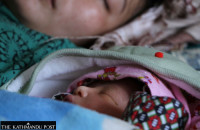
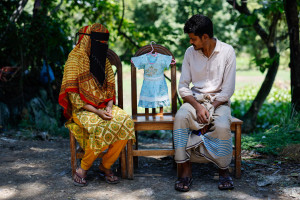
“Had the law revision been endorsed, working mothers would have received six months’ leave, which would have helped promote breastfeeding,” said Thapa.
Studies show that exclusive breastfeeding rates in Nepal have been steadily declining over the years.
According to the Nepal Demographic and Health Survey-2022, exclusive breastfeeding declined from 70 percent in 2011 to 66 percent in 2016, and further to 56 percent in 2022.
Health officials are concerned that more educated and well-off mothers are less likely to exclusively breastfeed their babies.
The proportion of children who are bottle-fed rises with increasing mothers’ education, from 12 percent among those whose mothers have no education to 49 percent among those whose mothers have more than a secondary education, the report said. Bottle feeding is highest in the top wealth quintile at 46 percent and lowest in the bottom quintile at 11 percent.
Health officials say granting six months' leave to working mothers would help promote exclusive breastfeeding. They attribute the decline in breastfeeding among educated, working mothers to pressure to return to work soon after childbirth.
Doctors recommend breastfeeding for the first two years or longer, as breast milk reduces children’s risk of illness, supports their recovery, and remains an important source of nutrients for healthy growth and development.
Longer durations of breastfeeding also have health benefits for women, including reduced risks of certain breast and ovarian cancers and diabetes, doctors say.
Nepal had committed to increasing the exclusive breastfeeding rate to more than 90 percent by 2030, but the rate has continued to decline.
Officials also say they had prepared a document to amend the “Right to Safe Motherhood and Reproductive Health Act-2018” for submission to the Cabinet, but that document was also destroyed in the September 8-9 mayhem.
“Had the act been revised, it would also have supported increasing leave for new mothers,” Thapa said.
Arjun Poudel is a health reporter for The Kathmandu Post. Before joining the Post, he worked for Sagarmatha Television, Naya Patrika, Republica and The Himalayan Times.




 19.72°C Kathmandu