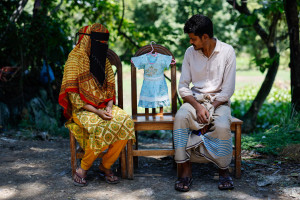
Sex-selective abortions are rampant in Nepal, especially in big cities and semi-urban areas of Nepal, as data on boys to girls birth ratio indicate.
Government officials as well as public health experts, including gynecologists, admit that the problem is serious and needs immediate intervention to prevent looming gender imbalance and resulting social and other problems in the country.
“The problem is more serious than many people imagine, and agencies concerned also don’t seem to have taken it seriously,” said Dr Pawan Sharma, professor of Obstetrics and Gynaecology at Patan Hospital. “We have heard a lot about stark gender imbalances in some states of neighbouring India and China. We cannot rule out a similar situation in Nepal, if immediate intervention measures are not taken.”
Data from the the Ministry of Health and Population show sex-selective abortions are alarmingly high not only in areas with low education but also in big cities, where more people are educated.
According to data, 383,205 babies were born in the fiscal year 2024-25. Of them 206,374 were boys and 176,831 girls. The difference is 29,543. The figure shows the girls’ ratio is 16.71 percent lower than that of boys, meaning boys outnumbered girls, markedly.
Experts say the natural sex ratio at birth should be about 105 boys per 100 girls.
The gender gap is even wider at the provincial level. According to the Health Ministry, of 36,622 babies born in Sudurpaschim province, 20,344 were male and the remaining 16,278 were female. The gap is around 25 percent—highest among all seven provinces. Sudurpaschim is followed by Madhesh, which recorded 86,901 births, of which 48,117 are male and 38,784 are female. The male-to-female birth gap is over 24 percent.
Experts say the large gap between male and female birth ratio means sex selective abortion is unchecked in these provinces.
Karnali province reported 26,452 births—14,275 boys and 12,177 girls, and the boys-to-girls gap is 17.23 percent. Bagmati province reported 73,639 births—39,188 boys and 34,451 girls, and the gap is 13.75 percent.
Likewise, Lumbini reported 79,032 births—41,931 boys and 37,101 girls; the gap is over 13 percent. Koshi recorded 61,796 births, of which 32,663 were male and 29,133 female, for a gap of over 12 percent.
Gandaki province reported 1,762 births—9,855 boys and 8,907 girls; and the boy-to-girl gap is 10.64 percent, the lowest in the country.
Experts say preference for boys to girls is not new in Nepal, but it has increasingly led to sex-selective abortions in recent decades.
Several studies, including a report by the National Statistics Office, show a widening gap that is especially high in big cities and districts bordering India. These areas, with the largest gender disparities, have easy access to healthcare facilities that provide foetal sex identification tests.
Doctors suspect that parents whose firstborn is a son, tend to avoid having a second child, and if their firstborn is a daughter then many often determine the sex of the next pregnancy and opt for abortion if it is a girl.
Multiple demographers the Post talked to warn that a widening gender gap could create long-term social problems, including crime.
“We have heard news about inter-state marriages in India. In China, youths are having difficulty finding brides,” said Yogendra Bahadur Gurung, professor and head of the Central Department of Population Studies at the Tribhuvan University. “We cannot rule out a similar scenario in our country, if ongoing practices are not immediately stopped.”
Despite rising education and empowerment among women in Nepal, illegal sex-selective practices continue. Several factors drive the trend, including a strong cultural preference for sons, combined with discrimination in care for girls which increases female mortality. The rising trend of marrying late and delayed motherhood have also encouraged families to have only one child, and many opting for a boy.
The rising costs of living, healthcare and education is also the reason for having a single child and sex-selective abortions.
Both testing of the sex of a foetus and sex-selective abortion are banned in Nepal. The Safe Maternity and Reproductive Health Act, 2018 states that pregnant women should not be coerced into identifying the sex of the foetus through intimidation or terror, or by improper influence and deception.
Under the National Criminal Code, 2017, parents and service providers can face one to five years in prison, along with fines between Rs10,000 and Rs50,000.
But no one has been sentenced or fined for committing such crimes in Nepal.
“Making laws alone does not stop illegal practices,” said Kabin Maleku, a pharmacist. “Strong enforcement is necessary.”
Sex identification of embryos is possible only after 12 weeks of pregnancy and only radiologists who perform ultrasounds can confirm the gender of the foetus.
Experts say most radiologists and gynaecologists working in state-run hospitals and large private hospitals generally do not carry out sex-selective abortions, partly as it is not profitable. However, most such abortions connected to around 300 radiologists and over 200 gynaecologists working in small private clinics in urban and semi-urban areas.
“These are the clinics where illegal sex-selective abortions take place, they could be immediately prevented with proper enforcement of the law,” says Maleku.
Abortions are also being carried out through pills, but terminating a fetus of over 12 weeks requires medical supervision, which only gynaecologists or experienced medical officers can provide, according to doctors.
Gynecologists and radiologists the Post talked to concede that some people in their professions are involved in illegal activities, which tarnishes the image of honest doctors.
“Due to the greed of a few, honest doctors are being defamed,” said Dr Swyam Prakash Pandit, a professor of radiology. “Authorities must enforce the law strictly to stop the illegal practices.”
Multiple doctors told the Post that sex-selective abortion has persisted in the country for years and the practice may be increasing. They say that incumbent health minister Sudha Gautam, who herself is a senior gynecologist, is aware of sex-selective abortions and the measures needed to prevent them.
“The minister can strictly enforce law, regulate ongoing practices and take every measure to prevent problems that would invite multiple social problems,” said Maleku.
Abortion was legalised in Nepal in 2002, a milestone development for women’s reproductive rights, empowerment, and right to bodily autonomy. With legalisation, the practice of prosecution and jail terms for women who terminated unwanted pregnancies ended, and unsafe abortions decreased dramatically.
In the last fiscal year, 105,099 women terminated their pregnancies—through surgical or medical means—at government-authorised health facilities.
Arjun Poudel is a health reporter for The Kathmandu Post. Before joining the Post, he worked for Sagarmatha Television, Naya Patrika, Republica and The Himalayan Times.




 14.69°C Kathmandu