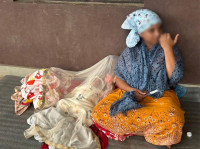
Most hospitals treating burn victims said all allocated beds have been occupied. Doctors urge the public to avoid open fires, and ask authorities to distribute warm clothes. Shutterstock
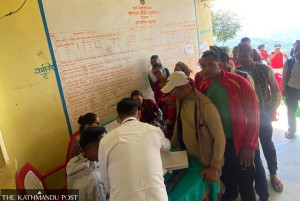
The Nepal Cleft and Burn Centre also known as Kirtipur Hospital on Wednesday decided to expand an additional eight beds in its burn unit, as all 35 beds of the unit have been occupied by patients with severe burn injuries.
Along with general beds, all 11 beds of the intensive care unit (ICU) of the hospital have been occupied by critically ill burn patients.
“Burn victims keep coming every hour, “ said Dr Shankar Man Rai, senior consultant at the hospital. “We cannot expand intensive care unit beds easily, like we are expanding general beds numbers.”
With the start of winter season, hospitals treating burn victims in the Kathmandu Valley witness an alarming surge in burn cases. Ongoing cold wave conditions in many Tarai districts have also contributed to a spike in burn incidents. Doctors, however, said that the limited bed capacity, especially in intensive care units, has made it increasingly difficult to provide timely care to the victims.
“We have few vacant beds in general wards, but do not have any intensive care unit beds available,” said Dr Piyush Dahal, chief consultant plastic surgeon at Bir Hospital. “The number of burn victims is rising every day, but the bed capacity is not increasing at the same pace.”
Multiple doctors, the Post spoke to, urged the general public not to sit too close to fires, even during extreme cold. They also requested that authorities distribute warm clothes to the poor instead of firewood.
“The risk of catching fire lessens if we keep distance from flames,” said Dr Ishwar Lohani, a consultant plastic surgeon. “We should be careful while warming ourselves, take special care of children and elderly people, and move them away from fire to protect them from catching fire.”
Meanwhile, the Meteorological Forecasting Division under the Department of Hydrology and Meteorology said that temperatures could decline further, as the peak winter period is yet to arrive. Ongoing cold wave conditions in the Tarai will continue for the next couple of days, it said.
“Compared to Tuesday, visibility in Dhangadhi has improved today [Wednesday],” said Binu Maharjan, a meteorologist at the division. “But these conditions will persist for the next few days.”
Health experts warned the public not to take fire lightly, as treatment is too costly and the chance of recovery also depends on the extent of injury.
The erstwhile government had pledged to provide free care to poor burn victims and reimburse treatment costs to the designated hospitals, but most health facilities have complained that they have not received reimbursements, and patients have been forced to pay costly treatment charges.
Designated hospitals for free treatment of burn injuries include Kirtipur Hospital in Bagmati province; BP Koirala Institute of Health Sciences in Koshi province; Narayani Hospital in Madhesh province; Pokhara Institute of Health Sciences in Gandaki province; Bheri Hospital in Lumbini province; Surkhet Provincial Hospital in Karnali province; and Seti Provincial Hospital in Sudurpaschim province.
Nepal is among the countries with the highest incidence of burn injuries. It is the second most common injury in rural Nepal, accounting for five percent of disabilities, according to the World Health Organisation.
The health ministry estimates that each year, 55,000 people throughout the country suffer burn injuries.
One study shows that over 40,000 people sustain burns [minor or severe] every year in Nepal. Among them, about 1,500 to 2,000 succumb to their injuries.
Kirtipur Hospital alone provides treatment to around 800 victims each year. Despite the scale of the problem, the government has neither upgraded nor expanded treatment facilities, nor has it run awareness programmes to deal with the immediate aftermath of burn incidents.
Most hospitals provide only minor treatment for burns. Experts say such care does not ensure patient safety, and a multidisciplinary team of experts is needed to provide specialised care to victims.
For that, highly trained medical professionals with years of training, advanced equipment and advanced facilities are needed, which in turn calls for a big investment, and it might not be possible to put together such a large sum.
Doctors say public awareness, too, can substantially increase the chances of survival of burn patients.
Arjun Poudel is a health reporter for The Kathmandu Post. Before joining the Post, he worked for Sagarmatha Television, Naya Patrika, Republica and The Himalayan Times.




 15.48°C Kathmandu