The National Planning Commission has reset almost all of the Sustainable Development Goals (SDGs) targets, scaling back international commitments the government earlier promised to achieve by 2030.
What has surprised experts and officials is that several achievable targets, including those for maternal, neonatal and under-five mortality, have been lowered.
“Almost all of the SDG targets have been revised,” said Anita Poudel, an undersecretary at the commission. “The decision to reset targets has been made after comprehensive analysis of the resources necessary to achieve the targets, evolving national and global contexts, economic slowdown and declining international support.”
The SDGs, a follow-up on the Millennium Development Goals (MDGs), aim to end poverty, hunger and all forms of inequality in the world by 2030. Nepal has committed to meeting them.
The government had committed to allocate at least seven percent of the gross domestic product (GDP) to healthcare expenditure, but this has now been revised to five percent.
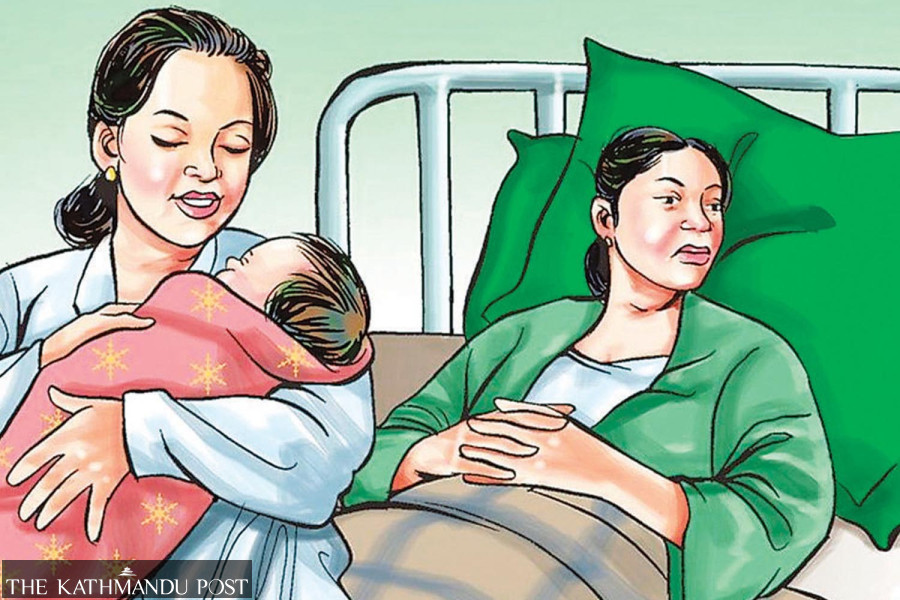
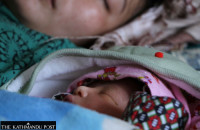
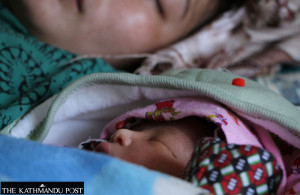
As per the new revised target, maternal mortality rate will be reduced to 110 per 100,000 births from 70 committed earlier. Nepal has cut maternal deaths by over 70 percent since 2000, according to the World Health Organisation.
The UN health body, in its report released in April, stated that 142 Nepali women die from maternity-related complications per 100,000 live births.
A previous study carried out by the National Statistics Office in 2021 had shown 151 maternal deaths per 100,000 live births.
Earlier, in 2016, the country reduced the maternal mortality rate from 539 per 100,000 births in 1996 to 239 per 100,000 births in 2016, an achievement for which the country even received the Millennium Development Goals award.
Likewise, the revised SDG targets for neonatal mortality rate has been set at 15, up from the earlier commitment of 12. The neonatal mortality now stands at 16.6 per 1,000 live births.
Similarly, the under-five mortality rate has been lowered to 25 from the previous commitment to reduce it to 20 by 2030.
“Several health targets under SDGs, including maternal, neonatal, and under-five mortality rates are achievable and we are committed to meeting them,” said Dr Bikash Devkota, secretary for health. “The question is about financing, and what concerns us most is that the revised plan allows healthcare expenditure to be reduced to five percent from the existing 5.3 percent of the GDP.”
Public health experts say the decision to reset SDGs targets could be a ploy to reduce health financing and evade responsibilities for saving lives.
“Nepal is on track to achieve many health-related SDGs targets, and where progress is lagging, relevant agencies should make additional effort,” said Mahendra Shrestha, a retired chief specialist at the Health Ministry. “The government cannot escape its responsibilities by simply resetting targets.”
Health officials say regardless of the revised targets, they will work continuously to prevent deaths and improve public health.
Arjun Poudel is a health reporter for The Kathmandu Post. Before joining the Post, he worked for Sagarmatha Television, Naya Patrika, Republica and The Himalayan Times.




 13.8°C Kathmandu