The Commission for the Investigation of Abuse of Authority (CIAA), the constitutional anti-graft body, on Sunday filed a corruption case against 55 individuals and a Chinese company over irregularities in the construction of Pokhara International Airport. Among those charged are five former ministers, 10 ex-secretaries, other staff, plus one company. The charge sheet, which the anti-graft body filed at the Special Court, accuses officials and the contractor of “revising the approved cost estimate of the airport with malicious intent, inflating the estimate abnormally, and making excessive payments accordingly.” The contract also clearly violated the Public Procurement Act. The inflated cost totals $74.34 million, making it the largest corruption case under a public procurement process reported at the court. The CIAA’s intervention is thus commendable—albeit a little late.
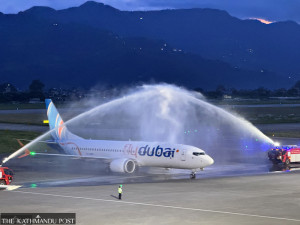
This follows the parliamentary subcommittee investigation carried out by the previous government. Amid growing concerns over the airport’s construction, a sub-panel under the Public Accounts Committee of the House of Representatives investigated the matter and assessed documents, contracts, expenditure and the airport’s physical compliance and released a final report in April 2025. Around a dozen issues—including the forged cost of transporting soil and pebbles to the construction site, lower than specified runaway elevation, and tax exemptions amounting to Rs2.2 billion granted to the contractor—also came to the fore. As a result of flawed design and construction, even though the airport began operating in January 2023, it currently serves only domestic carriers, with only a few chartered international flights coming in.
Civil aviation has long been among the most corrupt public sectors in Nepal. Not only is our aviation industry beset by safety issues, but also by regulatory problems. The CAAN is still operating with a conflict of interest, serving a handful of officials who largely benefit from the body’s dual role as the service provider as well as the regulator. Last week, the CIAA detained Pradeep Adhikari, the director general of the CAAN, over his alleged involvement in anomalies during the construction of a heliport in Nalinchok, Bhaktapur. (Now he has also been charged in the Pokhara airport case.) Those meant to guarantee robust aviation standards are actually compromising on air safety. The economic stakes of such irregularities are high, with Nepali flag carriers still barred from entering the EU skies. Still, successive governments have been reluctant to look into the case and bring the culprits to book.
Even though the interim government, which is largely tasked with holding elections on March 5 next year, does not have enough time to investigate every corruption case, it has nonetheless set a wonderful precedent. After all, the spirit of the September Gen Z protest was to bring down the walls of corruption in public sectors. Yet whenever a new government is formed, cases of irregularities are swept under the rug.
Now that the Sushila Karki government has dared to do the right thing, there must be sustained pressure on successive governments to see these investigations and prosecutions to their logical end. In fact, the investigations should go deeper. For instance, currently only ministers have been charged. But what about successive prime ministers without whose knowledge a corruption of such a scale would not have been possible? Only when there is a thorough investigation and prosecution of all those involved in such high-level corruption, starting from the top of the decision chain, can the country’s aviation sector take wings.




 21°C Kathmandu