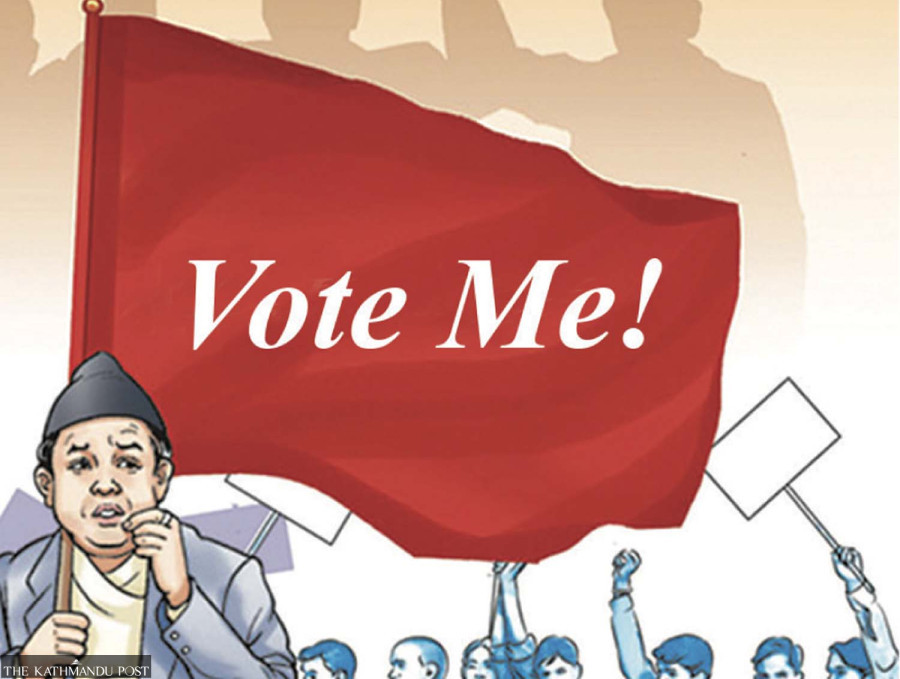
Under three months remain for the scheduled March 5 polls, with a total of 119 parties in the fray. Many of these are established outfits or their offshoots, formed after party mergers and splits. Yet there are also a few new ones that have emerged following the Gen Z uprising. Old or new, they will be taking part in elections being held in extraordinary times, when the previous elected government was removed not through the ballot box but by a revolt. This revolt spearheaded by members of the Gen Z had various demands, yet a central thread ran through them all. The people who came out on the streets all over Nepal on September 8 and 9—and who were supported by the intelligentsia, the media and a broad spectrum of society—said with one voice that they had had enough of same-old leaders running the country for decades. They spoke in favour of a generational change. Yet it was not just a call for a change of political leadership. In its spirit, the call was for a top-to-bottom shake-up of the state structure, making it younger, more inclusive and more service-oriented. Quite logically, this cannot be done by electing the same-old legislators with the same-old ideas working on the same-old problems.
Yet it is curious that none of the prominent political parties, old or new, have declared that their roster of election candidates will be younger or more inclusive—in keeping with the spirit of the Gen Z revolt. Start with the more established ones. As things stand, there are unlikely to be many new candidates from either the Nepali Congress or the CPN-UML, the two biggest parties in the dissolved legislature. This is because whoever wins the party leadership in their upcoming general conventions will be surrounded by the old stalwarts clamouring for tickets. But newer outfits like Ujyalo Nepal Party have also disappointed, for instance by their failure to declare, right up front, that half of all their candidates will be women or that a majority of them will be under-30. This is not as radical a proposal as it might sound. After all, these new forces have been formed on the foundation laid by the blood and sacrifice of Gen Z protesters. The revolution’s mandate was for a radical change in doing politics, not tinkering at the margins.
If these political parties can carry the agendas and spirit of the Gen Z uprising, they will be rewarded in elections. More than that, it will give the Nepali youth—many of whom are looking to leave the country for good, the first opportunity they get—a compelling new reason to be optimistic about their homeland. This will be vital for the prosperity and development of a young country whose median age is just around 25 years. On other hand, if these youths are again disappointed by the Nepali political class, the country’s prospects will be grim. Few had imagined the peaceful protests called on September 8 would eventually topple the mighty Oli government with two-thirds support in the legislature. Or that the grip of the old political elite could be loosened. But they did happen. This rare and unexpected chance to reshape the country’s politics should not be lost.




 19.73°C Kathmandu