Many residents of the villages of Hokse, Panchkhal, Jyamdi and Baluwa in Kavre district, just hours from the Capital, share a telltale sign on their bodies. On the sides of their stomachs, usually stretching from mid-hip towards the back, is a long, ugly scar. Once, a kidney lay underneath. Now, the organ has been long harvested. Promised sums of money ranging from Rs 50,000 to Rs 200,000, lied to about the kidney’s non-existent regenerative qualities and deceived about the potential health risks of losing a kidney, hundreds of mostly poor and uneducated Kavre residents have traded their organs to unscrupulous smugglers. Hokse was dubbed the ‘village of kidneys’ after it was discovered that more than 300 villagers had traded their organs. In one case, seven members of a single family had their kidneys missing. The organs are sold in India, where they fetch more than $7,000 on the black market.
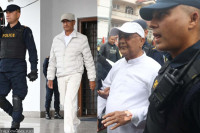
The Metropolitan Police Circle in Maharajgunj currently has 10 organ smugglers in custody. Among them is one Ranjit Maharjan, 24, accused of convincing 20-year-old Kavre resident Ramesh Sunar to give up his kidney. Maharjan himself relinquished one of his own kidneys when he was just 21. He is not the only one—six of the 10 accused organ smugglers have sold one of their kidneys. The testimonies of these men chart a similar trajectory. They were first approached by an intermediary offering a large sum of money for their kidney. Lured by the promise of easy money, they were taken to hospitals in India where their organs were
discreetly removed. In most cases, the payment did not materialise as promised. Once the money ran out, the victims attempted to find work but since their operations had left them weaker and with health problems, they found themselves unable to do hard labour, often the only jobs they were suited for. Faced with a dearth of options, the men returned to their villages—once victims themselves, now scoping out the poor and gullible for potential organs.
This problem needs a targeted, concerted response, not just from the police but from all concerned agencies. The police have done a commendable job busting organ rackets in the past, especially the arrest of notorious Indian ‘kidney king’ Amit Kumar from Sauraha in Chitwan in 2008. But their efforts need to be supplemented by awareness campaigns from the government, civil society and the media targeting the most at-risk areas in Kavre, like one in 2012, where the Kavre District Public Health Office (DPHO) initiated an awareness campaign in Hokse. The campaigns must work to dispel the misconceptions that kidneys grow back and that there are no long-term health risks to functioning with just one kidney. Furthermore, as the case of the six arrestees attests, victims often end up as victimisers for a lack of opportunity. Efforts, therefore, must be made to assist victims with loans and aid programmes. The Kavre DPHO’s provision of free treatment worth Rs 50,000 for victims is welcome but monetary aid must also be extended to livelihood support.




 18.12°C Kathmandu