The global fertiliser crisis may hit Nepal hard this plantation season
Nepal needs 250,000 tonnes of fertiliser for paddy cultivation. Around 183,000 likely to be available. This undated photo shows farmers in Rupandehi carrying fertiliser sacks. Tarai farmers often depend on smuggled fertiliser due to perinnial shorage. Sanju Paudel/TKP
The impact of the chemical fertiliser crisis triggered by tensions in West Asia is already being felt in the United States and Europe, where the main crop planting season is underway. In South Asia, including Nepal, the fertiliser crisis is expected to hit the first planting season in the coming months.
In the worst-case scenario, if imports of chemical fertiliser are disrupted, it would lead to lower yields and possible crop failures.
Even if supply partially improves, higher input costs are likely to stop Nepal from buying abundantly.
Low yields could push up food prices next year.
Iran is limiting shipments through the Strait of Hormuz, a narrow passage that typically handles about a fifth of the world’s oil shipments and nearly a third of global fertiliser trade. Freight rates have been rising with each passing day.
Nepali officials say that China, the world’s largest producer of nitrogen and phosphate fertilisers, is prioritising domestic supply, and urea shipments are unlikely to resume anytime soon.
Nepal’s paddy transplantation begins in June, and in the case of timely rainfall, from as early as mid-May. The new government is already under pressure to manage vital farm inputs and scrambling for alternatives.
According to the Ministry of Agriculture and Livestock Development, the fertiliser stock currently stands at 137,500 tonnes and has been reserved for the paddy transplantation period. A consignment of 45,000 tonnes is en route and may reach the country within a few weeks.
This means around 183,000 tonnes will be available for the peak paddy transplantation period, provided farmers do not divert fertiliser to other crops like maize.
The requirement for the three-month paddy transplantation period is at least 250,000 tonnes.
Nepal has floated a global tender to import 90,000 tonnes. However, officials say it will be difficult to secure supplies due not only to disruptions but also to a sharp rise in prices.
Sanket Bhattarai, assistant chief executive officer of Salt Trading Corporation, a government-backed enterprise that supplies 30 percent of subsidised fertilisers, said the price difference quoted by suppliers has reached $400 per tonne. “So, there are fewer chances that the supplier will deliver the product,” he said.
The corporation has issued a fresh tender with revised rates, but its outcome remains uncertain.
The earlier quoted price for urea fertiliser was $519 per tonne, which has now surged to $900 per tonne, including delivery charges, Bhattarai said.
Under Free on Board terms—where the seller is responsible for delivering goods to the port of departure, clearing them for export, and loading them onto the vessel—the price has reached $850 per tonne. This means the gap between the quoted contract rate and the current factory price exceeds $330 per tonne, leaving suppliers at a loss of over $300 per tonne.
Suppliers typically avoid fulfilling contracts when prices become highly volatile. When global prices rise sharply, they often choose to forfeit performance bonds rather than deliver at a loss.
For instance, in 2019-20, when fertiliser prices hit record highs, seven out of 10 global suppliers in Nepal failed to deliver on time. The retendering process is even slower, taking approximately six months, and only a few contractors consistently meet deadlines. As a result, shortages in Nepal are frequent.
“If the West Asia crisis continues for a few more weeks and there are no alternative measures, only 50 percent of the required chemical fertiliser will be available for the upcoming paddy transplantation season,” said Bhattarai.
Nepal’s primary fertiliser source is the Gulf region. Russia is considered an alternative, but officials say Nepali banks hesitate to open letters of credit involving Russian suppliers, complicating procurement.
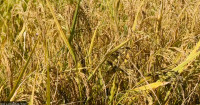
Rice is the dominant staple in Nepal, accounting for roughly 67 percent of total cereal consumption and over 50 percent of calorie intake. With an average annual consumption of 137.5 kg per person, rice plays a critical role in food security and, when combined with legumes, provides about 23 percent of total protein intake—making it one of the cheapest sources of protein.
A fertiliser shortage leads to lower yields, which in turn drives up prices, reduces farmers’ income, and increases the country’s food import bill.
For the current fiscal year, the government has allocated Rs27 billion for fertiliser imports. Subsidised urea is available at Rs18 per kg and is distributed through government-appointed cooperatives. At current rates, around 90 percent of the urea price is subsidised.
Similarly, the subsidised rate of Di-Ammonium Phosphate (DAP) is Rs46 per kg. The rising subsidy, on the other hand, will be a challenge for the already strained government reserves.
The shortage of chemical fertilisers in Nepal stems from multiple factors—from low inventories to weak supply mechanisms, and from policy shortcomings to global pricing pressures. These issues cause chronic distress to tens of thousands of farmers each year, who already face risks such as droughts, floods, and crop failures.
A comprehensive audit report by the Office of the Auditor General in 2021 highlighted major policy lapses in the supply and distribution of chemical fertilisers. It noted that the government lacks accurate data on the country’s actual fertiliser requirement.
According to the Land Resource Mapping Project 1986, Nepal has around three million hectares of arable land. Of this, about half is used for cereal crops, mainly paddy, wheat, maize, millet, and buckwheat.
The audit report states that the government has been able to meet only 63 percent of fertiliser demand, based on an estimated requirement of 600,000 tonnes.
Funding remains another major challenge.
A separate report by USAID indicates that Nepal is highly dependent on smuggled fertilisers, estimating that nearly 70 percent of the 600,000 to 800,000 tonnes consumed annually is imported through informal channels.
A former executive of the Salt Trading Corporation said that for decades Nepal has relied on such smuggled fertilisers. However, this year, India—the world’s largest importer and consumer of fertiliser—is itself under pressure to secure adequate supplies for its farmers.
If fertiliser becomes scarce in India, cross-border smuggling will also decline, leaving Nepali farmers even more vulnerable.
According to the US-based Institute for Energy Economics and Financial Analysis, geopolitical tensions have affected not only India’s imports of key fertilisers like urea and DAP but also domestic production. India relies on imports for about 13 percent of its urea and 60 percent of its DAP requirements.
Liquefied natural gas (LNG) is the key feedstock for urea production, serving both as an energy source and a production input. Reports indicate that gas supplies to the fertiliser industry were at just 70 percent of required levels within two weeks of the conflict.
DAP production requires ammonia derived from natural gas. With fertiliser stocks already running low, there are growing concerns that if the conflict continues into May or June—when crop demand peaks—prices will surge further, raising overall cultivation costs.
Nepal and India signed a five-year government-to-government (G2G) memorandum of understanding on February 28, 2022, to ensure long-term supplies of urea and DAP fertilisers and address Nepal’s chronic shortages during the crisis like this.
The agreement guaranteed at least 30 percent of Nepal’s annual requirement, with supplies increasing from 150,000 tonnes in the first year to 210,000 tonnes by the fifth year.
The MoU expired on Tuesday (March 31, 2026).
Ram Krishna Shrestha, joint secretary at the Ministry of Agriculture and chairman of the Agriculture Inputs Company—which supplies 70 percent of subsidised fertiliser—said a draft for renewal has already been sent to the Indian side. “We have been informed that they are studying it,” he said.
Shrestha expressed optimism that India, as a close neighbour, will continue to support Nepal’s fertiliser needs once the agreement is renewed. “We are discussing various measures to mitigate the fertiliser crisis,” he added.
A retired official of the Salt Trading Corporation said politicians have repeatedly floated the idea of establishing a domestic fertiliser plant, particularly during times of shortage.
On May 27, 2025, the 63rd meeting of the Investment Board Nepal, chaired by then Prime Minister KP Sharma Oli, decided to review and proceed with a detailed feasibility study for a chemical fertiliser production plant.
“It was a bad idea,” the former official said. “A country that cannot import even 500,000 tonnes of finished fertiliser annually cannot realistically ensure the import of raw materials needed to run a plant. Importing raw materials is more complex and risky than importing finished products.”
He added that investing billions of rupees in such a project risks creating another “white elephant” driven by vested interests.
Even major economies like India and China import a significant share of their fertiliser needs.
However, he suggested that Nepal could consider joint investment in fertiliser plants in West Asia or Southeast Asia. “This would ensure access to raw materials, a steady supply for Nepal, and potential dividends from sales in other markets,” he said.
Sangam Prasain is Business Editor at The Kathmandu Post, covering tourism, agriculture, mountaineering, aviation, infrastructure and other economic affairs. He joined The Kathmandu Post in October 2009.




 20.58°C Kathmandu