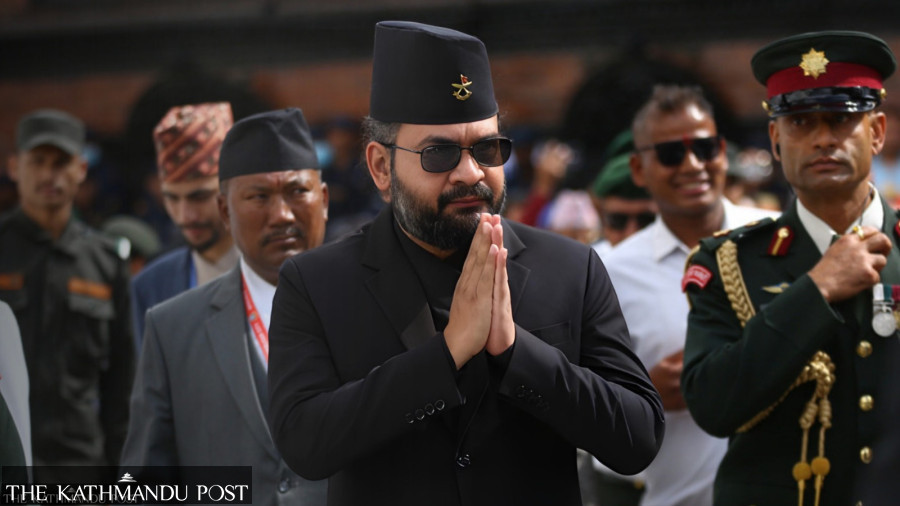
Finally, the tectonic plates of Nepali politics have shifted. And the ensuing youthquake has landed squarely at the gates of Singha Durbar. Today, former Kathmandu Metropolitan City (KMC) mayor Balendra Shah is being sworn in as the new prime minister in a loud and historic departure from the game of musical chairs played by the older set of leaders for decades. At just 35, Shah stands in stark contrast to the ossified leadership that long dominated the national landscape, narrowing the chasm between a country with a median age of 26 and people’s representatives. The era of the old guard, defined by ego-tussles and a disconnect from the modern world, is hopefully over and the era of the youth has begun.
The March 5 election results were a victory for the Rastriya Swatantra Party (RSP). But more importantly, they were a mandate for a sweeping reform of every state organ. For too long, the aspirations of the youth—who make up 42.5 percent of the population—were ignored by the political class. In Shah, the electorate has found a leader who understands that politics is a means for service delivery and systemic efficiency. People trust him because of what he achieved as the mayor of Kathmandu. His focus on clean, effective and hassle-free governance became a blueprint for what a revitalised Nepal could look like. Now, that same energy must be scaled to the national level.
With the RSP securing 182 seats in the House of Representatives (HoR), Shah commands a near two-thirds majority in the lower house. While a two-thirds majority in the National Assembly is still required for formal constitutional amendments, the strength in the HoR allows the incoming government to fast-track lawmaking and bypass the time-consuming hurdles of a fractured parliament. The mandate is clear: Use this strength to dismantle the structures of corruption.
The modern political history of Nepal is rife with examples of government failures due to intra-party feuds and coalition culture. Since the monarchy came under constitutional ambit in 1990, the country has seen the formation of 33 governments, a number of which fell due to these vices. In one such famous case, in 2002, a rift with party president GP Koirala over the state of emergency led then Prime Minister Sher Bahadur Deuba to dissolve parliament, and to the eventual split of the Nepali Congress. Most recently, in 2021, the near two-thirds majority government of Nepal Communist Party collapsed due to a tussle of egos between its top leaders. These examples must serve as a cautionary tale for the RSP.
The people, through the election results, have expressed their preference for fast-paced service delivery and development over ideological purity of political parties. Still, an ideological foundation is essential to keep the party united in the long run. Here, the party leadership must think beyond immediate service delivery. RSP chair Rabi Lamichhane and PM Shah must work hand-in-hand to steer the government to stability and keep the RSP rank and file united in the House and in the Ghanti ghar.
The challenges ahead are immense—from navigating a convoluted political system to managing the high expectations of a hopeful citizenry. Yet, the optimism currently sweeping the country is justified. Nepal has finally broken the glass ceiling of age and malignant political culture. The stage is set, the mandate is overwhelming, and the leader is ready. We welcome PM Shah not just with hope, but with the expectation that he will be the architect of a revitalised, efficient and prosperous Nepal.




 14.69°C Kathmandu