The inauguration of the Balendra Shah-led government was heralded as the dawn of a transformative era for Nepal. With an overwhelming mandate to lead for five years and the backing of 182 members of parliament, the Rastriya Swatantra Party (RSP) government stands on a precipice of historical opportunity. It is not plagued by the usual fragile, shifting sand of coalition politics. Rather, it has a solid foundation from which sweeping reforms can finally flourish. However, the government’s first week has been marked by a disquieting impulsiveness that threatens to undermine its own objectives. The recent flip-flop by Education Minister Sasmit Pokharel on the closure of bridge courses and entrance preparation centres is a reminder that youthful energy, if not tempered by patience, can quickly devolve into a policy mess.
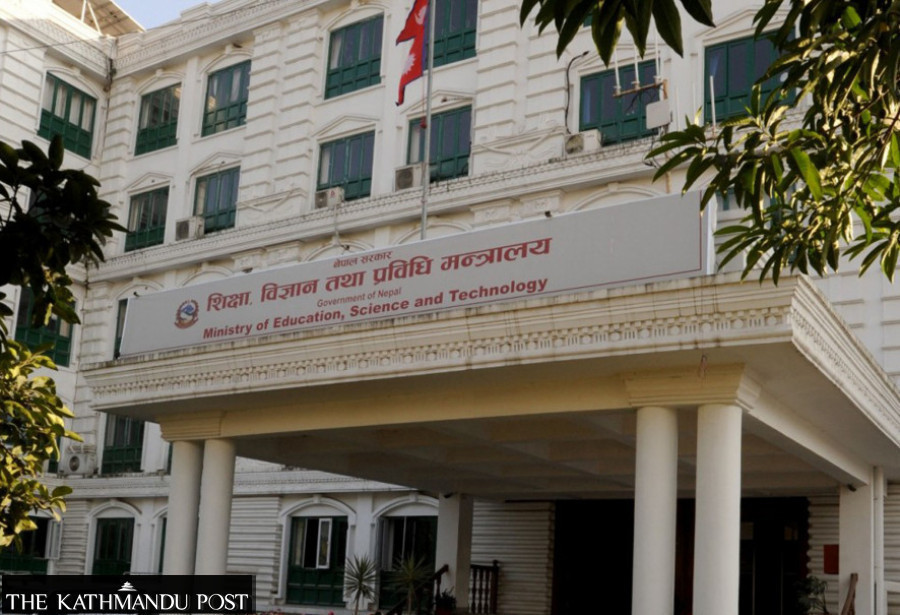
The Ministry of Education, Science and Technology initially issued a sweeping directive to shut down all exam preparatory classes and bridge course programs operating outside the legal framework, effective from April 14. The rationale provided—that such institutions exacerbate psychological pressure, hinder equitable access and impose unnecessary financial burdens—carried weight. Yet, the execution was precipitous. Within hours of the initial announcement, Minister Pokharel backtracked, issuing a clarification that the ban would only apply to classes up to Grade 12. This sudden partial reversal exposed a lack of rigorous internal consultation before the policy was made public. By removing the original statement from its website, the ministry signalled a government acting on impulse rather than through planning.
Such haste is a concern for the country’s political trajectory, especially with the government in place expected to last five years. The Shah government has the luxury of time, yet it acts as if it is under a ticking clock, risking the implementation of its reforms. For any policy to endure, it must be robust enough to withstand the scrutiny of judicial review. If reforms are formulated in haste and announced without a comprehensive legal roadmap, they become easy targets for the courts. In a climate where the judiciary is already active, following recent high-profile arrests of former officials, the government cannot afford to have its policies struck down due to procedural lapses. A reform overturned by a court is a blow to the government’s credibility and a waste of the historic mandate.
This deficit of patience appears to be a broader trend within the Cabinet. While the urgency to deliver is understandable given the ‘no excuses’ environment, ministers must learn that speed is not a substitute for stability. The government seemed to be in a hurry to arrest KP Oli and Ramesh Lekhak, while it could have easily obtained warrants before doing so, and thus stood on firmer legal ground. The proposed ban on political and student unions could also be legally dicey. The Balendra Shah government has the responsibility to make up for the non-performance of its predecessors. The administration must replace the theatre of immediate action with the discipline of durable policy-making. The Balen era will not be defined by how fast it moves, but by how much of its work remains standing after the first five years are over.




 14.81°C Kathmandu