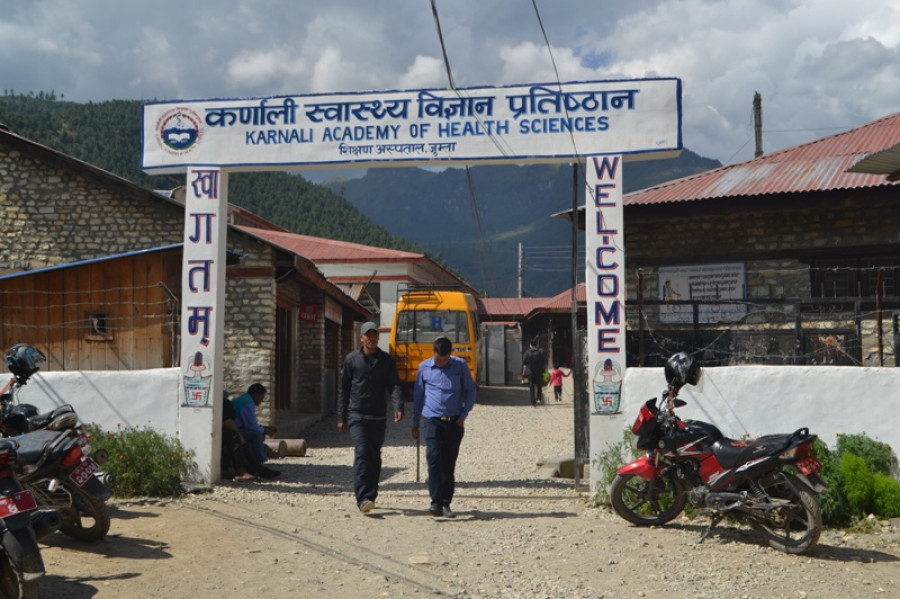
The narrative of Karnali was one of decades of deprivation. It was viewed through a lens of pity—a rugged landscape of isolation where the state’s presence was felt only in the irregular delivery of subsidised rice. The idea that this terrain could be a destination for international medical scholars was ridiculed as absurd just 15 years ago. Yet, the Karnali Academy of Health Sciences (KAHS) has effectively dismantled this narrative. By drawing students from the metropolises of India and to the island nations of South Asia, the institution is providing healthcare but also orchestrating a profound geographic inversion.
Since its inception in late 2011, the Jumla-based KAHS has faced the Herculean task of building a world-class educational hub in a province often forgotten by Kathmandu. The numbers speak for themselves. With a 100 percent pass rate in licensing examinations for Pharmacy, Nursing and Public Health, the academy is outperforming many of its earlier-established counterparts in Nepal’s urban areas. The presence of students from Jammu and Kashmir, Madhya Pradesh and New Delhi proves that academic excellence is not a captive of urban infrastructure.
Medical education in Nepal has long been criticised for being detached from the realities of the rural majority. The KAHS offers a corrective to this urban bias. The students there are gaining invaluable insight into the complexities of rural healthcare delivery. The exposure to unique epidemiological patterns and the challenges of providing specialist care in districts like Humla, Mugu and Dolpa create a breed of physicians who are as comfortable in high-tech operation theatres as they are in high-altitude health camps. This model of rural immersion should be the blueprint for the next generation of medical institutions across the country.
Furthermore, the academy has catalysed a rare brain gain for a region that has historically exported its youth for manual labour. By hosting international students, the KAHS is positioning Nepal as a credible regional hub for medical training. The academy’s move toward launching PhD programs in Rural Health and Pharmacy suggests an ambition that refuses to be tethered by the backwardness traditionally associated with its location.
However, the state should not view this success as a license for continued apathy. The brilliance displayed in Jumla is a result of local leadership and institutional dedication, but it requires a massive infusion of state capital to be sustainable. The academy serves a staggering catchment area: Thirteen districts across Karnali and Sudurpashchim provinces. To expect a 300-bed teaching hospital to address the needs of such a vast and difficult geography without expanded funding is to invite eventual exhaustion. The government must aggressively prioritise investment in these regional medical institutions.
Investment in the KAHS is a strategic necessity for Nepal’s health security. The institution has already proven its worth by significantly reducing mortality during outbreaks of cholera and influenza—diseases that were once death sentences for the people of the mountains. If the state truly believes in the spirit of federalism, it must empower these institutions to become autonomous engines of growth.
The ‘Jumla paradigm’ has silenced the critics who once questioned the viability of a medical college in such a setting. The onus now lies squarely on the shoulders of the government to ensure this welcoming change is not extinguished by neglect. The state must invest in the infrastructure that supports these students, from reliable roads to consistent energy, and ensure that the faculty are supported with adequate resources. The path to a healthy Nepal is being paved in the streets of Jumla. It is high time the rest of the country caught up.




 19.27°C Kathmandu