



 18.95°C Kathmandu
.JPG)
Sun, Oct 18, 2026
Columns
The two-hour map
Nepal’s shift to fewer, stronger maternal facilities is sound. The floods show those facilities also have to hold up in a disaster.
bookmark
Dr Bashir Najeeb
Published at : October 17, 2026
Updated at : October 17, 2026 13:00
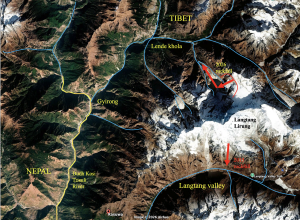
At a hydropower plant in Rasuwa on the morning of August 26, the warning siren blared, and a worker named Dawa ran. She later told colleagues from the United Nations Population Fund (UNFPA) that her friends were swept away while she ran, and that people climbed over one another trying to reach higher ground. High above the Lhende River, on the other side of the border, a section of glacier and bedrock about 600 metres wide had broken away at roughly 5,200 metres. Nepal issued an alert 38 minutes after the collapse. For many people downstream, that was too late.
In obstetric emergencies, too, time is the decisive variable. UNFPA estimated that the affected included some 5,030 pregnant women and that approximately 250 could require emergency obstetric and newborn care (EmONC) in the next three months.
Their due dates did not change. In the weeks after the flood, a maternity ward at one hospital receiving patients from the corridor recorded what happens in a disaster once the cameras leave. Nine women gave birth there. Others arrived with fevers, urinary infections, or babies that had stopped moving as much as they should. Four were referred on, two by Nepali Army helicopter and two by ambulance. One woman developed a serious wound infection after delivery. None of this made headlines, and that is partly the point. Obstetric emergencies are ordinary events. About one pregnancy in seven develops a complication. A disaster does not remove the need for care. It changes whether a woman who develops a complication can reach the care she needs in time.
For most of the past three decades, Nepal’s response to this concern has been a public health success. In 1996, 539 women died for every 100,000 live births. By 2023, the figure was 142. Ministries, donors and, above all, tens of thousands of female community health volunteers pushed births out of homes and into clinics. The approach was simple and, for a long time, it worked: build more facilities and bring care closer.
The data eventually revealed the limits of that approach. The Nepal Maternal Mortality Study of 2021 found that 57 percent of maternal deaths now occur inside health facilities. The women had arrived. The system did not save them. Nepal had designated 371 facilities for EmONC, far more than international guidelines call for. Only about half of the comprehensive sites were fully functional, and just 2 percent of the basic ones. The map was crowded. On any given night, many of the facilities on it could not do what their designation promised.
Over the past two years, the Ministry of Health and Food Safety, with technical support from UNFPA, has quietly tried to redraw that map. Using a light functionality assessment and AccessMod, a geographic modelling tool that estimates how long it takes people to reach a facility over real terrain, analysts asked a straightforward question: What is the smallest set of facilities Nepal could make fully capable and still keep nearly everyone within two hours of emergency care? The answer was 267 facilities, covering 98.8 percent of the population. The provinces have started to act on it. Gandaki drew up a cost plan of Rs374 million to close the equipment and staffing gaps at its priority sites, and wrote it into a provincial safe motherhood roadmap with annual government funding. Nepali analysts, not foreign consultants, carried out most of the assessments.
It is a sound strategy, and the floods do not refute it. But they do expose the assumption underneath it.
The flood corridor shows how much of the strategy is still unfinished. Before the floods, nine of its 154 health facilities were designated to provide EmONC. But only one of the nine, Dhading Hospital, was fully functional, and only two could perform caesarean sections. Four obstetricians served the whole corridor, none of them in Rasuwa. Even before the floods, the monsoon lengthened referral times by 39 percent, and most referrals already took more than two hours.
The two-hour map is a map of roads. A travel-time model is only as good as the road network it runs on. In Rasuwa, Nuwakot and Dhading, that network was partly destroyed in a single morning, and health facilities fell along with it. A consolidated system has a trade-off built in. When there are fewer facilities, each one serves more women. If one is cut off, the distance to the next becomes the difference between an emergency and a death. A crowded map of weak facilities fails slowly and all the time. A lean map of strong facilities can fail suddenly, at the points where it depends on a single road or bridge.
This is not a reason to go back to the old approach. It is a reason to test the new network against conditions like these. The same GIS tools that picked the 267 facilities can model their failure, close this bridge, flood that hospital, cut this highway, and see who falls outside the two-hour line. Two hours is a planning threshold, not a clinical safe limit: haemorrhage and eclampsia may need intervention much sooner, and in the monsoon the real journey is longer. Nepal already has glacial lake, landslide and flood hazard maps. Laid over the EmONC network, they would show which priority facilities sit on a floodplain or at the end of a single road. For each high-risk area, planners could name a backup facility and a backup route in advance. That would cost far less than building new hospitals.
Two more lessons follow. Some priority facilities in the mountain corridors will need to be built to keep working in a disaster, with safer siting, backup power and water, and communications that do not depend on the grid. And referral in the high districts has to include the air. During this response, helicopter evacuations were improvised. They should be planned, with agreed protocols between health authorities and the army before the next emergency.
The last lesson is the least technical. In the first days after the flood, UNFPA estimated how many pregnant women were in the affected area using standard demographic ratios, because no one had a list.
Local governments and health volunteers in hazard-prone areas already know many of these women by name. Turning that knowledge into up-to-date registries, linked to pre-positioned reproductive health supplies and mobile teams trained to act within 48 hours, would give the next response a list to work from.
Climate scientists and UN officials who visited the corridor have warned that events like this could happen again across the Himalayas. Nepal cannot build a hospital in every valley, and it should not try. It can make sure the facilities it has chosen to rely on still work when the roads fail. The last 30 years were spent getting women to facilities. The work now is making sure those facilities can save them, including in the worst weeks of the year.
Dr Bashir Najeeb
Dr Najeeb is the Deputy Country Representative for UNFPA in Nepal.



Most Read from Columns

Before you take credit for Khula Manch, read its history

Shah went to the UN to speak for Nepal, then left before he could make the most of it
Bhotekoshi flood wasn’t a freak event. It’s the Himalaya doing what it does

Lesson learned after the death of Ronaldo
Why passive neutrality won’t take Nepal anywhere
Editor's Picks
Dashain paints the country in festive colours
Buying a goat for Dashain? Look for the green mark
Explained: Why does an hour long flight to Dhangadhi cost more than a flight to New Delhi?
Bhotekoshi flood wasn’t a freak event. It’s the Himalaya doing what it does

How Tenzing Sherpa became Nepal’s breakout star at the Asian Games
E-PAPER | October 18, 2026

×