



 22.29°C Kathmandu

Sat, Oct 17, 2026
Columns
Balendra Shah should prepare for the worst
The prime minister cannot afford to spend his first year fighting battles within the party that put him in office.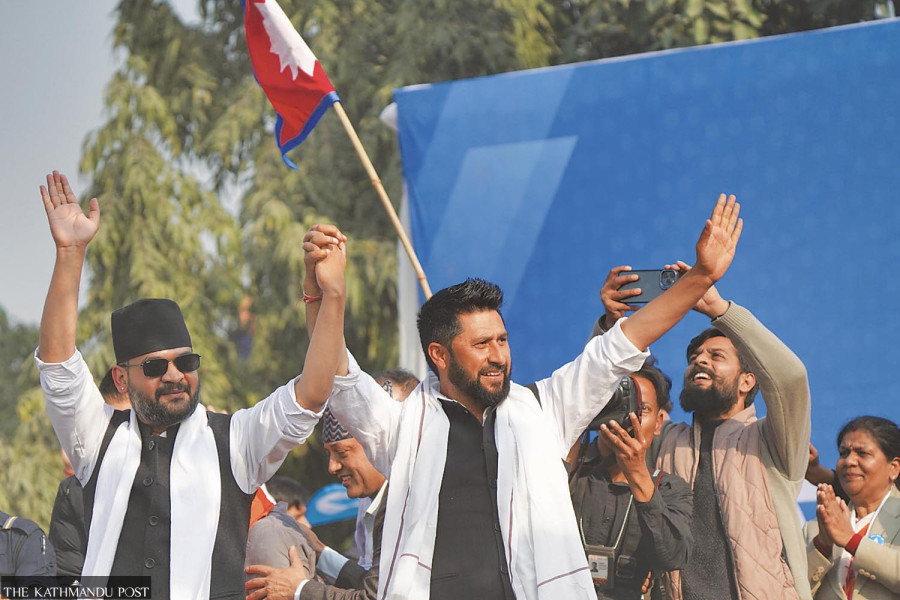
bookmark
Paban Raj Pandey
Published at : September 26, 2026
Updated at : September 26, 2026 17:48
The Balendra Shah government has been in power for nearly six months, and he is already under attack from both the opposition parties, which were cut down to size in the March 5 federal elections, and the Rastriya Swatantra Party (RSP) that Shah helped sweep with 182 seats in the 275-member House of Representatives. The RSP, which was only founded in July 2022, went to the polls projecting Shah as the next prime minister for five whole years and, for that reason, did as well as it did. People gave Shah, and the RSP, a five-year mandate in a landslide win, and we are in year one. Yet, both pre- and post-catastrophic August 26 Bhotekoshi flood, signs of intra-RSP fissures regularly hit the headlines.
Shah is not an original member of the RSP, having joined the party in January this year ahead of the March 5 polls, which were held by a caretaker government after a violent September 8-9 public protest last year led to the collapse of the K.P. Oli-led government. Shah was then just an independent mayor of Kathmandu City, continuously facing roadblocks from some of the 32 ward chairs representing the old guard; refusing to back down, Shah’s no-bullshit attitude won the hearts of not only the city dwellers but also nationally. For lack of time, he needed a platform to jump on the national political bandwagon, even as the RSP was looking to cash in on his popularity. It was a mutually beneficial deal for both.
The RSP was conceived by Rabi Lamichhane, a former broadcaster, who remains the president. During the 2022 elections, the party won 20 seats. Although leading an anti-establishment party, Lamichhane was quick to seize a chance to become deputy prime minister/home minister for a few months under Prime Minister Pushpa Kamal Dahal. He obviously has high ambitions and possesses an enviable public following. That said, he has also been embroiled in controversies including allegations of cooperative fraud, embezzlement and possession of dual passports; during the September uprising, Lamichhane left the Nakkhu Jail but only to return after a few days following widespread public criticism.
Opportunity to become statesman
So, when Lamichhane agreed to make Shah the RSP candidate to become prime minister, this was billed as one of the great personal sacrifices in Nepali politics. Some ardent supporters even hail him as a statesman. It is too soon to declare that. First, legal scholars point out that Lamichhane at the time did not have the legal clarity to lead the nation himself. Second, he is smart enough to realise what it would mean to bring Shah under the RSP umbrella. Shah, a genuine outsider with a lot of charisma, would probably not run under the RSP ticket if he did not get the top job; if he instead decided to sit out this year’s election, then it is hard to imagine the RSP faring as well as it did in March.
During the 2022 elections, the Sher Bahadur Deuba-led Nepali Congress became the largest party with 89 seats, followed by the Oli-led CPN (UML) at 78 and the Dahal-led CPN (Maoist Centre) at 32. Come March this year, the one-time majors were shrunk to 38, 25 and 17 seats, in that order. The public was fed up with bad governance and corruption and with a game of musical chairs that the trio repeatedly played to grab power. Be that as it may, with a support base that goes back years, the three parties would probably not get wiped out the way they did if voters did not see a genuine alternative in Shah. In the end, the March polls saw a mass exodus from all three parties to vote for the RSP.
Lamichhane’s big test is if he will continue to honour the agreement he reached with Shah, and the RSP voters, to have Shah in the prime minister’s seat for the next four and a half years. The Shah administration has been at it for less than six months – hardly sufficient time in the big scheme of things to evaluate and conclude a government has failed or succeeded. But attempts are being made to throw dirt on the Shah leadership. It should not come as a surprise if they are coming from the opposition bench, most notably Harka Sampang, of the Shram Sanskriti Party, who, with six parliamentary seats, comically even asked for Shah to resign. But in recent months, most of the criticism is coming from within the RSP.
Criticise, but constructively
Constructive criticism should always be welcome. In a democracy, an effective opposition can help guide a government that has gone astray back on track. But at the same time, the public finds it difficult to digest when members of parliament make a mountain out of a molehill for the sake of opposition – more so if criticism is coming from within the ruling party. Criticism from RSP lawmakers ranges from Shah’s limited presence at Parliament and his dark sunglasses to the way landless squatters were handled and the absence of timely supplies of fertilisers to farmers. Some are genuine (fertilisers), some absurd (sunglasses). To an observer, it increasingly feels like a campaign to make Shah look bad.
Shah in early August wrote on Facebook, “Sometimes one has to fight alone; this is not the first time.” Lamichhane promptly said that there is no problem in his relationship with Shah. Let time decide. The intra-party attack on Shah can be traced back to the friction between Shah and Finance Minister Swarnim Wagle over budget allocations, allegations of budget tampering and the proposed, but withdrawn, three percent equity tax on health and private education. Other critics include Manish Jha and Amresh Kumar, who were both Cabinet hopefuls. This month, RSP whip Krantishikha Dhital criticised Home Minister Sudhan Gurung for inviting two religious leaders at a Gen Z Memorial Day event.
Shah is someone who, in May 2017, wrote on Facebook that he did not vote and that he would vote for himself the next time; five years later, he won the mayoral post of Kathmandu. Knowing his penchant for preparation, if he is not already, he should prepare for the worst. If the intra-party rift continues to widen, it is difficult to predict what comes out of it. If Lamichhane wants to go down in history as a statesman, he should see to it that Shah succeeds to the fullest. If instead this is all part of a big plan to replace Shah with Lamichhane, history will not forgive the latter. The RSP will be punished in four and a half years – or sooner. People are on board the Shah train – be it RSP or Shah’s own party.
Paban Raj Pandey
Pandey talks about markets, money and macroeconomics on hedgopia.com.



Most Read from Columns
Before you take credit for Khula Manch, read its history
Shah went to the UN to speak for Nepal, then left before he could make the most of it

Bhotekoshi flood wasn’t a freak event. It’s the Himalaya doing what it does
Lesson learned after the death of Ronaldo
Why passive neutrality won’t take Nepal anywhere
Editor's Picks
Constitutional Bench caught in seniority, ‘pick and choose’ dispute

A Dom boy’s long road to becoming a doctor

From blankets to handmade dolls, two foreign women bring comfort to flood survivors
News Analysis: When institutional defence exposes institutional fault lines
It’s a bird … it’s a plane … it’s the Indian ambassador’s farewell tweets
E-PAPER | October 17, 2026

×