



 14.74°C Kathmandu

Sat, Oct 17, 2026
Columns
Whatever Nepal decides on cannabis, it should first document its landraces
Nepal holds a distinctive and largely unstudied cannabis gene pool. Legalisation, if it comes, risks erasing it through hybridisation.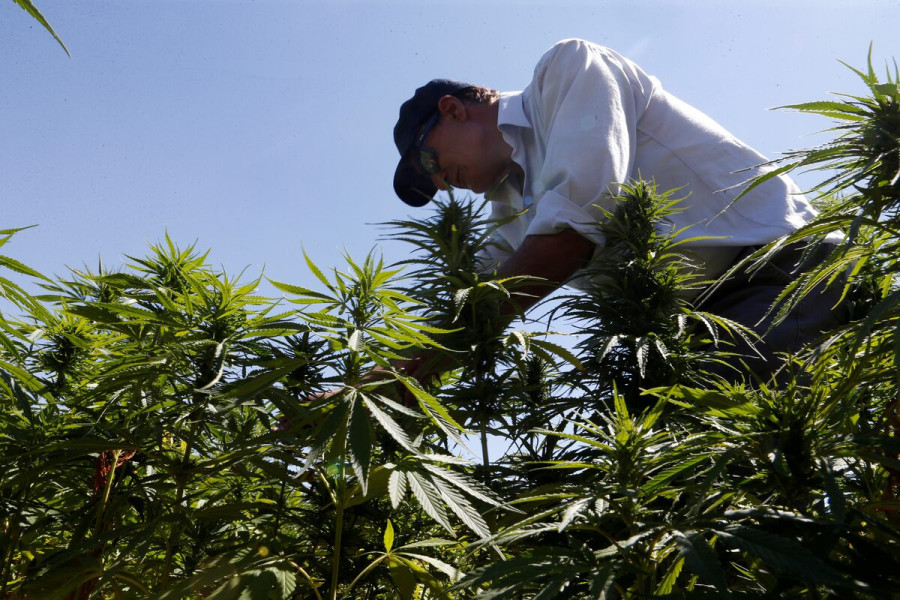
bookmark
Amrit Baral
Published at : July 12, 2026
Updated at : July 12, 2026 22:47
Cannabis has been part of Nepal’s flora and rural economy for centuries, cultivated and semi-managed across hills long before it was prohibited under the Narcotic Drugs (Control) Act of 1976. Nepal is home to indigenous, locally adapted cannabis populations, i.e., landraces that remain poorly documented, and the policy shift now underway could eliminate them before science has had a chance to study them.
Gandaki Province has passed a bill permitting cannabis farming for medicinal and industrial purposes, Karnali has raised its cultivation for oil, Ilam has begun a monitored hemp pilot and the federal budget has referenced its commercialisation. What matters is that any move towards large-scale, market-driven cultivation carries a specific and often overlooked biological cost.
A landrace is not simply an ‘old strain’. In population-genetic terms, it is a heterogeneous, locally adapted population carrying allelic variation shaped by generations of natural and human selection in a particular environment. Nepal’s hill and high-mountain cannabis populations represent one such reservoir.
A plant’s cannabinoid profile is governed largely by tightly linked loci encoding the tetrahydrocannabinolic acid (THCA) and cannabidiolic acid (CBDA) synthase enzymes; the configuration of functional and pseudogenised alleles at this locus underlies the standard chemotype classes: Type I (predominantly tetrahydrocannabinol, THC), Type III (predominantly cannabidiol, CBD), Type II (intermediate) and the rarer Type IV, which accumulates cannabigerolic acid (CBGA). Layered on this are the terpene and minor-cannabinoid pathways: Cannabigerol (CBG), tetrahydrocannabivarin (THCV) and the propyl-side-chain homologues reported in some Asian material that are of growing interest in pharmacological research. Landraces are valuable to this research not because they are potent, but because they may harbour allelic and chemotypic variants absent from the narrow set of lineages that dominate commercial breeding.
Decades of prohibition and closed, clandestine breeding are widely held to have driven a genetic bottleneck in cultivated cannabis, and recent whole-genome studies report extensive admixture and comparatively low nucleotide diversity across commercial material. Locally adapted populations are, in principle, a partial counterweight; having undergone repeated selection in a defined niche, they can retain alleles for traits such as pathogen resistance, cold and altitude tolerance, and photoperiod response that have been lost or diluted in mainstream breeding lines. Nepal’s high-elevation populations, adapted to short seasons, heavy monsoon and frost, are plausible reservoirs of exactly these stress-resilience traits. Whether they in fact remain so is an empirical question—one that documentation would answer.
When commercial demand arrives, growers adopt higher-yielding introduced genetics, and open pollination lets those genotypes introgress into neighboring local populations. Comparable displacement has been described for cannabis in Morocco’s Rif and in the Indian Himalaya, where introduced hybrids progressively replaced indigenous alleles, with measurable genetic introgression, typically within one or two decades of commercialisation. Nepal is exposed to the same dynamic, and its open border with India makes uncontrolled germplasm-flow difficult to prevent.
Hybridisation, moreover, is only the newer of the two pressures. The older one is active eradication. Since licenses were revoked in 1973 and cultivation criminalised under the 1976 Act, the standing state response to wild and semi-wild cannabis has been to destroy it, and that policy is ongoing. Nepal Police and the Narcotics Control Bureau (NCB) conduct routine destruction drives. In a single 2019 operation on the outskirts of Kathmandu, authorities reported clearing wild cannabis across roughly 1,700 ropanis of land and destroying more than 100,000 plants; a separate bureau operation months earlier targeted tens of thousands of ropanis in adjoining municipalities.
The conservation problem this creates is specific: These campaigns are indiscriminate with respect to genotype. Eradication treats cannabis uniformly as contraband, not distinguishing between a naturalised roadside weed and a distinctive, locally adapted mountain population that might carry rare alleles. Wild and feral stands are precisely the material a characterisation effort would prioritise, yet they are being removed—unsampled and unrecorded—by one arm of the state while another debates commercialisation. Nepal is, thus, losing this germplasm from both directions at once—to introduce hybrids where cultivation is tolerated, and to uprooting where it is not.
The remedy is standard germplasm-conservation practice, and Nepal already applies it to other crops. The National Agricultural Genetic Resources Centre, the national gene bank, maintains hundreds of landrace accessions of rice, wheat and other species. The institutional capacity therefore exists; it has simply never been extended to a plant that was, until recently, entirely off-limits. Documentation and conservation should be treated as a precondition of any cultivation policy rather than a downstream add-on. And, at a minimum, eradication drives in traditional cultivation districts should allow for collection and sampling before they proceed.
First, a georeferenced field survey of surviving populations in traditional cultivation areas such as Darchula, Rukum, the far-western hills and comparable pockets shall be conducted with the farming communities that manage them. Characterisation should generate primary data: Simple sequence repeat (SSR) and genome-wide single-nucleotide polymorphism (SNP) genotyping to quantify diversity and population structure, marker assays at the cannabinoid-synthase locus to resolve chemotype genotypes, and liquid chromatography–mass spectrometry (LC–MS) profiling of cannabinoids and terpenes to link genotype to phenotype. Second, ex-situ conservation of these accessions in the national gene bank, ideally paired with community-managed in situ collections. Third, a legal designation of characterised Nepali material as a national genetic resource. This paired genotype–phenotype record, not the plants’ potency, is the substantive scientific output.
Such a designation need not be framed only in conservation terms; it also aligns with any eventual commercial interest. Documented, origin-authenticated germplasm analogous to geographical-indication protections for Darjeeling tea or Basmati rice is more defensible and more valuable than an undifferentiated commodity. The primary case for documentation stands independently of whether a cannabis market ever materialises.
An equity consideration follows from good practice. The farming communities that maintained these populations through decades of prohibition are their de facto custodians, and any benefit-sharing arising from characterisation or commercial use should be structured to return value to them, consistent with established norms on access and benefit-sharing for plant genetic resources.
The current debate has centered, reasonably, on revenue, regulation and the public-health risks of cannabis use. The point here is narrower: Genetic introgression is effectively irreversible on any human timescale. Once a local population has been genetically swamped, it cannot be reconstituted from the hybrids that replaced it. A characterisation-and-conservation effort is, therefore, time-sensitive in a way the wider policy debate is not.
The window to act usefully is measured in a few years; the interval between policy liberalisation and widespread adoption of introduced genetics. Whatever Nepal ultimately decides about cultivation and use, sampling, sequencing and banking its indigenous cannabis populations is a low-cost, scientifically defensible step that should precede, not follow, any expansion of commercial planting. It is the kind of decision that is inexpensive now and impossible later.
Amrit Baral
Dr. Baral is a physician-scientist and Research Fellow at the Johns HopkinsBloomberg School of Public Health, where he studies cannabis, psychedelics, and theireffects on human health.




Most Read from Columns

Before you take credit for Khula Manch, read its history

Shah went to the UN to speak for Nepal, then left before he could make the most of it

Bhotekoshi flood wasn’t a freak event. It’s the Himalaya doing what it does
Lesson learned after the death of Ronaldo
Why passive neutrality won’t take Nepal anywhere
Editor's Picks

Constitutional Bench caught in seniority, ‘pick and choose’ dispute

A Dom boy’s long road to becoming a doctor

From blankets to handmade dolls, two foreign women bring comfort to flood survivors

News Analysis: When institutional defence exposes institutional fault lines

It’s a bird … it’s a plane … it’s the Indian ambassador’s farewell tweets
E-PAPER | October 17, 2026

×