



 26.02°C Kathmandu

Tue, Oct 27, 2026
Columns
Did we fail our classes, or did our classes fail us?
Our education system rewards complacency and subservience, while critical questioning is demonised and punished.
bookmark
Anoushka Pant
Published at : August 3, 2026
Updated at : August 3, 2026 21:35
Nepalis have always taken pride in their perseverance, but that doesn’t always sit right with me. There is a thin line between perseverance and complacency. Perseverance is acting to change a situation. What we usually do is shrug and say, “Eh, happens here all the time.” Either our threshold for happiness is too low, or we have been taught to accept things as they are and to not question authority.
I hate it when people say that we do not deserve democracy. It is not a matter of deserving it as much as it is about learning to practice it. The definition of democracy as we know it—of the people, by the people and for the people—is much more than just conducting elections and voting. We put it into practice in our everyday lives and habits by asking the ‘why’s and getting answers. These habits are not innate to most people; they have to be learned somewhere. The idea of democracy is founded in education, which, as envisioned by Socrates, is critical thinking and questioning. Education then evolved towards grounding the questions in reason, facts and science. This important aspect of education is lost on us.
The comment I received on my first submission during my master’s at the London School of Economics and Political Science was that it was too descriptive and not very analytical. I got another shot at the submission because the professor understood the education system in our part of the world, but the lesson has since stayed with me. The whole setting is so different from ours. I was surprised when I saw a classmate disagreeing with the professor in one of the lectures. Taking my astonishment up another notch, the professor did not even get mad! Instead, she engaged with the classmate constructively. The best part was that this was not a one-off incident; it was the norm. I am not saying that the Western world is perfect, but there are certainly a few lessons we could take from them.
My qualms with our education system are structural rather than personal, and it has little to do with the syllabus. What started as annoyance at how strict teachers were is something I understand differently now. We were expected to believe the teacher always knew best. Asking too many questions would label you a problem and not a problem solver. This might have been less of a problem if teaching was not still treated as a stopgap profession. The notion that someone gets into teaching because nothing else worked out for them makes it hard to find educators who are in it for the love of the game. Someone who doesn’t like their job is obviously going to be irritated while at it. Add a dissenting student to that, and the classroom becomes a place to intimidate students into either silence or leaving the space altogether.
Because we were discouraged from speaking up in classrooms, we never built the muscle to question authority of any kind, including the state. So we rarely try to hold the government accountable. We mould ourselves around the imperfect system instead. There aren’t many families in Nepal who have not pulled strings when they had the connections or the money. Long queue at the passport office? Make a call, or have some cash at your disposal, and you’ll be inside within an hour. Every one of those calls is a small vote for keeping the queue broken.
It is only when things get truly bad that we come asking for accountability. Last September’s uprising fits that pattern quite well. The youth demanded answers and actions from parties our parents had elected. But lest we forget, our parents had their own revolution too, demanding change and good governance. That movement is what gave power to the people we now call the ‘old guard.’
So how did we end up in September after all of that?
Because a late convulsion is not the same thing as ongoing accountability. Our parents thought the fight ended when the revolution did, and democracy arrived. But that was the beginning of the fight. Democracy is a feedback loop, and it only works with a government that speaks to people rather than at them, meaning that the loop has to be fed continuously, not once a decade when things become unbearable.
In practice, that is duller than a revolution and much harder to sustain. It means reading a budget, knowing the plans and policies of the state, and talking about the implications of said plans and policies. It means doing things that may not always be exciting or interesting, and doing them even when they do not affect us personally.
Questioning a system is not the same as overthrowing it. Asking tough questions is the job of all citizens in a democracy, and the onus to answer them falls on the government. The government has to explain itself, correct course, and carry the cost of having been wrong, all while remaining the government. A system where the only available response to failure is collapse is not an accountable system but one that has run out of peaceful options, which is exactly what happens when nobody has been asking the small questions all along.
From the Nazis in Germany to the Taliban in Afghanistan, history is a testament to the fact that such regimes rely on destroying education and the educated to silence dissent and hold on to power. The tactics do not have to be as drastic as bombing schools or deeming education illegal. They can be as simple as gradually undermining the importance of education, defunding it, or just providing mediocre education overall.
Our education system, at its core, rewards complacency and subservience, while critical questioning is demonised and punished. This system of rewards and punishment then also extends into our professional and political lives. The most sustainable effort to save our democracy is to save our education system. It has already cost enough Nepali blood, sweat and tears—we cannot afford more of that. We cannot wait for our institutions to crumble before we take to the streets, because by the time an institution collapses, the damage is already inside it. Democracy is more than just a right we hold; it is a responsibility we perform by staying informed, by asking the right questions at the right time, and by staying vigilant even about the things that do not touch us directly.
Anoushka Pant
Pant is a legal professional and lecturer of law at Kathmandu University School of Law.


Most Read from Columns



Editor's Picks

What to know about the US trial over Mamta Kafle’s disappearance
NPL returns with bigger ambitions and global recognition
What’s new in the Nepal Premier League’s third season?
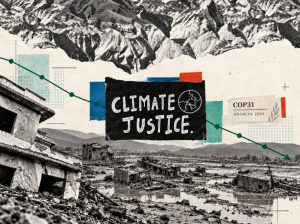
After Nepal’s recent disaster, it wants to test whether COP31 can deliver climate justice

Why does an hour long flight to Dhangadhi cost more than a flight to New Delhi?
E-PAPER | October 27, 2026

×