On June 27, terrorists believed to belong to Tehreek-e-Taliban Pakistan’s (TTP) Jamaat-ul-Ahrar (JuA) faction attacked the Pakistan Rangers headquarters in Karachi, where three paramilitary troops were killed. The attackers—around nine of them—were eliminated except one, who was reportedly captured alive. The group also claimed responsibility for the attack.
The JuA was formed in 2014 and is believed to be based in Lalpura, Nangarhar Province, Afghanistan. It has been active in the tribal areas of Pakistan, especially the Mohmand Agency and has actively carried out terrorist attacks; the most deadly among them was the 2016 Easter attack. The faction shares a complex relationship with the TTP—breaking away in 2014, merging in 2021 and now appearing to be independent.
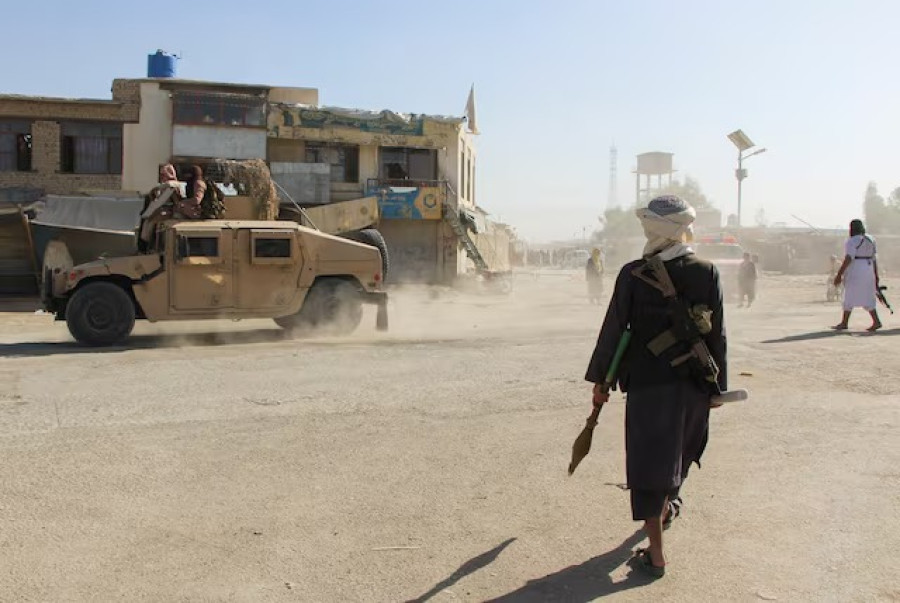
Operation Ghazb Lil Haq was launched by Pakistan, targeting provinces in Afghanistan and also the border areas, in which Pakistan claimed to have killed 29 terrorists, following the attack on the Rangers’ local headquarters in Karachi. When the Taliban came to power, Pakistan had expected that its Western border would be stable. It was not surprising that Pakistan’s intelligence agency chief, Gen Faiz Hameed, was the first to reach Afghanistan and was seen sipping tea in a Hotel in Kabul.
Pakistan’s confidence that it would enjoy the strategic relationship it once shared with the Taliban, which had led the Indian Airlines hijackers to melt into Afghanistan after the hostage swap, was seen as the template for Afghanistan-Pakistan cooperation against India. Pakistan’s two trusted lieutenants, the Haqqanis and some Taliban leaders, especially the Quetta Shura, seen as close to Rawalpindi, occupied important positions in the Taliban 2.0 government that took over power after the collapse of the Ghani government following the US withdrawal from Afghanistan in 2021. However, when the Taliban assumed office, it did not forsake its ally who helped it return to power.
The Haqqanis have their own power base in the tribal areas bordering Pakistan and Afghanistan. In fact, it is from these bases that they managed to launch deadly attacks on the NATO forces in Afghanistan. The group’s patronage led the US to suspend military aid to Pakistan. A famous statement of the then Secretary of State Hillary Clinton likened Pakistan’s support for these terrorist groups to nurturing snakes in its backyard, expecting that they would bite only its neighbours. What one witnesses in present Pakistan is what Hillary Clinton had prophetically predicted; Pakistan has been witnessing attacks on its security forces and political as well as military installations by terrorists. After the Taliban captured Kabul, it promised that it would not allow its soil to be used against any country. Though it refused to take action against the TTP, it facilitated a few rounds of talks between Pakistan and the TTP, which ultimately made no progress, as the TTP terminated the ceasefire in November 2022.
Measures taken by Pakistan
As the terrorist strikes in Pakistan increased, Pakistan blamed Afghanistan for these attacks and demanded that Kabul hand over the Tehreek-e-Taliban leadership. In 2023, Pakistan began deporting Afghan refugees under the Illegal Foreigners’ Repatriation Plan (IFRP), targeting those who had overstayed and sending them back to Afghanistan. Though international human rights organisations criticised the measure and also the Taliban, Pakistan continued this expulsion to put pressure on the Taliban government for not complying with its demand to hand over the TTP fighters who have been sheltered in Afghanistan.
The second measure that was taken to address the issue of terrorism has been to use its air force to bombard places in Afghanistan, and to use artillery and ground operations. Despite these measures, it has not been able to stop terror attacks. It has targeted what it believes to be strongholds of the TTP, targeting Paktia, Paktika, Nangarhar and even Kabul. In a strike in March, Pakistan targeted a drug treatment centre in Afghanistan, killing around 100 people, while it defended the attack as retaliation against the military installation and terror infrastructure. Rather, the Pakistan-Afghanistan border skirmishes have drawn the attention of China and Turkey, which have played an active role in trying to resolve the conflict and draw a ceasefire.
In April this year, China hosted a talk between Pakistan and Afghanistan in Urumqi, following the attack on a drug rehabilitation centre. Beijing held talks in May 2025 and in August 2025 as part of the China-Pakistan-Afghanistan trilateral. Such attacks also endanger Chinese investments in Pakistan. During the intervention of Türkiye and Saudi Arabia, Pakistan and Afghanistan had agreed on a ceasefire last year. Türkiye and Qatar mediated to enforce a ceasefire, yet the talks did not result in any agreement between Pakistan and Afghanistan. While Pakistan demanded action against the TTP, Afghanistan wanted an assurance that Pakistan would not violate its sovereignty. Neither of them was willing to put this into writing.
What now
The expulsion of Afghan refugees and frequent violations of Afghanistan’s sovereignty by launching military attacks have not brought peace or resulted in a reduction of terrorist attacks on Pakistan. Several splinter groups are operating across the treacherous border that is dominated by tribes that owe their allegiance to their tribal loyalty. These attacks have resulted in death and destruction. Afghan Taliban do not want to risk their relationship with the TTP because of the presence of Islamic State-Khorasan Province (ISIS-K). Some TTP cadres had previously joined the group. According to the Islamabad-based Centre for Research and Security Studies (CRSS) report, till November 25, an overall surge of 25 percent was observed in violence, which resulted in 3,187 deaths in comparison to 2,546 casualties in 2024, a rise of around 20 percent.
Even diplomacy has failed to resolve the acrimonious relations that have characterised Islamabad’s ties with Kabul. Terror attacks have lowered investor confidence and have deeply affected projects in Pakistan. While Balochistan remains volatile, the TTP’s ability to stage coordinated attacks across the country reveals the network it has spawned over time.




 15.88°C Kathmandu
.PNG&w=200&height=120)