



 14.5°C Kathmandu

Fri, Oct 16, 2026
Columns
Keeping the ballot from becoming a crown
Perhaps the lure of a directly elected chief executive in Nepal comes from a strange mix of monarchical nostalgia and modernist impatience..png&w=900&height=601)
bookmark![]()
Photo credit: CK Lal
CK Lal
Published at : June 30, 2026
Updated at : July 1, 2026 08:05
Suga was once a vibrant village known for its scholars, priests, scribes, civil servants, teachers, professionals, anti-Panchayat politicos and laidback farmers. It began to change in the mid-1990s with the exodus of young men of productive age, first to Haryana and Punjab in neighbouring India and then to the GCC countries and Malaysia. The flow of remittances transformed the economy of the “village”, now subsumed into Jaleshwar Municipality as merely one of its wards. Perhaps befitting its new identity, agriculture is no longer the mainstay of its inhabitants. Women, the aged and children form the bulk of the population. The young ward chair Harishchandra Mahato, elected on a CPN-UML ticket, talks incessantly about vikas, by which he mostly means the concrete pathways extended under his watch. Heated discussions about world politics, often based on the evening BBC Hindi bulletin, are now largely a thing of the past.
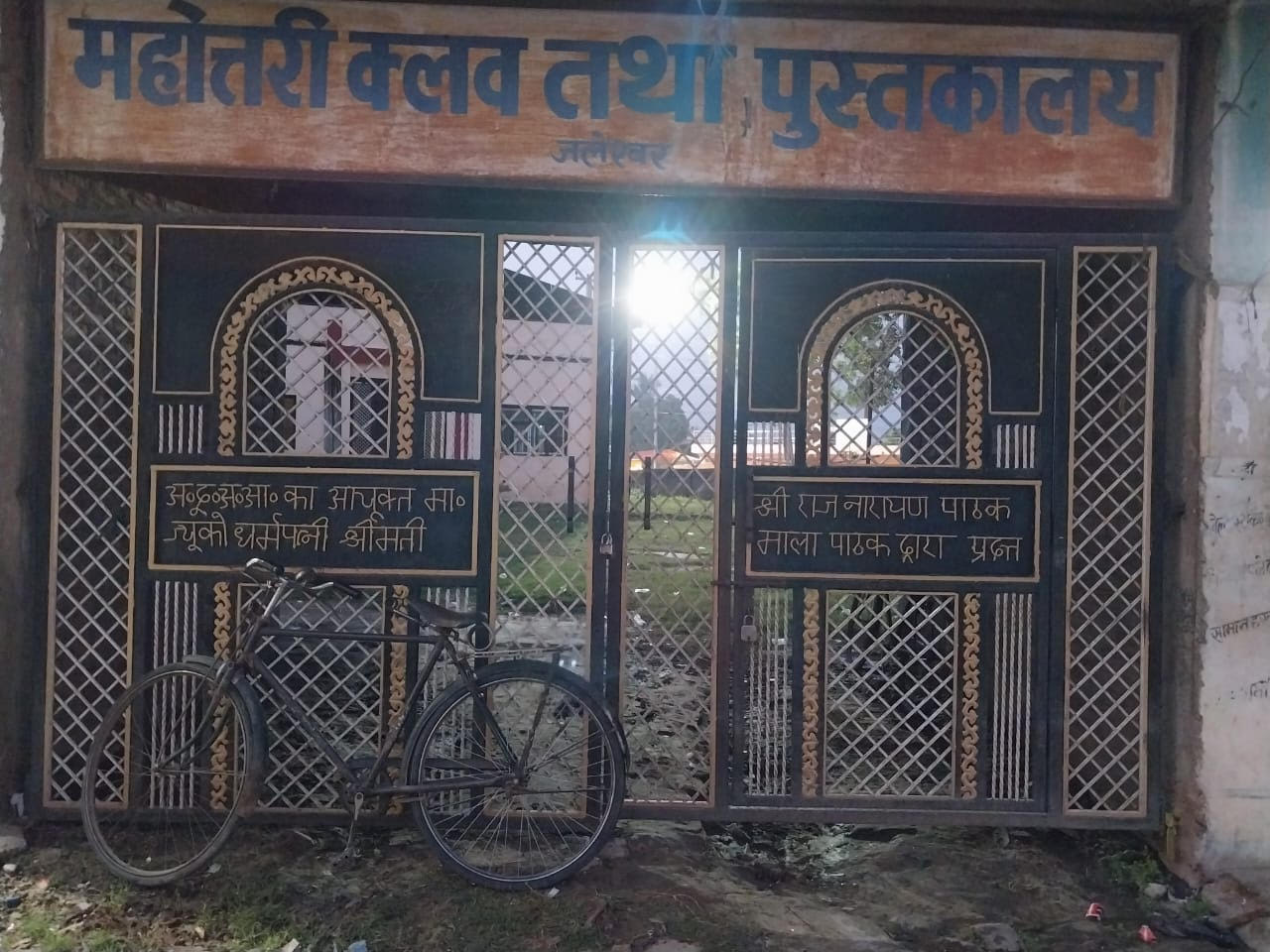
The Mahottari Club and Library in Jaleshwar was once a place where Zonal Commissioners, District Panchayat Chairmen, Nepal Army officers and senior bureaucrats lounged around the billiard table in its high-ceilinged hallway, discussing ways of eliminating “anti-national elements”, a euphemism for supporters of the proscribed Nepali Congress. It now remains locked, its premises serving as an open urinal for shopkeepers in the neighbourhood. A few retirees of the extended municipality still walk in the evening to the banks of Bharipokhari, where they meet fellow pensioners to discuss pensions, politics and world affairs.
In one such gathering recently, a retired teacher introducing himself as Jha Sir, with a pointed emphasis on the honorific, steered the discussion towards the resilience of the US Constitution despite the monarchical aura of its presidency. The immediate provocation was the Rastriya Swatantra Party’s decision at its Chitwan plenary to advocate a directly elected chief executive, fully proportional representation in Parliament, reduction in the number of local government units and abolition of provincial legislatures.
Taken together, the proposals appear to point towards the centralisation of power in an elected monarchy: A plebiscitary executive at the top, a Parliament more dependent upon party lists than on territorial accountability, local governments pushed further away from the people, and federating units emasculated by being deprived of legislative authority altogether. In short, the temptation is to imagine Donald Trump and Narendra Modi not as warnings, but as models.
ChaCha is a Nepali word for an ornament or a toy. The moniker also fits the ‘Chameli’ Champions who carried Prime Minister Balendra Shah to Singha Durbar after the central secretariat burned in September 2025, during his mayoral term, with the metropolitan city’s firefighters nowhere to be seen. Even though the ChaCha-sugar high has begun to wear off, Chitwan showed that they are still ready to be played upon by the former rapper who once crooned about the plight of the poor but has since shown his true colours: White sneakers, black-on-black attire, health food and fancy cars. Comparable to the Trumpards of MAGA and the Modiots of MIGA, the ChaChas of Nepal fail to realise that the stronger their devotion to an iconic ruler, the weaker becomes the constitutional order and the republic. There are lessons here from the resilience of the United States.
Monarchical impulse
As the United States approaches the 250th anniversary of its Declaration of Independence, its deepest lesson may lie not in the romance of revolution but in the architecture of restraint. The American presidency has always carried within it the temptation of elected monarchy, especially when a leader mistakes a mandate for a crown and when “mercurial”, that polite word of the commentariat, is made to stand in for something closer to reckless and maniacal outburst. Yet the republic’s endurance has depended upon safeguards against elected authoritarianism: A written Constitution, an independent judiciary, a jealous legislature, a noisy press, vigilant citizens and a federal design that refuses to let all power pool in one capital.
Federalism, for all its contradictions, has helped keep the centre from swallowing the whole; states can resist, litigate, administer, delay and sometimes defy. The genius of the American order is not that it produces virtuous rulers, but that it assumes the opposite possibility and builds obstacles before them. Its greatness, at its best, is not in trusting power, but in making even an elected ruler answerable to law.
Perhaps the lure of a directly elected chief executive in Nepal comes from a strange mix of monarchical nostalgia and modernist impatience. The invented memory of Jang Bahadur or King Mahendra as decisive nationalists who delivered instant justice and kept competing elites in check is born of social changes that have come too fast for traditional hierarchies to absorb. A republic is intelligible enough; secularism, inclusion and federalism are more unsettling, for they shake the ethnonational order strengthened by successive Shah and Rana rulers. The social elite, including some who are economic proletarians, seem to believe that majoritarian nationalism will protect their socio-cultural hegemony.
Except for hardcore loyalists of the fallen Shah regime, politicos of both left and right have flirted with the directly elected executive as a means of preserving a unitary centre. In a multi-national state, however, the hope of the dominant community is often the fear of every dominated citizen conscious of selfhood and dignity.
The modernist excuse for unhindered executive power usually comes clothed in admiration of strongmen. Lee Kuan Yew is invoked as the stern father of prosperity; Deng Xiaoping and Xi Jinping are cited as leaders who transformed China with a combination of the big stick and the soft voice. Few pause to notice the exceptional conditions behind such examples: A continental, almost monoethnic civilisational state in one case, and a city-state developed as an economic refuge for powerful minorities of Southeast Asia under the protective umbrella of Western power in the other. Nepal is neither. In a multi-national society, an elected chief executive without robust federal restraints would not be a shortcut to stability; it would be an invitation to the discomfort of multiple minorities and the disturbances that follow when dignity is denied.
Federated diversity
Federalism is not merely an administrative arrangement, but the constitutional order of the future, perhaps the only arrangement capable of protecting both the integrity of the state and the sovereignty of its many peoples. The package of ‘good governance’, with transparency and accountability as its principal components, that donors and lenders have sold for over three decades, has failed partly because people’s ownership had little place in its top-down design. Along with shared government, self-government is an inalienable part of bottom-up good governance.
The term subsidiarity may sound alien, but the idea that authority should rest with the level of government best suited to exercising it in a participatory manner lies at its heart. It is true that a ward chair today has more authority and a larger budget than his Pradhan Panch or VDC chair predecessors to deliver vikas. But federalism is not merely a delivery mechanism for services; it is a dignity mechanism for plural societies. Local government can build roads, drains and concrete pathways. Only federating units with legislative power can protect identity, language, memory, culture and shared sovereignty. That is something only an arrangement of ‘coming together’ or ‘staying together’ federalism can ensure.
Since federalism is a component of self-government, it becomes a hollow shell without provincial parliaments that share sovereignty with the federal government. The present arrangement of weakened provinces is as much a failure of design as of intent; the drafters of the Constitution appear to have made enough concessions to federalism to claim compliance, and enough restrictions to ensure its disrepute. Since 2015, the ethnonational institutions of the federal state have done almost everything in their power to defame federalism, starve it of legitimacy and make it appear dysfunctional.
Climate change, resource scarcity and the obscene concentration of wealth, with some ultra-rich individuals commanding assets larger than the GDP of several countries, require the strengthening of supranational entities. Federal governments, too, need sufficient authority to control capital flight, regulate communication, stabilise currency and maintain strategic infrastructure. For almost everything else, however, governments closer to the people are often more efficient, more accountable and more humane. Monarchy, elected or otherwise, belongs to the past. Centralised authority retains its allure for the present, but the future undoubtedly belongs to empowered federating units.
Homage is due to the founders of the American republic, however limited their imagination of citizenship by the exclusions of gender, race and property, as the United States marks 250 years of its Declaration of Independence. The republic, born in 1776 and later framed by the Constitution, showed remarkable foresight in designing a system of shared rule and self-rule. The emergence of President Trump shows that a republican order can never be treated as a finished monument; it has to remain a work in progress, valuing constitutional dynamism over the false comfort of stability. An electoral mandate is not a crown divinely bestowed upon a hyper-narcissist. It is a temporary trust, revocable by law, restrained by institutions and answerable to the people in all their federated diversity.
CK Lal
Lal is a writer and political analyst.


.PNG&w=200&height=120)

Most Read from Columns

Before you take credit for Khula Manch, read its history
Shah went to the UN to speak for Nepal, then left before he could make the most of it

Bhotekoshi flood wasn’t a freak event. It’s the Himalaya doing what it does

Lesson learned after the death of Ronaldo
Why passive neutrality won’t take Nepal anywhere
Editor's Picks

Constitutional Bench caught in seniority, ‘pick and choose’ dispute

A Dom boy’s long road to becoming a doctor

From blankets to handmade dolls, two foreign women bring comfort to flood survivors

News Analysis: When institutional defence exposes institutional fault lines

It’s a bird … it’s a plane … it’s the Indian ambassador’s farewell tweets
E-PAPER | October 16, 2026

×