



 14.59°C Kathmandu

Fri, Oct 23, 2026
Columns
Nepal’s cultural heritages need our attention
Restoration and rebuilding are not extras; they are essentials for our way of life, society, economy and Nepal’s position in the world as a place of incomparable cultural dynamism.
bookmark![]()
Courtesy of Rohit Ranjitkar ![]()
![]()
KVPT ![]()
KVPT ![]()
KVPT ![]()
KVPT
Sophia L Pandé
Published at : June 27, 2026
Updated at : June 28, 2026 12:07
Two days after the 2015 earthquake, I found myself in the Patan Durbar Square. I had a regular column at the time with The Kathmandu Post, ‘On Art & Architecture’, and I needed to take stock.
The ground was still shaking with aftershocks whilst I walked around, and I knew I was doing something incredibly stupid by putting myself in range of the remaining teetering temples. The ones that hadn’t collapsed completely like the iconic Char Narayan, the oldest and biggest temple in the Square, were listing badly. The Bhimsen temple, the shrine of all merchants, looked ready to come down at any moment.
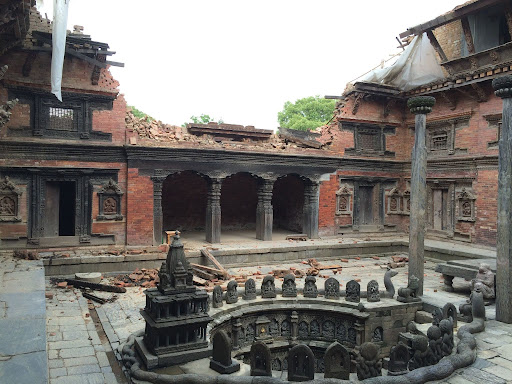
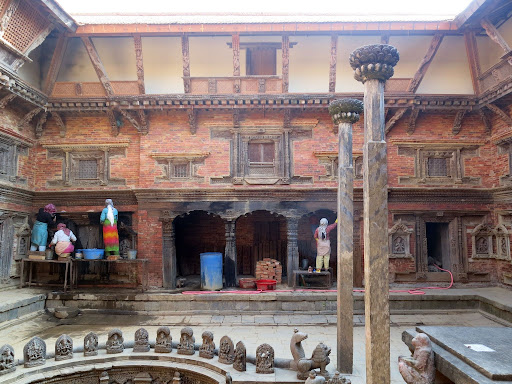
Today, if you go to Patan Durbar Square, it looks as if the earthquake never happened. Almost everything has been rebuilt or restored, with the Char Narayan rising out of its rubble like a phoenix, even more magnificent and with stronger foundations.
The Bhimsen temple stands tall and straight again. Even more remarkably, the great Bhaidegah temple that was once completely destroyed in the 1934 earthquake, and replaced with a small stucco placeholder, has been rebuilt; the surviving struts housed in the Patan Museum stairwell for years have been replaced in this striking Shiva temple that is once again the largest and tallest in the Square.
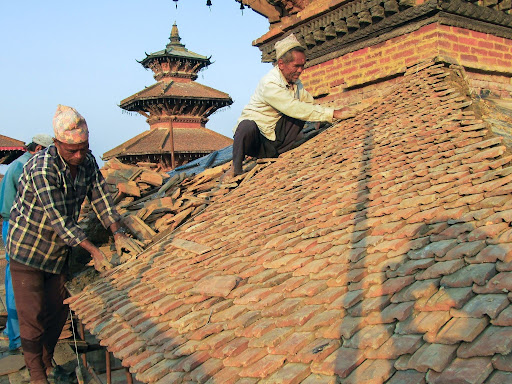
This, of course, did not happen by magic, or through wishful thinking. The Kathmandu Valley Preservation Trust (KVPT), founded in 1991, was on the ground and working with the police and local community the very day after the earthquake. Thanks to the Trust’s previous work, institutional knowledge, extensive documentation and technical capacity, it was able to step in immediately to salvage what remained from the ruins, and to catalogue, restore and safely store these artefacts until it was time to replace them within the rebuilt edifices.
It took an immense amount of effort and money. The funds that rebuilt the Patan Durbar Square came from the German, American, Japanese and Austrian governments who understand the practical value of conserving heritage, along with international institutions such as the Prince Claus Fund, and some key private and corporate Nepali donors who have long supported culture and the tangible and intangible cultural heritage that comes with it.
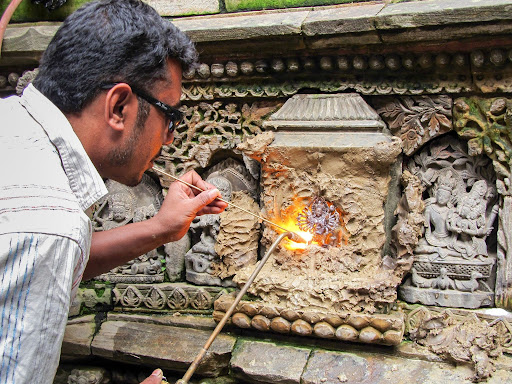
The Kathmandu Valley itself is a UNESCO Cultural World Heritage Site, within which there are seven allocated ‘Monument Zones’. These are Kathmandu, Patan and Bhaktapur Durbar Squares, Swayambhunath, Boudhanath, Pashupatinath and Changu Narayan Temple. Within these seven Zones, there are countless priceless objects and structures in need of conservation and restoration.
Not only are these Zones essential to our living heritage and culture, they are also a vital draw for tourism, both domestic and international, not to mention our way of presenting Nepal’s riches to the world in the form of cultural diplomacy.
And yet, despite the multiple aspects that make this Site invaluable, children do not learn about it in school, the government does not do enough to contribute towards its conservation, and while there is some support from private individuals domestically, for the most part Nepalis do not give towards conservation.
Corporate donors are not keen on rebuilding these stunning temples, even while they bring their international partners to visit the Durbar Squares, as evidenced by Nirvana Chaudhary recently taking David Marriott (Chairman of Marriott International) to Patan Durbar Square, while never having contributed towards its restoration.
After the earthquake, for earning political capital as well as purely altruistically, various groups from local municipalities and civil society have been moved to restore within these Monument Zones. However, this kind of piecemeal effort, while better than nothing, can do only so much in the face of so much need.
Recognising that the only way the youth will become active stakeholders in their cultural heritage is if they can be brought to understand the fascinating, profound stories, history and techniques that brought these treasures into being, the KVPT started its Education Outreach programme in 2017.
Based on an idea conceived by writer and researcher Rishi Amatya, during the Kathmandu Triennale, we work with a core team to design deeply researched, intricate, interactive illustrated maps that are used to lead free school tours, particularly oriented towards government schools that often do not have the capacity to bring their students to the Durbar Squares for field trips. Once again, our outreach programme is funded by donors.
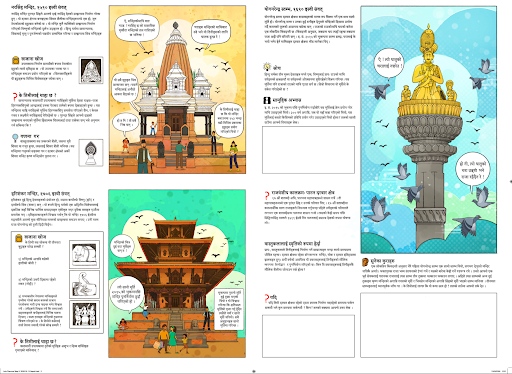
Imagine who would want to visit Nepal if not for our profound, diverse culture and heritage? Nepal’s overall caché, internationally, would be woefully diminished without our famed tiered temples, not to mention the horror of our cultural and social fabric being damaged by the loss of such vital landmarks. Kathmandu would become the place where people land before catching another flight to go trekking or on safari. No money would trickle into the hands of locals in communities across the Valley from tourism. Hotels would house visitors for a night, or two at the most. The situation would be dire.
Yet, even while these things are evident, there is no support or interest from those in power who wax poetic about leveraging Nepal’s culture for diplomatic purposes. Going forward, the government and civil society must actively understand that our culture is not just cosmetic, and gorgeous to look at, it is an income generator with infinite economic potential which cannot continue to be neglected fiscally nor socially.
Learning about local culture should be an essential core part of curricula across the country, with cutting edge pedagogical tools that make sure this kind of learning is not just on the page, but tangible, practical, creative, critical.
This is a transition that India has already begun, moving from a STEM to STEAM approach, finally understanding the value of ‘Creativity as a 21st Century tool’, particularly when measured up against a design-forward China where 4.6 percent ($830 billion) of GDP is accounted for by the Creative Economy, compared to the 0.8 percent ($30 billion) generated by India’s Creative aka ‘Orange’ Economy.
The lack of funding to restore these monuments is compounded by the waning human resources to rebuild and restore, as Newa woodcarvers and artisans transition towards higher-paying, less hand-labour intensive jobs.
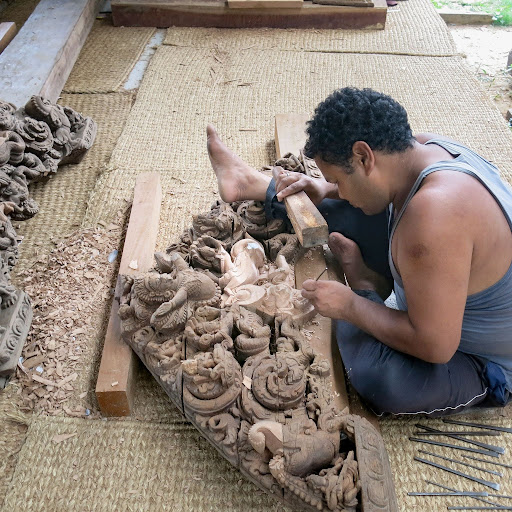
If these artisanal skills are not taught at schools and TVET programmes, given official diplomas, and recognised for the sheer technical skills and artistry involved, in a few years, we’ll find ourselves with a dying tangible heritage and a tragic loss of skill that may not be replaceable, resulting in the irrevocable loss of both tangible and intangible cultural heritage.
Conservation requires the government and people to give without strings attached. Restoration and rebuilding are not extras; they are essentials for our way of life, for society, for the economy, and for Nepal’s position in the world as a place of incomparable cultural dynamism.
Sophia L Pandé
Pandé is a writer, art-historian and filmmaker advising on the economic and social potential of the Cultural and Creative Industries, Education Outreach, and Sustainable, Strategic Planning. She has consulted for IFC and UNESCO. She is Director of Development at the Kathmandu Valley Preservation Trust, and Founding Director of The Kalā Salon, a non-profit space for the arts. In the past, she has been a long-running columnist for The Kathmandu Post and the Nepali Times.


Most Read from Columns



Editor's Picks





E-PAPER | October 23, 2026

×