Nearly a decade has passed since Nepal adopted federalism under the Constitution of 2015. Yet the implementation of federalism has not fully lived up to people’s expectations. Many citizens question whether federalism has delivered on its promises, while debates over the relevance and cost of provincial governments have become increasingly prominent in public discourse.
This growing dissatisfaction has been particularly evident among young people, culminating in the emergence of the Gen-Z movement, which reflected widespread frustration with governance, public accountability, corruption, unemployment and the performance of established political parties. Although the movement was largely concentrated in Kathmandu, it demonstrated that a new generation of Nepalis is increasingly demanding better governance and more responsive public institutions. The subsequent general election, which produced a government commanding nearly a two-thirds majority in the House of Representatives, further highlighted the changing political landscape.
The active participation of young people in civic movements and electoral politics clearly indicates that many are seeking political change. At the same time, it also suggests that many young citizens have become increasingly sceptical of the state, successive governments and traditional political actors.
However, one important question has remained largely unexplored. While considerable attention has been given to youth activism in Kathmandu, far less is known about how young people across the rest of Nepal perceive the country’s federal system. There has been little empirical evidence to understand youth perceptions of federalism, and opportunities for informed dialogue and reflection on these issues have remained limited.
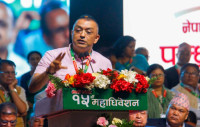
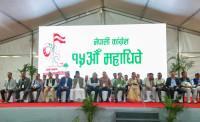
This article seeks to fill that gap. It draws upon discussions, interactive exercises and perceptions gathered from 315 young people under the age of 40 from all seven provinces of Nepal. Forty-five participants were selected from each province, representing provincial and local governments, political parties, universities, civil society organisations, media and professional groups, while ensuring broad geographical, gender, ethnic and social inclusion. Rather than focusing on political elites or constitutional experts, the dialogue captured the voices of young citizens from diverse backgrounds, providing a rare opportunity to understand how Nepal’s next generation perceives federalism.
The discussions covered a wide range of issues relating to constitutional governance and democratic participation. This article focuses on four questions that emerged as particularly significant: Do young people believe provincial governments are unnecessarily expensive? How well do they understand Nepal’s federal system? Has federalism brought government services closer to citizens? And has it strengthened inclusion and representation?
Having participated in many national policy dialogues over the years, this was my first opportunity to engage directly with such a diverse group of young people from all seven provinces on federalism. More importantly, it allowed me not only to hear their views but also to observe how those views evolved through informed discussion and practical learning.
The first finding relates to one of the most common public criticisms of federalism, that provincial governments are expensive. Before the dialogue, 67.97 percent of participants agreed that provincial structures are expensive, while 21.71 percent disagreed and 10.32 percent were unsure. The perception was strongest in Bagmati (83.87 percent), followed by Karnali and Sudurpashchim (77.78 percent each), whereas Madhesh recorded the lowest level of agreement (39.39 percent), with nearly half of the respondents disagreeing. These variations suggest that perceptions of provincial governments are influenced not only by national political narratives but also by provincial experiences.
The second question examined young people’s understanding of federalism. Following the dialogue, more than 80 percent (80.77 percent) of participants reported having a medium to very high understanding of Nepal’s federal governance system. The highest levels were recorded in Bagmati (87.5 percent), followed by Karnali and Sudurpashchim (84 percent), Lumbini (82.61 percent), Gandaki (80.77 percent), Koshi (80.65 percent), and Madhesh (67.86 percent). The findings demonstrate that civic education and informed discussion can significantly improve understanding of federal institutions.
Participants were also asked whether federalism has brought government services closer to citizens. The response was overwhelmingly positive. Overall, 86.91 percent agreed that federalism has improved access to public services, while only 11.64 percent disagreed. Agreement was highest in Karnali (100 percent), followed by Gandaki (93.48 percent), Koshi and Lumbini (85.71 percent each), Madhesh (84.38 percent), Bagmati (78.13 percent), and Sudurpashchim (71.43 percent). Despite concerns about the cost of provincial governments, most young people acknowledged that federalism has made government more accessible.
The strongest support emerged on the issue of inclusion. Nearly 89 percent (88.85 percent) of participants believed that federalism has strengthened inclusion and representation in governance. Lumbini recorded the highest level of agreement (96.97 percent), followed by Bagmati (94.44 percent), Gandaki (91.84%), Koshi (91.49 percent), Karnali (89.09 percent), Madhesh (87.5 percent), and Sudurpashchim (71.43 percent). These findings suggest that young people widely recognise federalism’s contribution to expanding opportunities for historically marginalised communities to participate in governance.
Taken together, the results present a balanced picture of youth perceptions. While many participants initially viewed provincial governments as costly, they also believed that federalism has improved public service delivery and strengthened inclusion. More importantly, the dialogue demonstrated that greater understanding leads to more informed opinions. Young people did not reject federalism; rather, they called for its more effective implementation through stronger accountability, better coordination, improved service delivery and transparent governance.
The findings carry an important lesson. The future of federalism depends not only on constitutional arrangements but also on public understanding and trust. As Nepal continues to consolidate its federal democratic system, investing in civic education and meaningful youth engagement will be just as important as institutional reform.
Nearly a decade after the adoption of federalism, Nepal’s youth are sending a clear message. They are not asking whether federalism should continue; they are asking whether it can deliver on its promises. Their expectations are not for a different constitutional system, but for one that is more accountable, more effective, and more responsive to citizens. That may be the most important lesson emerging from this dialogue across all seven provinces.
The discussions revealed an interesting contrast. Most participants were already aware that federalism has brought government services closer to citizens and has expanded inclusion and representation in public institutions. However, many continued to believe that provincial governments were unnecessarily expensive. Nearly 68 percent of participants shared this view at the beginning of the dialogue, reflecting a perception that has become widespread in political debates and social media. My session on understanding of federalism helped unpack this perception. Participants were introduced to the constitutional rationale for establishing provincial structure, the political and economic reasons underpinning federalism, and official data on public expenditure across the three levels of government. When three-tier government expenditure including administrative expenses was presented in its entirety, it became evident that provincial structure accounts for only a modest share of total public spending. For many participants, this challenged the common narrative that provinces are the principal source of excessive government expenditure. By the end of the discussion, most acknowledged that provincial governments were not as costly as they had previously assumed.
This does not mean that the existing provincial structure is beyond criticism. Participants continued to emphasise the need for institutional reform, greater efficiency, stronger accountability and improved service delivery. The dialogue demonstrated, however, that many misconceptions about federalism arise not from direct experience but from limited access to reliable information. It also reinforced the importance of expanding civic education on Nepal’s federal system so that public debate is informed by evidence rather than perception.




 16.74°C Kathmandu
.PNG&w=200&height=120)