



 23.43°C Kathmandu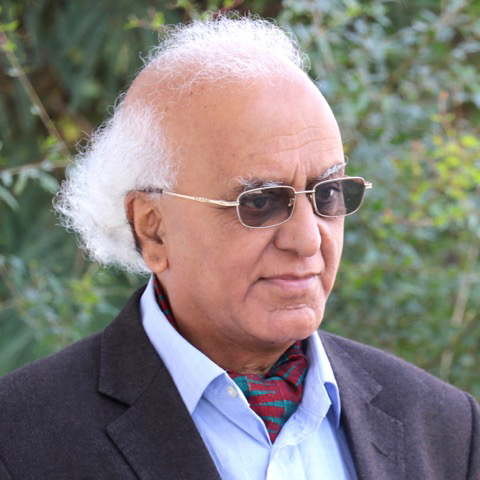

Tue, Oct 20, 2026
Columns
The poetic exploration of ecological anguish
The urgent issues of ecological catastrophe in Nepal are receiving less priority from the government, political parties and agencies.
bookmark
Abhi Subedi
Published at : June 6, 2026
Updated at : June 6, 2026 21:31
A few inspiring, stimulating and anguish-provoking contexts about ecology struck me over the last few days. Both universal and particular contexts coalesce in ecology. That is why the world’s ecology, in general, and the Nepali context, in particular, share similar problems. One paradox of ecology is that it is very old yet always fresh, imbued with the dynamics and poetic anxieties of the present.
The ecology imbued with the paradox of time and space consistently overwhelms me. Artist Rasheed Araeen, in what he calls ‘a manifesto for the twenty-first century’ under the title ‘ecoaesthetics’, correctly spells out this paradox in the following manner. I find his statement about the paradox, published in the journal Third Text in 2009, very revealing. The Nepali context, too, is articulated here.
Araeen acknowledges that the civilisation of 6,000 years has given us knowledge about ourselves, our world and even the cosmos. Our sphere of knowledge in all this has expanded. But what he expresses in these confessional lines is striking. Despite our wider knowledge, he says, “We are no wiser than the Mesopotamians, the ancient Persians, Egyptians, Greeks, Chinese, Indians or Arabs. Our imagination can reach beyond Mars, but is often unable to resolve even small disagreements or disputes among ourselves without resort to confrontation, leading to all kinds of violence.”
Powerful people everywhere are happy to flash their sabres. That is precisely what is happening in the world today. By invoking the Nepali experience, we can say many things about our ecology. Unfortunately, no outstanding scholars or writers from Nepal have made any all-embracing wise remarks about the country’s ecology. The Nepali ecological phenomenon is a silent, enduring and pervasive experience for those living in diverse ecological contexts and situations.
This subject reminds me of my own ecological engagements as a poet. I would like to move further in this article by alluding to two contexts. The first is a survey published by the News Agency Nepal in Kantipur on May 1, 2026. The agency report covers very important issues related to the ecological problems Nepal currently faces regarding resource constraints and the future of neglected ecological problems. This survey is triggered by the budget recently presented by the economist and finance minister, Swarnim Waglé.
The agency timidly puts their findings, stating, “Ecological change does not cover only one area. It covers diverse areas like agriculture, energy and calamities. Though Nepal is not facing the uncanny effects of ecological changes and related calamities, it also has the capacity to manage the vast green resources. Judging from these two perspectives… it appears that perhaps this budget has not done justice to the ecological problems.”
The next interesting trigger is the 6th Conservation Asia Congress 2026, organised in Kathmandu. The symposium is being held under the rubric ‘Translating Qualitative Ecologies, Embodied Knowledge and Plural Ways of Knowing through Art in Conservation’.
According to one academic participant, Nandiny Velho, “The speakers will not only talk but also use mixed media of music, film, visual art, foreground art, design, media and embodied practices as critical modes of engaging with knowledge.” Their theme, ‘Harmonising Biodiversity and Human Well-being in Asia’, is quite eloquent. Ecologists are prolific with language, drawing idioms from literature, especially poetry. It was interesting to see a Nepali participant recite a very powerful poem, written in idiomatic Nepali by poet Kedarman Vyathit seven decades ago about ants’ movements in the garden.
As a poet, I view the anguish in poetry as the expression of the current ecological problems. When the famous British Romantic poet William Wordsworth revisited Tintern Abbey in 1798, he found that the nature remained unchanged, but this time he heard “the sad music of humanity” there. The poets and painters, as well as musicians, today hear the sad music of humanity in nature. I would call that anguish or melancholy in nature, attributable to reckless human action and the alarming failure of those who hold power, both to preserve and save nature.
Nepal promised at the international conference on ecology held in Glasgow, United Kingdom, on November 1, 2021, that “Nepal aims to reach a net-zero emission by 2045. We will ensure that 15 % of our total energy demand is supplied from clean energy sources and maintain 45 % of our country under forest cover by 2030.” Now is the time to speak the truth: Is the forest cover a stable phenomenon? Does clean energy meet our demand today? It is for the experts and scholars to answer these questions.
I want to recall presenting a keynote address at the Nepal Year of Conservation 2009 UK Celebration on November 24, 2009, hosted by the Zoological Society of London. I mentioned that hunting has occupied the minds of the male-centric power holders in countries, including Nepal. This was an emulation of the British practice during colonial times and the Indian hunting culture. Several Brits had found my reference to the British people in power hunting in Nepal’s forests interesting. I recalled a Rana-time building that housed the legislature in Singha Durbar. I mentioned one wall painting when I went to see the parliament in session. There was a huge coloured mural of a hunting scene with the hunters donning British hats. The scene of the lovely tiger falling under the fatal wounds inflicted by the hunters’ bullets was at the centre of this vain pride. The parliament continued to operate in that building, and the painting and ecological violence were hegemonised.
That building fell during the earthquake of 2015, and its makeshift type renovation houses the parliament today after the Baneshwar house was burned during the Gen Z movement in September 2025. Ecology remains a perennial anguish caused by the gap in understanding between those who rule the country and what happens in nature. Politics and power are the dominant metaphors in Nepal today. As feared by the news agency cited earlier, the outstanding and urgent issues of ecological catastrophe, including shifts in weather patterns and their extreme manifestations, are receiving less priority from the government, political parties and agencies of change. This is definitely a subject of worry. Poets Lekhanath Poudyal, Laxmi Prasad Devkota, Siddhicharan Shrestha, Kedarman Vyathit and poets of later times like Dinesh Adhikari have written about the reality of anguish regarding Nepal’s ecology.
Abhi Subedi
Abhi Subedi is a poet, playwright and a columnist.





Most Read from Columns




Editor's Picks




E-PAPER | October 20, 2026

×