



 26.08°C Kathmandu
.jpg&w=200&height=120)
Tue, Sep 29, 2026
Columns
How Ebola’s silent spread poses global threat
This makes the virus extremely difficult to identify and to track suspected cases at an early stage.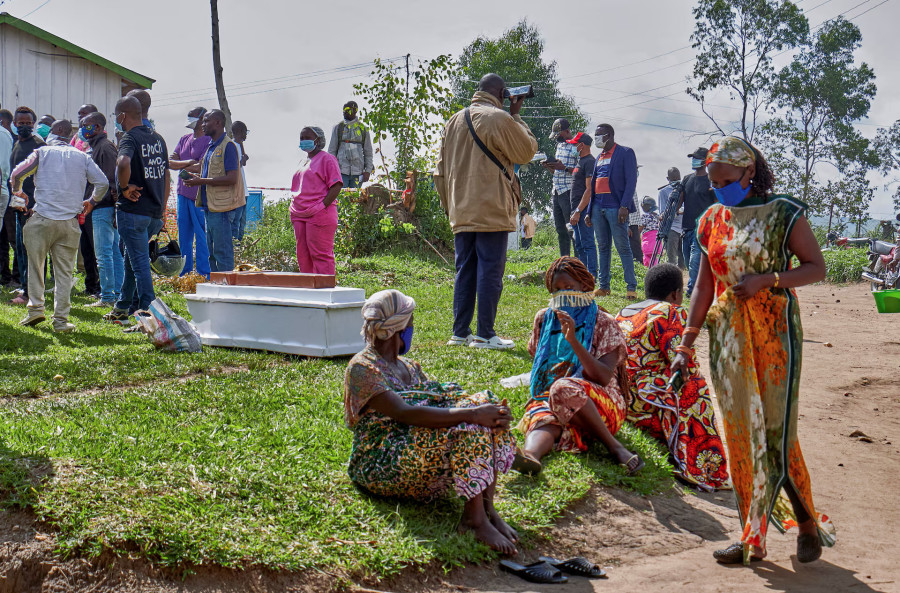
bookmark
Dr Sher Bahadur Pun
Published at : May 25, 2026
Updated at : May 25, 2026 21:42
On May 17, the World Health Organisation (WHO) declared a Public Health Emergency of International Concern (PHEIC), just two days after the Ministry of Health of the Democratic Republic of Congo confirmed an outbreak of Ebola virus disease. The very short interval between confirmation of the outbreak and the WHO’s declaration of a PHEIC, compared with previous outbreaks such as Mpox, Zika and SARS-CoV-2 (Covid-19), which took several weeks, indicates unexpected yet serious concern regarding its severity and the silent, rapid community spread of the infection.
Surprisingly, Bundibugyo virus, a less frequently reported and historically less pathogenic species of Ebola virus, was confirmed as the cause of the ongoing outbreak in DR Congo. According to the WHO, as of May 22, there were 750 suspected cases and 177 suspected deaths, meaning that Ebola is claiming nearly one life and causing four new infections every hour in the current outbreak. Its unexpected emergence and lightning-fast community transmission have raised fears of potential spread to other countries or even continents, prompting questions about how such rapid transmission is occurring.
Ebola is a zoonotic disease transmitted through contact with infected animals, such as fruit bats, chimpanzees, gorillas and monkeys. It was first reported in the DR Congo in 1976. Four Ebola species are known to infect humans: Zaire virus, Sudan virus, Bundibugyo virus, and Tai Forest virus, of which the first three have frequently been associated with human outbreaks. While the Zaire Ebola virus was responsible for the largest 2014-2016 Ebola outbreak in history, the Bundibugyo Ebola virus, responsible for the current 2026 outbreak, has been associated with less frequent outbreaks historically.
Compared with the Zaire and Sudan Ebola viruses, the Bundibugyo is generally considered less pathogenic, with an estimated fatality rate of 25-50 percent. At present, the case fatality rate (in the ongoing outbreak) is approximately 24 percent based on the number of suspected cases and deaths. The symptoms are similar to those of other infectious diseases, which may explain why it is difficult to suspect the virus based on symptoms alone. Moreover, the limited availability of diagnostic testing kits, specifically for the Bundibugyo species of Ebola virus, may have delayed early diagnosis, clinical management and preventive measures, potentially contributing to the unexpectedly rapid community transmission observed in the current outbreak.
Fever, extreme tiredness, body aches are among the initial symptoms of Ebola disease, followed by abdominal pain, nausea, vomiting, diarrhoea, symptoms of impaired kidney and liver functions, and bleeding from the nose, gums, eyes or puncture sites. The incubation period, defined as the time from exposure to the development of symptoms, ranges from two to 21 days. Although countries around the world are preparing to prevent the virus from entering their territories, the three-week incubation period may represent one of the greatest challenges in stopping international spread. For example, during the 2014-2016 Ebola outbreak, a Liberian citizen arrived in Dallas, Texas, USA, during the incubation period and later developed clinical symptoms. The virus was subsequently transmitted to healthcare workers involved in the patient’s care.
This demonstrates that the virus can easily enter a country during the incubation period, when infected individuals have not yet developed symptoms. The situation may become even more serious in low- and middle-income countries, where initial symptoms can easily be mistaken for other infectious diseases and where adequately equipped infrastructure and health care systems to manage highly infectious diseases remain limited.
In Nepal, Sukraraj Tropical and Infectious Disease Hospital is the only tertiary-level government infectious disease hospital. Although the government announced plans to upgrade the hospital following the Covid-19 pandemic by increasing bed capacity and improving equipment and infrastructure, there are still no visible signs of implementation of those commitments.
From another perspective, an important debate remains whether it is better to strengthen existing hospitals alone or to establish temporary Ebola treatment centres during emergencies. In the event of an Ebola outbreak, the country’s only specialised facility would be insufficient to handle a sudden surge of patients, particularly given the rapid spread of the disease. Moreover, most government and private hospitals in Nepal are neither specifically designed nor adequately prepared to manage highly infectious diseases such. Thus, maintaining preparedness plans and standby temporary Ebola treatment centres may be a more practical strategy to ensure the safe isolation and treatment of patients, if an outbreak occurs.
During the 2014-2016 Ebola outbreak in DR Congo, the Nepal government established health desks at the Tribhuvan International Airport (TIA), with the aim of early identification of Ebola cases, particularly among travellers returning from Ebola-affected countries. As per media reports, the government has again stepped up airport health desk screening for passengers returning mainly from Ebola-affected countries following the declaration of a PHEIC after the fresh Ebola outbreak in the DR Congo.
At present, the risk of Ebola virus introduction into Nepal remains low, but it is not zero. For example, infections such as Mpox (monkeypox) have recently spread worldwide, including to Nepal, after having long been restricted mainly to the African countries/continent. In recent years, a growing number of people have been visiting Sukraraj Tropical and Infectious Disease Hospital daily to receive the yellow fever vaccination, which is mandatory for travel to African countries. This serves as an indicator of increasing travel to and from African countries, thereby increasing the potential risk of Ebola virus importation into Nepal.
Policy-makers and scientists are currently alarmed and deeply concerned by the Ebola virus’s unexpectedly rapid community transmission in the DR Congo. One possible explanation may be the incubation period, during which infected individuals remain asymptomatic and may travel from one place to another, even cross borders. This makes the virus extremely difficult to identify and track suspected cases at an early stage, as observed during the first Ebola case in the US in 2014. The incubation period could become a key factor in the international spread of Ebola, and hence, this issue cannot be underestimated. Addressing this challenge is essential to prevent the virus from potentially becoming a pandemic in the future.
Dr Sher Bahadur Pun
Pun is Chief of the Clinical Research Unit at Sukraraj Tropical & Infectious Disease Hospital.


.jpg&w=200&height=120)


Most Read from Columns




Editor's Picks

What triggered the Rasuwa flood? Scientists piece together a complex chain of events

The floods keep coming. Nepal keeps starting over

In a settlement destroyed by the Bhotekoshi flood, a disabled couple offer strangers the little they have

Nepal working on detailed assessment as Bhotekoshi flood reconstruction could cost up to $5 billion

Rabindra Dhant gave Nepal a reason to smile. Now his camp wants real action behind the praise
E-PAPER | September 29, 2026

×