



 14.67°C Kathmandu

Sat, Oct 24, 2026
Columns
A walkout that shook constitutional decorum
What makes such moments particularly powerful is not just the act, but its interpretive openness.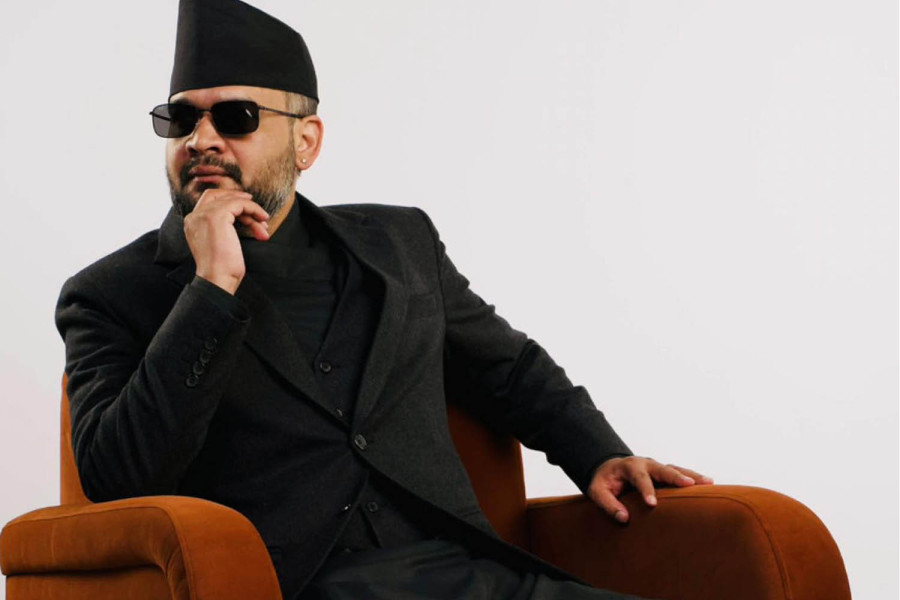
bookmark
Keshab Bhattarai
Published at : May 15, 2026
Updated at : May 17, 2026 06:49
In Nepal’s parliamentary history, no sitting prime minister has publicly walked out while the President addressed the joint session of Parliament to present the government’s Policies and Programmes. That is precisely why the recent incident has drawn intense public attention, constitutional debate and, naturally, a fair share of political memes.
To be fair, parliamentary walkouts are not new in democracies around the world. In the United States, lawmakers have boycotted or walked out during presidential addresses. In the United Kingdom, Members of Parliament have staged symbolic protests during speeches by prime ministers or even the Crown. In India, opposition walkouts during presidential addresses have become almost a seasonal parliamentary tradition.
But Nepal’s situation carries a unique constitutional irony: The Policies and Programmes presented by the President are not his personal views. They are the official agenda approved by the Cabinet itself. In simpler terms, it is the Government presenting its own homework to Parliament.
That is what makes the incident politically fascinating. Usually, a prime minister remains present throughout the address as a sign of constitutional respect, collective responsibility and political ownership. Walking out from one’s own government’s presentation is rare enough to leave constitutional scholars confused, opposition parties energised, and social media thoroughly entertained.
Whether viewed as a symbolic protest, political frustration or merely a momentary exit, the incident has already secured a place in Nepal’s ongoing constitutional conversations and perhaps in future classroom discussions on parliamentary conduct as well.
The incident becomes even more interesting when viewed not just as a political gesture but through the lens of constitutional practice, parliamentary etiquette and democratic symbolism. In Nepal’s constitutional design, the President is not an executive actor in the political sense. Under Nepal’s constitution, the President’s address to the joint session of Parliament is formally prepared and approved by the Council of Ministers. This means the Policies and Programmes is not an independent presidential statement, but rather the government’s own annual roadmap presented through the Head of State as a constitutional formality. It is, in essence, the executive speaking to the legislature about what it intends to do.
This is where the symbolism of presence becomes important. The prime minister, as head of government and chair of the Council of Ministers, is traditionally expected to remain present throughout the address, not because of any explicit penal provision, but because of constitutional convention, what lawyers often call the ‘unwritten discipline’ of parliamentary democracy. It reflects collective cabinet responsibility, continuity of executive authority and political accountability before Parliament.
Against that backdrop, a walkout, especially by the prime minister, does not just read as an absence. It reads as a statement. And in constitutional democracies, silence or absence often speaks louder than formal speeches.
Comparatively, parliamentary walkouts are a well-established form of protest across democratic systems, but they usually carry a different context. In India, opposition walkouts during the President’s address are often expressions of dissent against the ruling government’s policies, not against the President’s presentation. In the United Kingdom, symbolic exits or staged protests in Parliament are part of a long tradition of adversarial politics, generally directed at opposing benches or ceremonial critiques. In the United States, boycotts or walkouts during presidential addresses tend to signal deep partisan divisions, often tied to broader ideological conflict rather than procedural contradiction.
Nepal’s case, however, stands out because of one constitutional paradox: the address being walked out from is not ‘the President’s speech’ in a political sense; it is the government’s own program being formally presented through the Head of State. That creates an unusual layering of meaning.
The act is not simply dissent against the opposition or the institution, but potentially a visible fracture within the executive’s own presentation of its agenda. This is why the incident has triggered such intense interpretation. Depending on political perspective, it can be read as a symbolic protest within the ruling establishment, a moment of political dissatisfaction or internal disagreement, an emotional or spontaneous exit without deeper constitutional intent, or, more critically, as a breach of expected parliamentary decorum and collective responsibility
Constitutionally, it does not necessarily violate a written prohibition. But politically, it challenges the spirit of ‘collective cabinet responsibility’, which is a cornerstone of Westminster-style parliamentary systems that Nepal broadly follows. Under that doctrine, the Cabinet stands together behind the Policies and Programmes once they are approved, regardless of internal disagreements.
What makes such moments particularly powerful in Nepal’s political culture is not just the act itself, but its interpretive openness. In a young and evolving constitutional democracy, symbolism often travels faster than legal interpretation. A single gesture inside Parliament can instantly become a national debate about stability, institutional maturity and respect for constitutional conventions.
And then comes the modern layer of digital amplification. What once would have remained a closed parliamentary controversy is now instantly reframed through social media narratives, memes and public commentary. This accelerates polarisation but also ensures that such incidents become part of political memory much faster than formal legal analysis can settle them.
Ultimately, whether one views the walkout as justified, emotional, strategic or improper, it has already achieved something constitutionally significant; it has expanded the conversation about how far political expression can stretch within parliamentary formality and where constitutional convention begins to demand restraint over symbolism.
Keshab Bhattarai
Bhattarai is an advocate.





Most Read from Columns





Editor's Picks





E-PAPER | October 24, 2026

×