



 23.73°C Kathmandu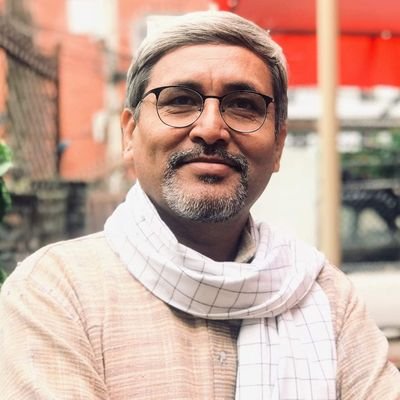

Sun, Oct 18, 2026
Columns
D for dopamine government
Democracy does not run only on elections, but on debate, dissent and institutional balance.
bookmark
Chandrakishore
Published at : May 4, 2026
Updated at : May 4, 2026 20:58
Veni, Vidi, Vici. (I came, I saw, I conquered). Julius Caesar’s famous declaration is regarded as a symbol of decisive victory in history. It was not merely a statement of military success, but a display of confidence in which presence, understanding and outcome all existed together. In Nepal’s contemporary politics, this same formula returns in a strange irony. The only difference is that the sequence has changed. Today’s politics seems to say: We came, we claimed, we performed. There is a claim of victory, there is performance, there is visibility, but a deep lack of understanding.
The Rastriya Swatantra Party (RSP) presented its entry into politics not as alternative participation but as an aggressive disruption. Public discontent with the old parties gave this entry energy. People felt that a jolt was necessary to break the established political inertia. This sentiment was not unnatural. Decades of disappointment, corruption, policy sluggishness and lack of leadership had pushed voters to seek an option that, at the very least, appeared fast-paced.
The problem begins right here. Appearing fast-paced and being competent are two different things. Entering politics can be ‘I came’. Capturing public attention can be ‘I claimed’. But truly understanding the complexities of the state, society and institutions is the real ‘I saw’. And this is the stage where Nepal’s rapid politics repeatedly stumbles.
Today, politics has become increasingly reactionary. The visibility of decisions matters more than their quality. Social media has turned governance into more of a narrative game than policy. A viral clip, a sharp statement, a dramatic intervention: These immediately generate political capital. But is this governance? If a decision lacks institutional study, long-term vision and understanding of social complexities, it becomes performance rather than governance.
Michel Foucault, writing about the relationship between power and knowledge, explained that power operates through control and understanding. Without knowledge, power is merely fleeting dominance. Nepal’s current politics is navigating this very crisis. The claim to power is strong, but structural understanding often appears superficial.
We have entered an era where democracy is gradually transforming into ‘dopamine politics’. Voters want quick reactions. Leaders make quick announcements. The media provides quick broadcasts. Social media grants quick legitimacy. What disappears first in this entire cycle is thought. The measure of political success is no longer who carried out institutional reforms, but who reacted first, who gave the fastest statement and who created the most impactful visuals. This is a dangerous simplification of democracy.
The state is not a viral content that can be captured in a 30-second impactful clip. The state is a complex living structure that requires patience, study and institutional maturity to understand, manage and change. Nepal’s new political forces are today facing a real dilemma: Will they continue on this fast track of popularity, where every decision is a performance? Or will they choose the slow, difficult, but sustainable path of institutional politics? This is their real test.
Because winning quickly in politics is not difficult. History bears witness that momentary waves often look big. The hard task is to convert that wave into institutional depth. The real meaning of ‘I came, I saw, I conquered’ is understanding before victory. If ‘seeing’ is absent, then ‘conquering’ remains only a staged spectacle. Nepal’s politics today faces this fundamental question: Does it want to govern, or merely appear to be winning? Because ultimately, the people write history not through performance but through results.
Understanding any government is as much about reading its policies as it is about recognising its style. The style reveals how decisions are made, how they are implemented and in what form they reach the people. If one wants to understand the working style of the Balendra Shah government in a simple, memorable framework, these 12 words starting with ‘D’ can serve as a kind of citizens’ toolkit—one that gives ordinary people the ability to understand and monitor as well.
Dopamine government: This government measures outcomes by their impact and visibility rather than by the actual process.
Dozer government: The dozer has now become a political symbol. The issue of the city is not just encroachment but also livelihood, planning and justice. When machines replace policy, solutions often appear bigger than they actually are.
Drama government: The question is whether the work is being done only so that it can be shown.
Data-manipulated government: Data is important, but selective data can also be half-truths. Truth then becomes merely the version approved by those in power.
Declaration government: Politics will become strong only when the gap between words and ground reality is reduced.
Diversion government: Bringing up new issues to divert attention from complex questions.
Delay government: Sluggishness of certain processes.
Disconnected government: Fast decisions are not always the right decisions if disconnected from reality.
Disruptive government: When there is no clear direction, it gives space for chaos.
Double-speak government: On one hand, talking about strict laws, but the implementation is selective.
Defensive government: There seems to be discomfort with criticism. Questions are perceived as ‘attacks’ and defence rather than answers.
Damage-control government: Becoming active only after a crisis. First the mistake, then the correction.
The Balendra government has made politics fast-paced, visible and aggressive—this is both its strength and its risk. If this style is not transformed into a structure with clear policies, transparent processes and accountable institutions, then once the dopamine effect wears off, emptiness will become visible. But if the government treats these 12 points as a roadmap for improvement rather than weakness, then the same style that is today a cause of criticism can become the foundation of credible governance tomorrow.
Ultimately, in a democracy, the greatest regulator is vigilant citizens. And vigilance begins with using words as a touchstone and developing the habit of examining power. Being popular and being democratic are not the same thing. Dopamine government blurs this difference. When people are pleased with quick decisions, they often fail to ask vital questions: Are these decisions within the bounds of law and process? Are they strengthening institutions or weakening them? Where is the accountability? Soft authoritarianism begins from this juncture, wherein suppression is not overt, but gradually the space for dissent shrinks.
In the end, ‘dopamine government’ and ‘soft authoritarianism’ are not final states; they are signs of a process. This is a warning that democracy does not run only on elections, but on debate, dissent and institutional balance. The real challenge for Nepal is this: Will it be able to recognise this new, attractive yet dangerous political style? Or will it gradually lose its democratic values in its quick shine? If we do not ask this question now, perhaps there will be no opportunity to ask it later.
Chandrakishore
The author is a veteran journalist.





Most Read from Columns
Before you take credit for Khula Manch, read its history

Shah went to the UN to speak for Nepal, then left before he could make the most of it

Bhotekoshi flood wasn’t a freak event. It’s the Himalaya doing what it does

Lesson learned after the death of Ronaldo
Why passive neutrality won’t take Nepal anywhere
Editor's Picks

Dashain paints the country in festive colours

Buying a goat for Dashain? Look for the green mark

Explained: Why does an hour long flight to Dhangadhi cost more than a flight to New Delhi?
Bhotekoshi flood wasn’t a freak event. It’s the Himalaya doing what it does

How Tenzing Sherpa became Nepal’s breakout star at the Asian Games
E-PAPER | October 18, 2026

×