



 14.7°C Kathmandu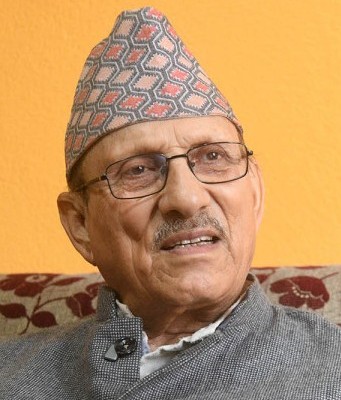

Fri, Oct 23, 2026
Columns
Nepal’s Foreign Policy: principles, practice and priorities
Constructs such as ‘buffer state’ or ‘vibrant bridge’ have limited utility beyond seminar rooms.
bookmark
Gopal Bahadur Thapa
Published at : May 2, 2026
Updated at : May 2, 2026 21:14
An abiding faith in the purposes and principles of the United Nations (UN) Charter remains a cornerstone of Nepal’s foreign policy. Maintaining relations with traditional friends, donor-partners and Gulf countries, and advancing cooperation with regional organisations for peace and economic progress, are equally important. Recently, however, renewing, reinforcing and reorienting relations with our immediate neighbours—India and China—has become the foremost preoccupation. Their growing economic and military might makes this inevitable. This shift should not be misread as deprioritising long-standing partners. Nepal cannot afford to do so and must continue to accord them due priority.
Multilateral diplomacy
Effective multilateral diplomacy requires long-term planning and diplomats skilled in multilateral negotiation. Nepal has too few such professionals. Countries like Pakistan, Sri Lanka and Bangladesh identify bright officers early and train them extensively before UN postings. By contrast, improvements in Nepal’s UN Mission have been quantitative, not qualitative.
It has been decades since Nepal last served as a non-permanent member of the UN Security Council. Its representation across UN bodies is less than satisfactory. Yet our diplomats alone are not to blame. Persistent weak coordination between the Mission and the Ministry leaves a missing link. Without timely support and instructions, diplomats cannot effectively advance Nepal’s priorities at the negotiating table. Renewed focus on selecting, training and backing our best diplomats at the UN is the need of the hour.
Bilateral relations
The Nepal-India relations are extensive and intensive, shaped by cultural similarities and an open border. Proximity, however, does not always guarantee cordiality. When vital interests collide, cordiality can turn to confrontation if not handled with tact. Outstanding issues, including sensitive security and boundary disputes, remain in this regard. Nepal must ensure such emotive issues do not fester and must address them through peaceful diplomatic dialogue.
The Nepal-China relations, too, have seen ups and downs. Anchored in the Five Principles of Peaceful Coexistence, this bilateral relationship has grown stronger over the years. Today’s China is vastly different—the world’s second-largest economy, expanding its global and Nepali footprint in infrastructure and connectivity. So far, Beijing has kept a studied distance from Nepal’s internal politics. But as economic and connectivity ties deepen, will security and strategic concerns follow? Nepal must craft cooperation strategies accordingly.
Both India and China have manifest interests in Nepal and seek to expand their footprint. India sees Nepal as its economic and strategic backyard and is uneasy about growing Chinese engagement. Other Western powers share that unease. China, aware of tacit containment efforts, urges Nepal to be cautious. Nepal must therefore sharpen its diplomatic prowess and operational foreign policy to navigate these challenges.
The case for proactive diplomacy
For too long, Nepal’s diplomacy has been reactive—responding only after events occur, then reverting to business as usual. This absence of proactive diplomacy is a cause of Nepal’s eroding international image. Proactive diplomacy is neither pressure nor mere persuasion. It is the in-house ability to detect early warning signs of trouble—regionally or globally—and prepare preemptive responses. It demands bold ideas, strategic thinking, long-term planning, and sharp analytical skills to interpret events affecting our social, economic and security interests. This requires identifying and training the best talent within and outside the foreign ministry for bilateral and multilateral negotiations. We must distinguish domestic from foreign policy, bilateral from multilateral issues, and improve our often unsteady international behaviour. Clarity and consistency in word and deed are essential to win trust and credibility. Practising proactive diplomacy effectively will require fundamental policy reorientation and behavioural transformation. Only such a change will improve performance and enhance Nepal’s international standing.
Envoy selection through open competition
The current government has taken some positive initiatives to render the conduct of foreign policy more proactive and result-driven. The first step taken by the Prime Minister to observe the diplomatic code of conduct in meetings with foreign dignitaries is laudable. It is an effort to restore diplomatic decorum and dignity, which was thrown into the wind by previous governments.
However, there are a few measures that have been announced that require a serious second thought. First, the reported plan to select some ambassadors through an open competition does not offer a reliable way to secure deserving candidates. Nor does it align with established international diplomatic norms and practice.
Globally, the prevailing standard is to draw the majority of ambassadors from the ranks of senior career foreign service officers. Ambassadors embody both their nation’s interests abroad and the trust of their home government. Governments may, of course, exercise discretion to appoint a limited number of non-career envoys. That too is consistent with international practice. The test for such political appointments, however, is rigorous: The government must be fully confident in the nominee’s diplomatic acumen, professional competence, integrity, and character.
By contrast, the selection mechanism now under consideration—modelled on routine Public Service Commission examinations and interviews—is out of step with diplomatic convention. An ambassadorship is not a mid-level bureaucratic post. Treating it as such risks diminishing, not enhancing, the dignity of the office. The cure may prove worse than the disease.
Appointing an ambassador is a matter of statecraft, not civil-service recruitment. It demands judgement, discretion and an uncompromising standard of merit. Reducing it to open competition will trivialise a position that symbolises the sovereignty and the standing of the nation itself.
Bufferstate controversy
Many experts have felt uneasy about the concept of a buffer state. However, academic constructs such as ‘buffer state’ or ‘vibrant bridge’ have limited utility beyond seminar rooms. Realpolitik tells a different story. Whether Nepal accepts it or not, post-independence India regards Nepal less as a buffer and more as a strategic backyard. New Delhi rejects the buffer state paradigm as a colonial relic and opposes doctrines of equidistance or proximity. It insists the relationship is ‘special’ and ‘unique’, citing an open border and deep cultural-religious ties—a formulation Nepal has never formally embraced.
Continuity and consistency are the hallmarks of the conduct of foreign policy. Nepal must pursue the principles and objectives as enshrined in the Constitution. We must always be informed of our vulnerabilities from the geopolitical, socioeconomic and strategic standpoints.
Gopal Bahadur Thapa
Thapa is former chief of protocol at the Ministry of Foreign Affairs, Nepal.





Most Read from Columns




Editor's Picks





E-PAPER | October 23, 2026

×