The political atmosphere in Kathmandu feels surreal and fundamentally different in 2026 with a new government, new political actors and hope for positive change. For decades, the Nepalese electorate has moved through the shifting phases of socialism, communism and democracy, and the hollow promises used by the old guards to extract loyalty. But today, the tables have turned. A new generation is doing a different kind of math, replacing ideological devotion with a pragmatic demand: a quantifiable return on their civic participation, a hope to improve their own quality of life.
This shift is not merely a change in mood; it is a mass application of the ‘Utility Principle’. In political philosophy, Utilitarianism holds that a government's moral duty is to maximise the ‘greatest good for the greatest number’. Yet, for decades, Nepal has operated under a system of factionalism and decentralisation of corruption and power, prioritising internal power struggles over the public interest. Our institutions were designed not to maximise public happiness, but to fuel the utility of the party elite. In this lopsided equation, the joy of parties outweighs public suffering, and it demonstrates simple math. As long as the authorities lack accountability, citizens are bound to carry the debt. A 2016 research, Decentralisation of Corruption by Krishna Raj Panta, found that several local bodies in Nepal lacked basic transparency and accountability standards, including timely audits and public disclosure of budgets and expenditures. The study further revealed that weak social auditing and secretive budgetary practices created a fertile environment for corruption at the local level, ultimately undermining public service delivery.
As a woman volunteer from Chilime VDC described in the study, “They meet in secret. We don’t know about budgeting, and it’s not transparent.” This single sentence carries the dark reality of so-called trusted authorities and the crisis of local governance, which has compelled today's citizens to think more critically and stand for themselves as a collective rational agent rather than emotional consumers of political propaganda.
Today, the discussion on political governance is no longer an abstract debate; it is a daily calculation of cost and inconvenience. The most crucial of these costs is time. Chronic queues for passports, licenses and basic documentation, compounded by system delays and lost workdays, transform into a massive economic setback for a nation striving for recovery. These ‘time costs’ accumulate perniciously, shaping a reality where the system meant to serve the people actually reduces their efficiency and happiness. This inefficiency is not limited to mundane administrations. Citizens have experienced system failure across daily life and national crises. Even during moments of state crisis, such as the 2015 earthquake, citizens experienced massive delays in relief distribution, weak coordination of authorities and delays in public funding. The crisis is further highlighted in the research article by Nepal Administrative Staff College, which shows that the government was not only underprepared to handle a massive disaster but also struggled to demonstrate effective leadership in public funding and coordination. The study points to weak institutional mechanisms for responding to victims’ needs, as local government structures were largely dysfunctional and lacked the capacity to effectively represent or respond to affected communities.
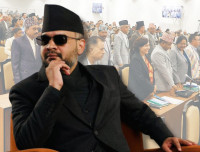
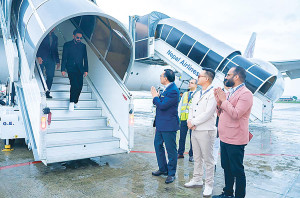
The current administration is attempting to address this instability through high-stakes accountability. The recent decision by Prime Minister Balendra Shah to personally assume the Home Ministry portfolio following Home Minister Gurung’s resignation is a strategic attempt to hedge against a ‘Utility Deficit’. By taking direct responsibility, the Prime Minister is signalling that political morality must not be sacrificed at the cost of administrative delay and is preventing a legal vacuum, as the onus lies solely on PM Shah to carry both the duties of the PM and the Home Minister until further notice. This move is predicated on the belief that direct accountability can finally bridge the gap between state capacity and citizen benefit.
The Nepali voter has realised that the cost of pain and suffering under the old establishment was too high and the loyalty was too low. They didn't switch their votes because they fell in love with new faces or parties, but because, as citizens, they were the victims of corruption and had to bear its cost. Panta's research also highlights how local political actors and officials frequently exercised monopolistic control over budgets and project selection, transforming public institutions into institutions of selfishness and corruption. Now, citizens have represented themselves as rational agents seeking a better service provider. They want their time, their money and their dignity back.
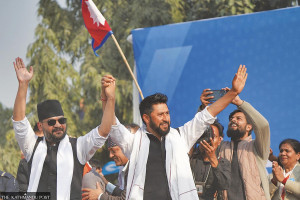
The mandate given to the new political actors is not mere impulsive action, but citizens’ trust who see them as a persona with a vision, fuelled with optimism, entrusting them with their votes. We are seeing the first signs of success in initiatives like doorstep delivery for essential documents, bypassing the limitations of bureaucratic delays. If these leaders succeed in reducing the ‘administrative burden’ of daily life, they will solidify an era of high-utility governance. However, if they fail to meet the high utility expectations of a hopeful public, they will find that the same rational calculus that brought them to power might lead to their obsolescence.
The math of the past definitely failed us; the math of the future depends on the new government’s ability to balance utility and justice.




 15.26°C Kathmandu